
Listen to this Post
Introduction: Speed Becomes the New Battleground in Advanced AI
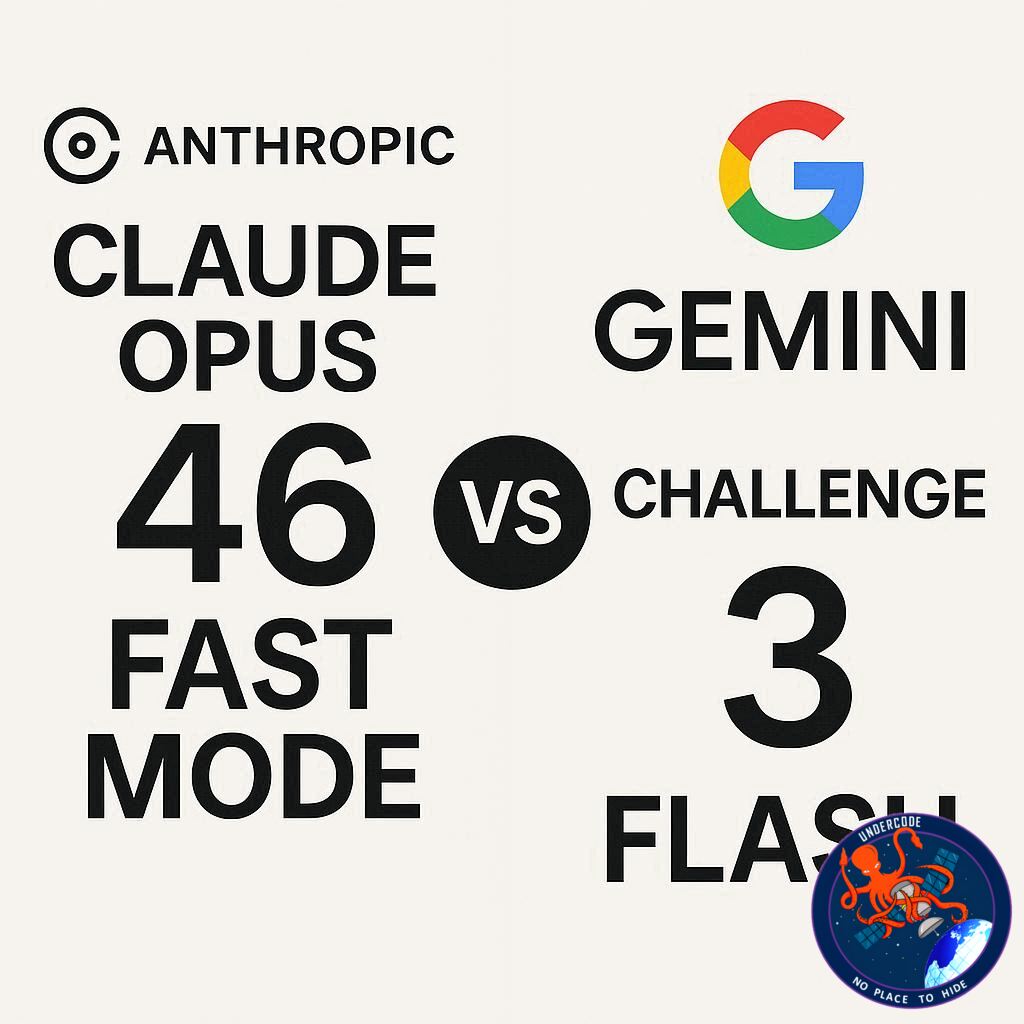
The race for faster, smarter large language models has entered a new phase. Just days after releasing its most powerful flagship model, Claude Opus 4.6, Anthropic has introduced a new performance-focused option called Fast Mode. This move signals a strategic push to dominate high-intensity use cases like complex reasoning, software development, and autonomous workflows, areas where milliseconds increasingly matter. As Anthropic gains traction beyond the tech bubble, including adoption by major financial institutions, the company is now positioning speed as a competitive weapon against rivals like Google’s Gemini lineup.
Summary: What Anthropic Announced and Why It Matters
Anthropic has officially launched Fast Mode for Claude Opus 4.6, promising response times up to 2.5 times faster than the standard version of the model. The feature is currently available as a limited research preview through the Claude Developer Platform API and Claude Code, making it accessible primarily to developers and early adopters experimenting with performance-critical workloads. According to Anthropic, internal teams have already been using this accelerated version, and the company is now opening it up as an early experiment. While the emphasis is clearly on speed, Anthropic has also been transparent about the trade-off, Fast Mode is more expensive to run and is intended for urgent, high-stakes projects where latency is a decisive factor. The release places Claude Opus 4.6 Fast Mode in direct competition with Google’s Gemini 3 Flash, a model designed to deliver faster responses than Gemini 3 while maintaining strong reasoning capabilities. Google positions Gemini 3 Flash as a cost-efficient option, claiming it offers Pro-grade reasoning with lower latency and better efficiency, particularly for agentic workflows. In contrast, Anthropic is leaning on Opus-level intelligence, highlighting Claude Opus 4.6 as its most capable model yet, with improved planning skills and the ability to manage long-running, autonomous tasks. The comparison sets up a clear contrast in philosophy, premium speed and intelligence versus balanced speed and affordability.
Performance Positioning: Speed as a Premium Feature
Anthropic’s decision to price Fast Mode higher than the standard Opus 4.6 is not accidental. It frames speed as a premium capability rather than a default expectation. By doing so, Anthropic is targeting enterprises and developers working on time-sensitive systems, such as real-time code generation, complex simulations, or decision-support tools where delays translate directly into cost or risk. This approach reinforces Claude Opus 4.6 as a high-end product rather than a mass-market model.
Competitive Landscape: Claude Versus Gemini
The comparison with Google Gemini 3 Flash highlights a growing divide in AI strategy. Google emphasizes efficiency and accessibility, promoting Gemini 3 Flash as both fast and cost-effective. Anthropic, on the other hand, appears more willing to trade cost efficiency for raw performance and intelligence depth. This creates a clear choice for developers, those prioritizing budget and scale may gravitate toward Gemini, while those prioritizing maximum reasoning quality under tight time constraints may favor Claude Fast Mode.
Enterprise Momentum: Beyond the Tech Industry
Anthropic’s broader recognition, including adoption by institutions like Goldman Sachs, adds weight to the Fast Mode release. Enterprise users often demand not only accuracy and safety, but also predictable performance at scale. Fast Mode aligns with these expectations, signaling that Anthropic is increasingly designing its models with large, operational deployments in mind rather than purely experimental or consumer-facing use cases.
Model Capabilities: Why Opus 4.6 Matters
Claude Opus 4.6 is positioned as Anthropic’s most capable model to date, with strengths in planning, long-context handling, and autonomous task execution. Fast Mode does not replace these capabilities, it amplifies them by reducing latency. This combination makes Opus 4.6 particularly attractive for agentic systems that must reason deeply while responding quickly, a scenario becoming more common as AI agents move closer to production environments.
What Undercode Say:
Strategic Intent Behind Fast Mode
Fast Mode is less about chasing benchmarks and more about redefining how Claude is used in production. Anthropic is signaling that its models are no longer just thoughtful and cautious, but also fast enough to operate under real-world pressure. This is a critical shift for a company often associated with safety-first narratives.
Pricing as a Signal, Not a Barrier
By explicitly stating that Fast Mode is more expensive, Anthropic is filtering its audience. The company is not trying to win every developer, it is targeting those who see speed as a business-critical feature. This mirrors strategies seen in cloud computing, where premium tiers exist specifically for latency-sensitive workloads.
Developer Ecosystem Implications
Releasing Fast Mode through the API and Claude Code first shows that Anthropic views developers as the primary testing ground. Feedback from this group will likely shape whether Fast Mode becomes a standard option or remains a specialized tier. This also suggests a gradual rollout strategy rather than a sudden, mass deployment.
The Gemini Comparison Is Intentional
Anthropic’s messaging clearly positions Fast Mode against Gemini 3 Flash. This is not accidental competition, it is a deliberate attempt to enter the same conversation Google currently dominates around low-latency AI. However, Anthropic differentiates itself by leaning on intelligence depth rather than efficiency metrics alone.
Long-Term Market Impact
If Fast Mode proves stable and scalable, it could shift perceptions of Claude from a deliberative assistant to a high-performance AI engine. This would broaden its appeal across industries like finance, engineering, and cybersecurity, where both speed and reasoning quality are non-negotiable.
Fact Checker Results
✅ Claude Opus 4.6 Fast Mode is claimed to deliver up to 2.5 times faster responses than the standard version.
✅ The feature is currently limited to a research preview via API and Claude Code.
❌ There is no evidence yet that Fast Mode is more cost-efficient than competing fast models.
Prediction
🚀 Anthropic will expand Fast Mode availability beyond research preview within the next few update cycles.
📈 Premium, speed-focused AI tiers will become standard across major LLM providers.
⚖️ The market will increasingly split between cost-optimized models and high-speed, high-intelligence models.
▶️ Related Video (82% Match):
🕵️📝✔️Let’s dive deep and fact‑check.
References:
Reported By: timesofindia.indiatimes.com
Extra Source Hub (Possible Sources for article):
https://stackoverflow.com
Wikipedia
OpenAi & Undercode AI
Image Source:
Unsplash
Undercode AI DI v2
Bing
🔐JOIN OUR CYBER WORLD [ CVE News • HackMonitor • UndercodeNews ]
📢 Follow UndercodeNews & Stay Tuned:
𝕏 formerly Twitter 🐦 | @ Threads | 🔗 Linkedin | 🦋BlueSky | 🐘Mastodon


