
Listen to this Post
Introduction
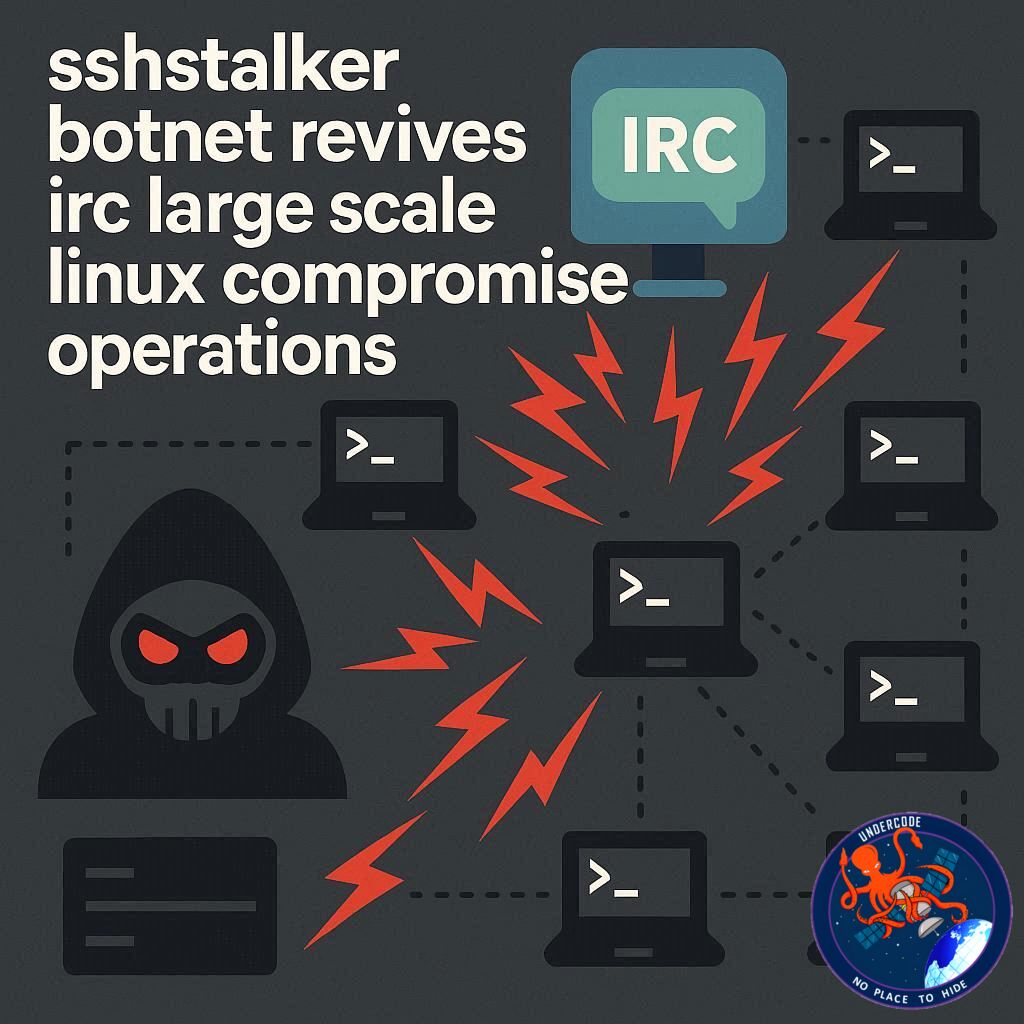
A newly identified Linux botnet known as SSHStalker is drawing attention not because it uses cutting-edge techniques, but because it deliberately goes in the opposite direction. Instead of relying on modern, encrypted command-and-control frameworks, SSHStalker resurrects IRC (Internet Relay Chat) — a protocol created in 1988 — to manage its infrastructure. This choice highlights a growing trend in cybercrime where attackers prioritize scale, resilience, and cost-efficiency over stealth or innovation. The result is a botnet that may look outdated on the surface but remains highly effective in today’s cloud-heavy environment.
Background on IRC and Its Relevance
IRC is a text-based communication protocol that dominated online group messaging throughout the 1990s. Although largely replaced by modern platforms, IRC never truly disappeared. Technical communities continue to value it for its simplicity, low bandwidth consumption, interoperability, and lack of graphical overhead. SSHStalker exploits these same characteristics, turning an old communication standard into a reliable backbone for malicious coordination.
Overview of the SSHStalker Botnet
SSHStalker operates as a scale-first Linux botnet, relying on classic mechanics rather than advanced evasion. Instead of hiding quietly, it spreads loudly and efficiently, using brute-force SSH attacks, noisy scans, and redundant IRC servers. According to threat intelligence researchers at Flare, the botnet is a “stitched-together kit” that favors reliability and mass infection over discretion.
Command-and-Control via IRC
The botnet’s command-and-control infrastructure is entirely IRC-based. Infected machines connect to predefined servers and channels using C-based bot binaries. Multiple servers and channels are configured to ensure redundancy, allowing the botnet to remain operational even if parts of the infrastructure are taken down. This approach mirrors early botnet designs but remains effective due to its resilience and low operational cost.
Initial Access Through SSH Brute Forcing
SSHStalker gains its initial foothold by performing automated SSH scanning and brute-force attacks. It uses a Go-based binary that masquerades as the popular network scanning tool nmap, helping it blend into legitimate system activity. Once access is gained, even at a low-privileged level, the infected host becomes a launchpad for further attacks.
Worm-Like Propagation Mechanism
After compromising a system, SSHStalker immediately turns it into a scanner. Each infected host searches for additional SSH targets, creating a worm-like propagation model. Flare researchers identified logs containing results from nearly 7,000 scans conducted in January alone, with a strong focus on cloud-hosted environments, particularly Oracle Cloud Infrastructure.
Targeting Cloud Infrastructure
The emphasis on cloud providers suggests a strategic choice. Cloud servers often expose SSH services to the internet and may rely on misconfigurations or weak credentials. By focusing on such environments, SSHStalker increases its chances of rapid expansion while also accessing systems with higher bandwidth and compute resources.
On-Host Compilation for Portability
Once inside a system, SSHStalker downloads the GCC compiler to build its payloads directly on the victim machine. This technique improves portability across Linux distributions and reduces the likelihood of static signature detection. Compiling malware locally also allows attackers to adapt binaries to the specific environment they infect.
Deployment of IRC Bot Payloads
The first compiled payloads are C-based IRC bots with hard-coded command-and-control details. These bots immediately enroll the victim into the IRC infrastructure, allowing operators to issue commands, update components, or simply maintain control. This step marks the system as a fully functional node within the botnet.
Secondary Payloads and Orchestration
Additional archives named GS and bootbou are fetched next. These contain further bot variants responsible for orchestration and execution sequencing. This modular approach allows SSHStalker to manage tasks such as scanning, updating, and monetization separately, increasing operational flexibility.
Persistence via Aggressive Cron Jobs
Persistence is achieved using cron jobs that execute every 60 seconds. These jobs act as watchdogs, checking whether the main bot process is still running and restarting it if necessary. Such frequent execution is noisy but effective, ensuring that manual cleanup efforts are quickly undone.
Exploitation of Legacy Linux Vulnerabilities
SSHStalker includes exploit code for 16 known CVEs affecting Linux kernel versions from 2009–2010. These vulnerabilities are used to escalate privileges after initial access is obtained through SSH brute forcing. While old, these flaws remain exploitable on unpatched or legacy systems still running in production.
Privilege Escalation Strategy
By chaining brute-force access with kernel exploits, the botnet moves from low-privileged users to root-level control. This two-step approach reflects the botnet’s pragmatic design: use whatever works, regardless of age, as long as it delivers results at scale.
Monetization Capabilities Observed
Flare researchers observed several monetization-related features within SSHStalker. These include AWS credential harvesting, website scanning, and cryptomining. The presence of PhoenixMiner, a high-performance Ethereum mining tool, indicates that the botnet is prepared to extract direct financial value from compromised systems.
DDoS Capabilities Remain Dormant
Although distributed denial-of-service capabilities are built into the botnet, researchers have not yet observed active attacks. Most bots currently connect to the C2 infrastructure and remain idle. This behavior suggests a testing phase or a strategy of access hoarding for future operations.
Attribution and Possible Links
SSHStalker has not been definitively attributed to any known threat group. However, Flare noted similarities with the Outlaw/Maxlas botnet ecosystem and identified several Romanian indicators within the infrastructure. These clues point toward possible reuse of tooling rather than direct authorship.
Detection Challenges and Indicators
Despite its noisy behavior, SSHStalker can still evade poorly monitored environments. Compiler installation on production servers, outbound IRC connections, and cron jobs running at unusually short intervals are all strong indicators of compromise. Execution from directories such as /dev/shm should also raise immediate concern.
Defensive Recommendations from Researchers
Flare recommends disabling SSH password authentication, removing compilers from production images, enforcing strict egress filtering, and restricting execution from temporary filesystems. Monitoring for IRC traffic and unusual cron activity is also critical for early detection.
What Undercode Say:
Old Protocols, New Threat Models
SSHStalker demonstrates that obsolete does not mean ineffective. By leveraging IRC and decades-old vulnerabilities, attackers bypass modern security assumptions that focus heavily on advanced malware frameworks. Many organizations no longer monitor IRC traffic, making it an attractive blind spot.
Scale Beats Stealth in Cloud Environments
In cloud-heavy infrastructures, scale often matters more than secrecy. SSHStalker’s aggressive scanning and propagation allow it to compromise thousands of systems quickly. Even if some infections are detected and removed, the overall botnet continues to grow through sheer volume.
Legacy Systems Are Still a Liability
The successful use of 15-year-old kernel exploits highlights a persistent problem: legacy systems remain online and unpatched. As long as outdated Linux kernels exist in production, attackers will continue to exploit them, regardless of how old the vulnerabilities are.
On-Host Compilation as an Evasion Tactic
Compiling malware directly on victim systems is a low-tech but effective evasion method. It reduces reliance on precompiled binaries and helps malware blend into legitimate development activity, especially in environments where compilers are expected.
Cloud Credentials as a High-Value Target
AWS key harvesting suggests that attackers are increasingly interested in secondary exploitation. Compromised credentials can be more valuable than the infected host itself, enabling lateral movement, data theft, or further infrastructure abuse.
Idle Bots Signal Strategic Patience
The current idle state of many SSHStalker bots should not be interpreted as inactivity. It likely reflects a strategy of building a large, ready-to-use network before launching monetization or disruptive campaigns at scale.
Security Monitoring Gaps Are Being Exploited
Many organizations focus on detecting modern threats while overlooking basic anomalies. Frequent cron executions, compiler downloads, and IRC connections are all behaviors that should stand out — yet often go unnoticed.
The Return of “Good Enough” Malware
SSHStalker represents a broader shift toward “good enough” malware engineering. Attackers no longer need cutting-edge exploits if simple, proven techniques can still deliver massive reach and reliable control.
Fact Checker Results
✅ IRC-based command-and-control was confirmed by Flare researchers.
✅ SSH brute forcing and legacy Linux CVE exploitation were observed in active samples.
❌ No confirmed DDoS attacks have been launched by SSHStalker so far.
Prediction
🔮 IRC-based botnets will continue to resurface due to low detection rates and operational simplicity.
🔮 Cloud infrastructure will remain a primary target for large-scale Linux botnets.
🔮 Legacy vulnerabilities will stay relevant as long as outdated systems remain online.
🕵️📝✔️Let’s dive deep and fact‑check.
References:
Reported By: www.bleepingcomputer.com
Extra Source Hub (Possible Sources for article):
https://www.reddit.com
Wikipedia
OpenAi & Undercode AI
Image Source:
Unsplash
Undercode AI DI v2
Bing
🔐JOIN OUR CYBER WORLD [ CVE News • HackMonitor • UndercodeNews ]
📢 Follow UndercodeNews & Stay Tuned:
𝕏 formerly Twitter 🐦 | @ Threads | 🔗 Linkedin | 🦋BlueSky | 🐘Mastodon


