
Listen to this Post
Introduction: A Structured Space for Astrobiology’s Next Chapter
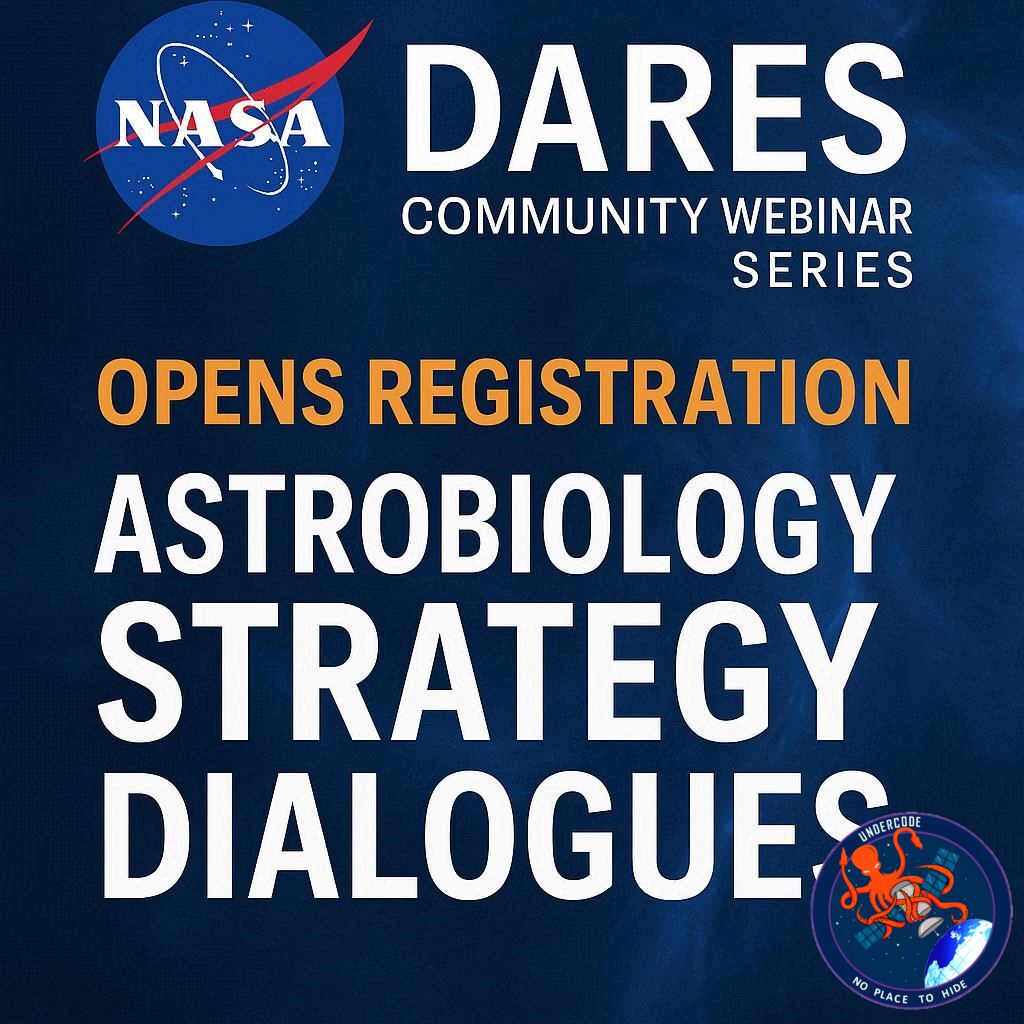
NASA’s Directorate for Astrobiology, Research, and Exploration Strategies (DARES) has opened registration for a new community-driven webinar series designed to shape the future of astrobiology research. Running every Wednesday between February 25 and March 25, 2026, the series creates a structured forum where students, researchers, and professionals can directly engage with NASA’s evolving astrobiology priorities. Rather than a single broadcast event, this initiative emphasizes continuity, discussion, and strategic alignment across scientific disciplines that study life in the universe.
Purpose of the NASA-DARES Webinar Series
The webinar series is built to support NASA’s long-term astrobiology strategy by gathering feedback, ideas, and interdisciplinary perspectives from across the global research community. Each session functions as both an information exchange and a listening exercise, allowing NASA to refine research directions while giving participants a clearer view of upcoming scientific investments and priorities.
Schedule and Timing Details
The webinars will be held weekly on Wednesdays, starting February 25 and concluding March 25, 2026. Each session runs for four hours, from 12 PM to 4 PM Eastern Time, corresponding to 9 AM to 1 PM Pacific Time. This extended format is designed to allow for presentations, focused discussions, and interactive participation rather than short, one-way briefings.
Registration Process Overview
Participation requires completing an online registration form that collects basic professional information. Attendees are asked to provide their full name, email address, career stage, and institutional affiliation. This information helps NASA understand the composition of the participating community and ensure balanced representation across career levels and sectors.
Career Stages Welcomed
The registration form explicitly welcomes participants from a wide range of career stages. These include undergraduate and graduate students, postdoctoral researchers, early-career scientists within ten years of completing a PhD, mid-career and senior researchers, and emeritus professionals. Industry experts, NGO representatives, and participants from non-traditional backgrounds are also encouraged to attend.
Flexibility in Webinar Attendance
Participants are not required to attend every session. The form allows registrants to select one or more specific dates, ranging from the first webinar on February 25 to the final session on March 25. This flexibility recognizes the global nature of the astrobiology community and the varied schedules of researchers and professionals.
Communication of Webinar Agendas
Detailed schedules and speaker lineups will be published progressively rather than all at once. Updates will be shared through the NASA Astrobiology website, the NASA Astrobiology Mailing List, and various Research Coordination Networks (RCNs). Registered participants will also receive direct email updates as agendas are finalized.
Focus Areas as the Core Discussion Framework
A central element of the registration form is the selection of Focus Areas, which define the scientific and strategic scope of the discussions. These Focus Areas align with NASA-DARES’s broader astrobiology roadmap and help structure conversations during each webinar.
Focus Area 1: Protometabolism and Macromolecules
This Focus Area explores how early metabolic processes and complex molecules could form and function in diverse planetary environments. Discussions here connect chemistry, planetary science, and biology to address how life’s building blocks emerge before biology as we know it exists.
Focus Area 2: Abiotic Organic Production
FA2 centers on non-biological processes that produce organic compounds and drive chemical evolution. This includes studies of planetary atmospheres, hydrothermal systems, and extraterrestrial environments where organic chemistry may occur without life.
Focus Area 3: Co-Evolution of Biospheres and Worlds
This Focus Area examines how life and planetary environments influence each other over time. Topics include feedback loops between biological activity and planetary conditions, as well as how planetary system evolution shapes habitability.
Focus Area 4: Comparative Planetology and Habitability
FA4 emphasizes comparing planets and moons to understand the conditions that support habitability. By studying similarities and differences across worlds, researchers can refine criteria for life-supporting environments beyond Earth.
Focus Area 5: Detecting Signs of Life
This area focuses on biosignatures and technosignatures, exploring how scientists can identify evidence of living environments or active life on other worlds using remote sensing, in-situ measurements, and future missions.
Focus Area 6: Mission Approaches and Technology
FA6 addresses the tools and mission concepts needed to advance astrobiology. This includes instrumentation, mission architectures, and technological innovations that enable new forms of exploration and data collection.
Focus Area 7: Infrastructure Investment
This Focus Area looks beyond science questions to the physical and digital infrastructure required for astrobiology. Topics include data systems, laboratory capabilities, and shared platforms that support long-term research.
Focus Area 8: Workforce and Early Career Support
FA8 highlights the human side of astrobiology, focusing on training, mentorship, and career pathways. Discussions aim to identify ways NASA can better support early-career researchers and build a sustainable workforce.
Focus Area 9: Astrobiology in Society
The final Focus Area explores the relationship between astrobiology and the public. This includes education, outreach, ethical considerations, and the broader cultural impact of searching for life beyond Earth.
Community Input and Discovery Channels
The registration form also asks participants how they learned about the event, offering options such as NASA websites, mailing lists, professional networks, or word of mouth. This information helps NASA evaluate outreach effectiveness and community engagement.
Accessibility and Participation Considerations
An optional section allows registrants to specify accessibility needs or participation considerations. This reflects an effort to make the webinar series inclusive and responsive to diverse participant requirements.
Summary of the Original Announcement
The original article primarily presents a structured registration form for the NASA-DARES Community Webinar Series, outlining dates, times, and participation requirements. It emphasizes that the webinars will run weekly from late February through March 2026 and that registration is open to a broad spectrum of career stages and professional backgrounds. The form highlights nine Focus Areas that align with NASA’s astrobiology strategy, allowing participants to indicate their interests in advance. It also explains how webinar schedules and speaker information will be distributed through official NASA channels and mailing lists. Finally, it collects feedback on how attendees learned about the event and whether they have accessibility needs, underscoring NASA’s intent to engage a diverse and inclusive research community.
What Undercode Say: Strategic Value of the DARES Webinar Model
The NASA-DARES webinar series represents a deliberate shift from static policy documents to dynamic, community-driven strategy formation. By hosting multiple long-form sessions instead of a single event, NASA is signaling that astrobiology strategy is not fixed but evolving.
What Undercode Say: Inclusivity as a Scientific Asset
Inviting participants from undergraduate students to senior researchers is not symbolic. It reflects an understanding that innovation often emerges at the boundaries between experience levels, where new ideas meet institutional memory.
What Undercode Say: Focus Areas as Policy Instruments
The nine Focus Areas function as more than discussion topics. They act as policy instruments that guide funding priorities, mission planning, and workforce development across NASA’s astrobiology portfolio.
What Undercode Say: Early Career Emphasis Signals Long-Term Planning
Explicit attention to workforce and early career support suggests NASA is thinking beyond current missions. Sustaining astrobiology requires not just discoveries, but people trained to pursue them over decades.
What Undercode Say: Infrastructure Talks Reveal Maturity
Including infrastructure investment as a Focus Area indicates that astrobiology has reached a level of maturity where data systems, labs, and digital platforms are as critical as hypotheses and experiments.
What Undercode Say: Societal Framing Matters
Astrobiology in society acknowledges that the search for life has philosophical, ethical, and cultural implications. NASA’s willingness to discuss this openly reflects confidence in the field’s relevance beyond academia.
What Undercode Say: Flexibility Encourages Broader Engagement
Allowing participants to choose specific sessions lowers barriers to entry. This design recognizes the time constraints of researchers while still encouraging meaningful participation.
What Undercode Say: Mailing Lists as Strategic Channels
The reliance on established mailing lists and RCNs highlights how scientific communication ecosystems function. NASA is leveraging trusted networks rather than reinventing outreach mechanisms.
What Undercode Say: Long Sessions Enable Real Dialogue
Four-hour sessions may seem demanding, but they allow for depth. This format supports nuanced discussions that shorter webinars often fail to achieve.
What Undercode Say: Data Collection Through Registration
The registration form itself is a data-gathering tool. By tracking career stages, affiliations, and interests, NASA can quantitatively assess community priorities and gaps.
What Undercode Say: A Template for Other Disciplines
If successful, the DARES webinar model could be replicated across other scientific domains within NASA, setting a precedent for participatory strategy development.
Fact Checker Results
✅ The webinar dates and weekly schedule align with the registration announcement.
✅ The nine Focus Areas are accurately listed and described.
❌ Specific speakers and agendas are not yet confirmed and remain pending.
Prediction
🔮 The DARES webinar series will influence future astrobiology funding calls and mission concepts.
🔮 Early-career participation will increase as workforce discussions gain prominence.
🔮 Community-driven strategy models like this will become standard across NASA science divisions.
🕵️📝✔️Let’s dive deep and fact‑check.
References:
Reported By: science.nasa.gov
Extra Source Hub (Possible Sources for article):
https://www.medium.com
Wikipedia
OpenAi & Undercode AI
Image Source:
Unsplash
Undercode AI DI v2
Bing
🔐JOIN OUR CYBER WORLD [ CVE News • HackMonitor • UndercodeNews ]
📢 Follow UndercodeNews & Stay Tuned:
𝕏 formerly Twitter 🐦 | @ Threads | 🔗 Linkedin | 🦋BlueSky | 🐘Mastodon


