
Listen to this Post
Introduction: When Cybercrime Threatens Public Safety
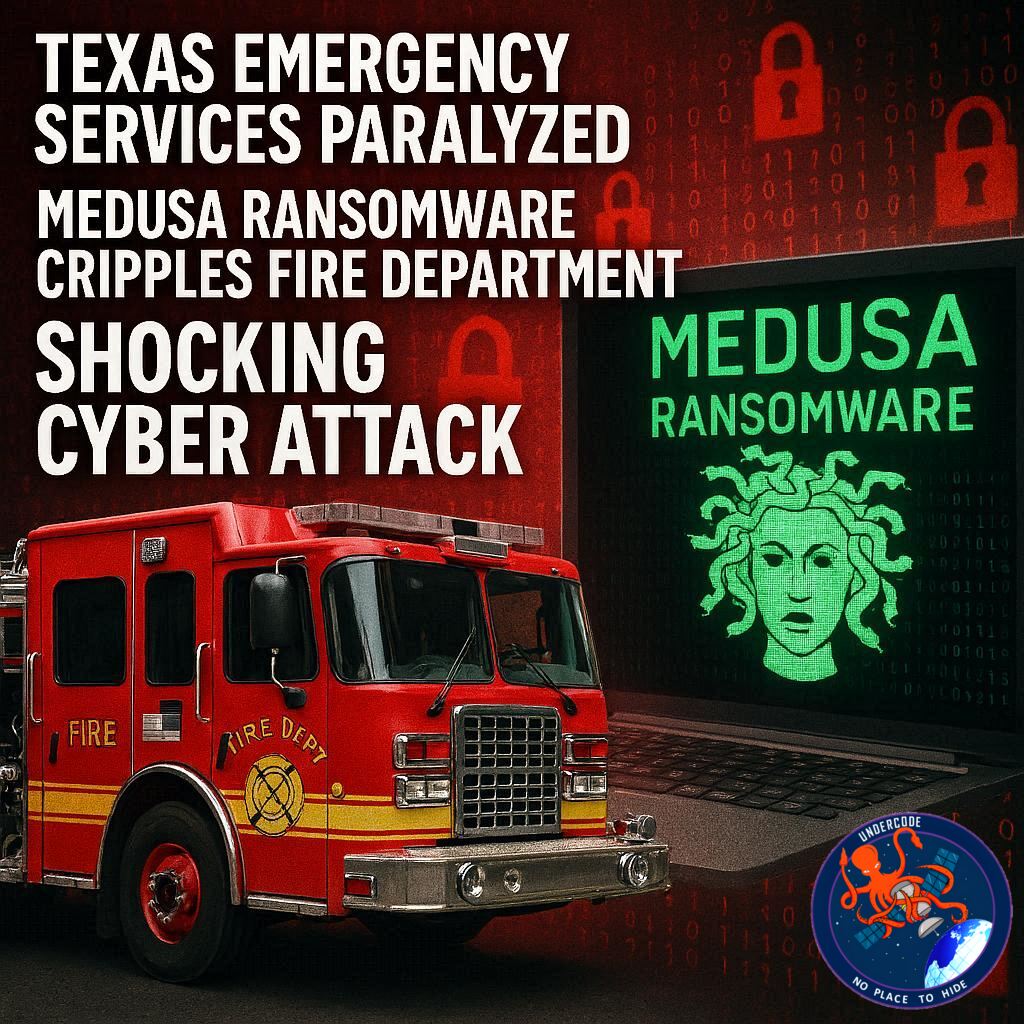
A ransomware attack is no longer just a corporate headache or a data privacy issue—it can now directly endanger lives. A recent cyberattack involving the Medusa ransomware has disrupted emergency operations at the South Hays Fire Department in Texas, raising serious concerns about the vulnerability of public safety infrastructure across the United States. The incident underscores a growing and unsettling trend: cybercriminals increasingly targeting organizations that communities depend on in moments of crisis.
the Original Report
According to cybersecurity monitoring accounts and reporting from HendryAdrian.com, the Medusa ransomware group successfully breached systems belonging to the South Hays Fire Department, which operates under the Hays County Emergency Services District 3. The attack disrupted emergency services across parts of Hays County, temporarily affecting the department’s ability to respond efficiently to incidents.
The breach was first highlighted by the Cybersecurity News Everyday account on X (formerly Twitter), which tracks ransomware campaigns and digital threats worldwide. The post emphasized that the attack was not just another data breach, but one that directly interfered with emergency response capabilities—an escalation that places public safety at immediate risk.
Medusa ransomware, known for its double-extortion tactics, typically encrypts victim systems while also threatening to leak stolen data if ransoms are not paid. While specific technical details and the full scope of data exposure were not disclosed at the time of reporting, the operational disruption alone marked the incident as severe.
The report also situates this attack within a broader pattern of ransomware groups increasingly targeting government bodies, healthcare providers, and emergency services—entities that often lack robust cybersecurity defenses but cannot afford prolonged downtime.
What Undercode Say:
The attack on the South Hays Fire Department is alarming not because it is rare, but because it is becoming normal. Ransomware groups like Medusa are strategically shifting toward “high-pressure” targets—organizations where downtime translates into immediate real-world consequences. Fire departments, hospitals, and emergency dispatch centers fit this profile perfectly.
From an attacker’s perspective, public safety agencies are ideal victims. They often operate with legacy systems, limited IT budgets, and a heavy reliance on always-on availability. Unlike private corporations, they cannot simply pause operations, rebuild systems quietly, or absorb reputational damage. Every minute offline increases the pressure to restore systems quickly, which ransomware groups exploit to strengthen their extortion leverage.
This incident also highlights a persistent misconception in public-sector cybersecurity: the belief that smaller or local agencies are unlikely targets. In reality, ransomware operators increasingly prefer decentralized targets because they are easier to breach and less prepared to respond. A single successful attack can ripple across an entire county’s emergency response framework.
Another critical issue is incident transparency. While early reporting confirms operational disruption, details about containment, data theft, and recovery timelines remain unclear. This lack of information is common in public-sector breaches but ultimately hinders broader preparedness. Other districts cannot learn from the incident if technical indicators and response lessons remain undisclosed.
The Medusa attack also raises policy-level questions. If emergency services are now considered fair game by cybercriminals, should they be classified as critical infrastructure with mandatory federal cybersecurity standards and funding? Current protections and budgets often lag far behind the threat landscape.
Finally, this case reinforces a hard truth: ransomware is no longer just an IT problem—it is a public safety risk. When fire trucks, dispatch systems, or communication tools are compromised, the line between cybercrime and physical harm effectively disappears. Without urgent investment in cybersecurity resilience, similar incidents are not a matter of “if,” but “when.”
Fact Checker Results
The attack on the South Hays Fire Department was reported by established cybersecurity monitoring sources and linked to Medusa ransomware activity.
There is no public evidence contradicting the claim of operational disruption at the time of reporting.
However, full technical details and confirmation of data exfiltration have not yet been officially released.
Prediction
Ransomware groups will increasingly target local emergency services in 2026, viewing them as high-impact, low-resistance victims.
Without federal-level cybersecurity mandates and funding, smaller districts will remain exposed.
Future attacks are likely to escalate from service disruption to coordinated campaigns against multiple emergency agencies simultaneously.
🕵️📝✔️Let’s dive deep and fact‑check.
References:
Reported By: x.com
Extra Source Hub (Possible Sources for article):
https://www.instagram.com
Wikipedia
OpenAi & Undercode AI
Image Source:
Unsplash
Undercode AI DI v2
Bing
🔐JOIN OUR CYBER WORLD [ CVE News • HackMonitor • UndercodeNews ]
📢 Follow UndercodeNews & Stay Tuned:
𝕏 formerly Twitter 🐦 | @ Threads | 🔗 Linkedin | 🦋BlueSky | 🐘Mastodon


