
Listen to this Post
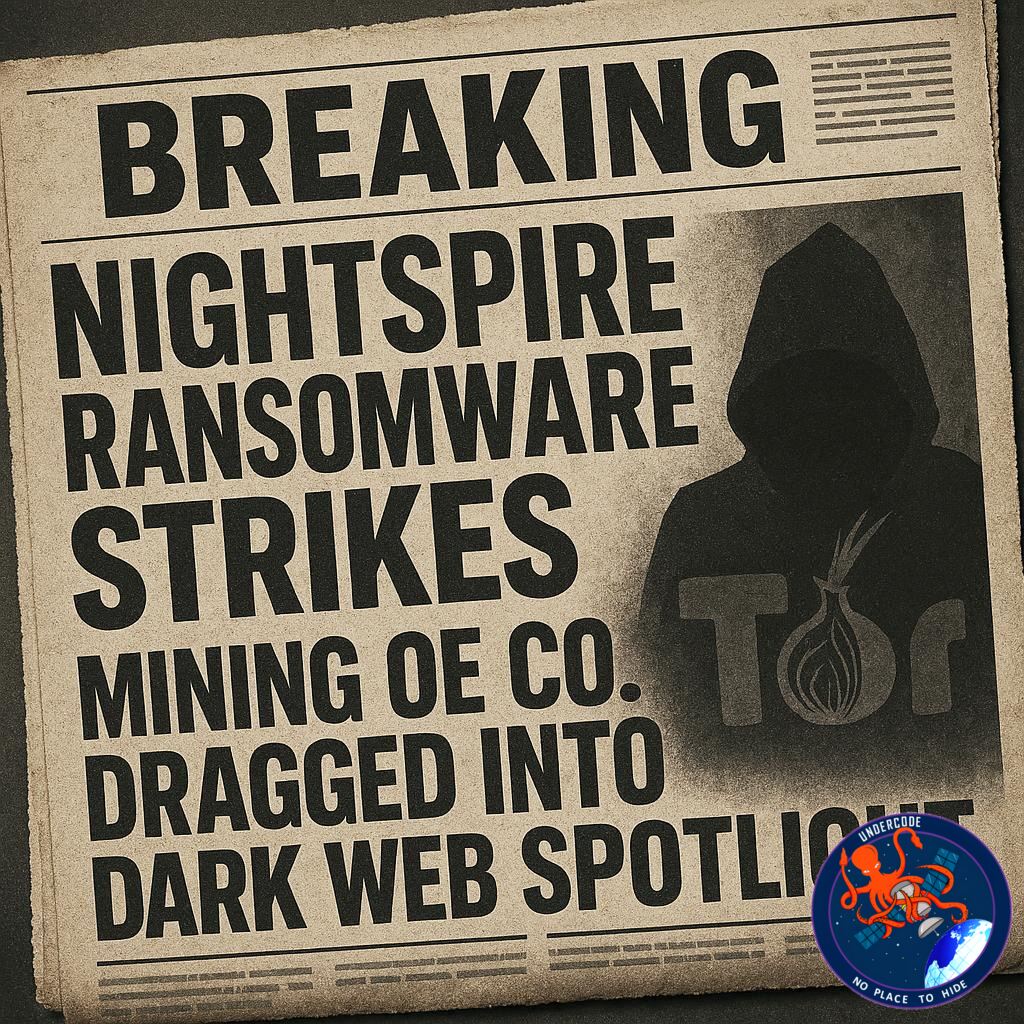
A New Ransomware Claim Shakes the Cybersecurity Landscape
A fresh ransomware victim claim has surfaced on underground channels, signaling yet another escalation in the ongoing cybercrime wave targeting industrial and resource-linked companies. According to threat intelligence monitoring, the Nightspire ransomware group has publicly listed Mining & Oe Co as its latest alleged victim, reigniting concerns around data extortion, operational disruption, and the growing boldness of ransomware operators in 2026.
Incident Snapshot and Timeline
The activity was detected on February 16, 2026, at 04:16 UTC+3, following a late-night post that began circulating across dark web monitoring feeds hours earlier. The claim quickly gained visibility after being flagged by threat intelligence analysts, indicating that the ransomware group is actively advertising new victims to increase pressure and credibility.
Who Is Behind the Alert
The detection was attributed to the ThreatMon Threat Intelligence Team, which monitors ransomware leak sites, underground forums, and extortion portals. Their systems identified the listing as part of Nightspire’s ongoing campaign, adding Mining & Oe Co to a growing roster of alleged victims.
What We Know About the Nightspire Ransomware Group
Nightspire is a relatively new but increasingly visible ransomware operation. Like many modern ransomware groups, it appears to follow a double-extortion model—encrypting systems while also threatening to leak sensitive data if ransom demands are not met. The public naming of victims is a psychological tactic designed to accelerate negotiations and amplify reputational damage.
Victim Profile: Mining & Oe Co in the Crosshairs
Mining & Oe Co, as referenced in the claim, appears to operate within an industrial or resource-related sector—industries that have become high-value targets due to their reliance on continuous operations and legacy infrastructure. While the company has not publicly confirmed the incident at the time of reporting, its appearance on a ransomware victim list alone can trigger regulatory, legal, and investor scrutiny.
How the Claim Surfaced on Social Platforms
The ransomware listing gained wider attention after being echoed in posts that tracked “trending” cybersecurity topics, briefly appearing alongside unrelated trending discussions. While such platforms are not primary sources of verification, they often act as early amplifiers for threat intelligence discoveries before official disclosures are made.
The Role of Open-Source Intelligence
ThreatMon’s tooling, developed by MonThreat, leverages open-source intelligence, indicators of compromise (IOCs), and command-and-control (C2) data to identify emerging threats. Their GitHub-hosted resources allow analysts to correlate ransomware activity across multiple campaigns, helping distinguish real intrusions from recycled or exaggerated claims.
Why Ransomware Groups Publicly Name Victims
Public victim listings serve several purposes. They validate the ransomware group’s operational capability, intimidate current and future targets, and apply public pressure on organizations to pay quickly. In some cases, the mere threat of data exposure can be more damaging than encryption itself, particularly for companies handling sensitive commercial or operational data.
Unverified Claim vs. Confirmed Breach
It is critical to note that a ransomware group’s claim does not automatically equal confirmation. Some groups exaggerate or reuse old data to appear more active than they are. However, repeated accurate claims build a group’s reputation, making each new listing harder for victims to dismiss without investigation.
What Undercode Say:
Ransomware as a Strategic Business Model
Nightspire’s behavior reflects a broader shift in ransomware from opportunistic attacks to structured, business-like operations. Groups now carefully select victims based on sector resilience, downtime tolerance, and likelihood of payment. Mining and industrial firms often rank high on that list due to the cascading costs of halted production.
Psychological Pressure Over Technical Sophistication
What stands out in this case is not technical novelty but strategic timing and visibility. By rapidly publicizing the victim name, Nightspire maximizes uncertainty. Even without releasing proof-of-data samples, the reputational risk alone can push organizations toward quiet negotiations.
The Growing Influence of Threat Intelligence Platforms
Independent threat intelligence platforms now act as de facto early warning systems. While they do not replace official disclosures, they shape the narrative long before companies are ready to respond publicly. This asymmetry increasingly favors attackers, who control the timing of exposure.
Silence as a Defensive Posture
Many companies choose not to comment immediately on ransomware claims, hoping to buy time for investigation and containment. However, in the era of rapid information sharing, silence can also be interpreted as confirmation, complicating crisis communications.
Data Leaks as the Real Endgame
Encryption is no longer the primary weapon. The real leverage lies in data theft—contracts, internal communications, technical schematics, or customer records. Even partial leaks can cause long-term damage that far exceeds the ransom demand itself.
Why 2026 Is Looking Worse Than 2025
Ransomware operations in 2026 are faster, louder, and more coordinated. Improved automation, access brokers, and malware-as-a-service ecosystems have lowered the barrier to entry, allowing groups like Nightspire to scale quickly without deep technical innovation.
What Organizations Should Be Doing Right Now
This incident underscores the need for continuous monitoring, segmented networks, offline backups, and rehearsed incident response plans. Companies that wait for confirmation before acting often lose valuable containment time.
The Trust Gap Between Victims and the Public
Without transparent disclosure frameworks, the public is left to rely on threat actors and third-party monitors for information. This imbalance erodes trust and allows ransomware groups to dominate the narrative.
🔍 Fact Checker Results
✅ The Nightspire ransomware group publicly listed Mining & Oe Co as a victim.
✅ The claim was detected by the ThreatMon Threat Intelligence Team.
❌ There is currently no public confirmation from Mining & Oe Co verifying a breach.
📊 Prediction
Ransomware groups like Nightspire will continue accelerating “name-and-shame” tactics in 2026, with faster victim disclosures and shorter negotiation windows. Industrial and resource-based companies are likely to remain prime targets unless sector-wide defensive standards and mandatory disclosure rules are strengthened.
🕵️📝✔️Let’s dive deep and fact‑check.
References:
Reported By: x.com
Extra Source Hub (Possible Sources for article):
https://stackoverflow.com
Wikipedia
OpenAi & Undercode AI
Image Source:
Unsplash
Undercode AI DI v2
Bing
🔐JOIN OUR CYBER WORLD [ CVE News • HackMonitor • UndercodeNews ]
📢 Follow UndercodeNews & Stay Tuned:
𝕏 formerly Twitter 🐦 | @ Threads | 🔗 Linkedin | 🦋BlueSky | 🐘Mastodon


