
Listen to this Post
 A Defining Moment for Artificial Intelligence in the Global South
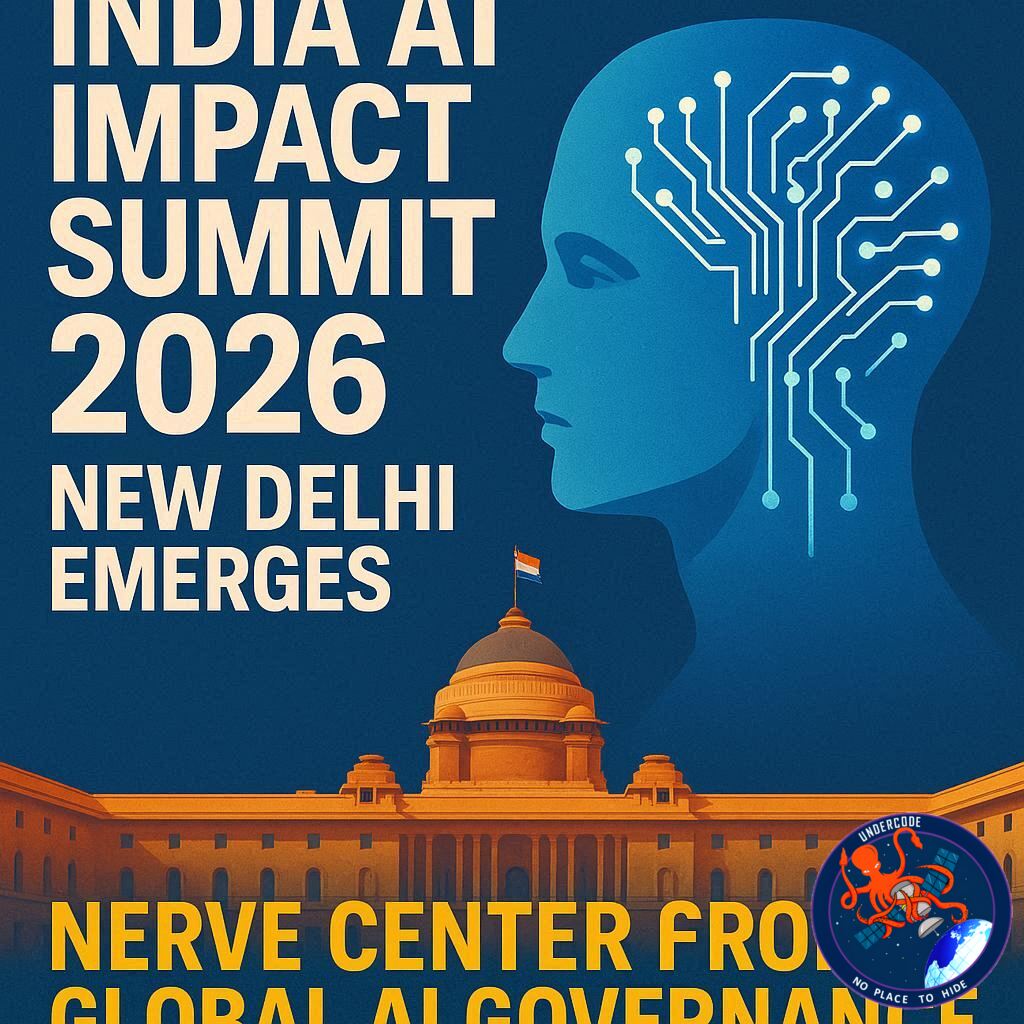
New Delhi has stepped into the global spotlight as it hosts the India AI Impact Summit 2026, an event that is being described as a turning point in the geopolitics of artificial intelligence. At the iconic Bharat Mandapam, Prime Minister Narendra Modi welcomed presidents, prime ministers, technology pioneers, and researchers from across continents, calling the gathering a moment of immense national pride. This is not just another technology conference. It is the first major AI summit hosted in the Global South, and it signals a strategic shift in who shapes the future rules of artificial intelligence.
The summit brings together more than 45 countries, global technology giants, startup innovators, and policy architects under a shared theme rooted in human-centric progress. As AI rapidly transforms economies, governance systems, and labor markets, India is positioning itself as both a builder of advanced AI systems and a bridge between developed and developing nations. The ambition is clear. Shape global AI norms while ensuring that innovation remains inclusive, responsible, and measurable in impact.
IndiaAI Mission and the Infrastructure Push
At the core of the summit lies India’s ambitious IndiaAI Mission. The government has committed USD 1.25 billion to build a comprehensive artificial intelligence ecosystem. More than 38,000 GPUs have been onboarded to create shared national compute infrastructure, enabling startups, researchers, and institutions to access high-performance computing resources. Twelve indigenous foundation models are currently under development, alongside more than 30 India-specific AI applications tailored for sectors such as agriculture, healthcare, education, and governance.
Talent development forms a central pillar of this strategy. Thousands of undergraduate, postgraduate, and doctoral students are being supported through structured programs aimed at strengthening research capacity and innovation. The objective is not merely to import global AI tools but to cultivate domestic expertise that can compete at scale.
Global Leaders Converge in New Delhi
The summit’s diplomatic weight is underscored by the presence of major global figures. French President Emmanuel Macron, Brazilian President Luiz Inacio Lula da Silva, and United Nations Secretary-General Antonio Guterres headline the international participation. Their attendance reflects growing recognition that AI governance is no longer a regional issue but a shared global responsibility.
The United States delegation, featuring senior government officials and executives from companies such as Microsoft, IBM, Zoom, Kyndryl, and Adobe, signals deeper collaboration on AI infrastructure, quantum computing, and trusted technologies. Discussions extend beyond innovation to encompass strategic domains such as critical minerals and resilient supply chains, highlighting how AI intersects with geopolitics and economic security.
Prime Minister Modi’s Vision of Inclusive AI
Prime Minister Narendra Modi framed the summit around the Sanskrit principle “Sarvajana Hitaya, Sarvajana Sukhaya,” meaning welfare for all and happiness for all. He emphasized that India’s AI transformation is powered by its 1.4 billion citizens, digital public infrastructure, and a vibrant startup ecosystem.
His remarks positioned the summit not as ceremonial diplomacy but as proof of India’s rapid advancement in science and technology. According to Modi, the world’s presence in New Delhi demonstrates confidence in India’s youth and its ability to contribute meaningfully to global development.
Industry Voices Stress Trust and Responsibility
Technology leaders used the summit platform to highlight ethical deployment and trust. Eric Yuan, founder and CEO of Zoom, stressed that AI must prioritize human connection, security, and values as it reshapes communication and work. Microsoft’s Natasha Crampton pointed to a widening AI adoption gap between the Global North and South, noting that AI usage in advanced economies is roughly double that of developing regions.
IBM executives reinforced the importance of building sovereign AI stacks, enabling nations to maintain control over data, infrastructure, and digital autonomy. The consistent message across panels was clear. AI should expand opportunity rather than displace livelihoods.
Bridging the Global AI Divide
One of the summit’s most urgent themes is narrowing disparities in AI adoption. As AI diffuses faster than any previous general-purpose technology, access remains uneven. Developing economies often lack computing resources, data infrastructure, and regulatory clarity. India’s approach seeks to address this gap by advocating shared compute frameworks and AI commons for public good.
The AI Impact Expo, spanning more than 70,000 square metres, showcases real-world applications in agriculture optimization, predictive healthcare, multilingual education tools, and digital public services. These demonstrations aim to prove that AI can solve grassroots challenges at scale rather than remain confined to elite research labs.
Strategic Diplomacy and Bilateral Engagements
Beyond keynote speeches, the summit is marked by intensive bilateral discussions. Leaders are exploring cooperation in ethical AI governance, climate-focused AI applications, digital public infrastructure partnerships, and cross-border innovation. Macron’s visit aligns with the India-France Year of Innovation 2026, while Lula’s delegation highlights South-South collaboration.
High-level meetings also address quantum computing integration, trusted technology frameworks, and resilient digital supply chains. The summit thus functions as both a policy laboratory and a geopolitical forum.
India as a Bridge Between Innovation and Equity
The summit’s overarching narrative casts India as a bridge. On one side stands Silicon Valley–style innovation, on the other, emerging economies seeking equitable access to AI tools. With over 800 million internet users and one of the fastest-growing startup ecosystems globally, India embodies scale and experimentation.
By hosting the first major AI summit in the Global South, India signals its intention to shape not just domestic AI capabilities but also global governance frameworks. The event seeks actionable outcomes rather than abstract declarations, focusing on measurable impact and collaborative infrastructure.
What Undercode Say:
India’s strategic timing is remarkable. The AI race is intensifying between major powers, yet governance frameworks remain fragmented. By hosting a large-scale summit at this moment, India positions itself as a neutral convening force rather than a partisan tech bloc. This is diplomatic engineering through technology.
The USD 1.25 billion investment under the IndiaAI Mission is significant, but the real leverage lies in how compute power is distributed. Onboarding 38,000 GPUs for shared access lowers entry barriers for startups and researchers. That democratization of compute may prove more transformative than headline funding numbers.
There is also a subtle geopolitical recalibration at play. When leaders like Emmanuel Macron and Luiz Inacio Lula da Silva gather in New Delhi to discuss AI norms, it signals diversification away from a purely US-China binary. India becomes the third gravitational center in AI diplomacy.
The emphasis on sovereign AI stacks is equally strategic. Data sovereignty is fast becoming as critical as energy security. Countries fear overreliance on foreign cloud and AI infrastructure. India’s call for trusted technology ecosystems aligns with a broader global anxiety about digital dependence.
The summit’s stress on inclusion is not rhetorical. AI adoption in the Global North far outpaces that of developing economies. Without intervention, this gap risks entrenching economic inequality. By advocating AI commons and shared compute frameworks, India is attempting to shape a more multipolar digital order.
Yet ambition must translate into execution. Building 12 indigenous foundation models is promising, but global competitiveness requires sustained funding, research depth, and private sector alignment. The challenge will be scaling these models beyond pilot stages into globally adopted platforms.
Another layer worth noting is talent geopolitics. By investing heavily in undergraduate, postgraduate, and doctoral AI education, India is securing long-term strategic capital. In the AI era, human expertise may be the most decisive resource.
The AI Impact Expo’s focus on agriculture and healthcare also reveals a pragmatic philosophy. Rather than chasing purely speculative AI applications, India is tying artificial intelligence to food security, rural productivity, and public health. That practical orientation may resonate strongly across the Global South.
There is also symbolism embedded in hosting the summit at Bharat Mandapam. The venue reflects India’s aspiration to project technological sophistication alongside cultural identity. Soft power and digital ambition are converging.
However, risks remain. Rapid AI diffusion without strong regulatory frameworks can amplify misinformation, labor displacement, and cybersecurity threats. Balancing innovation with accountability will require institutional agility.
If India successfully fosters collaborative frameworks among 45 nations, it could reshape global AI governance from a Western-centric narrative to a more distributed model. That would mark a historic inflection point.
The summit’s true legacy will not be measured by speeches but by policy instruments, joint research programs, and interoperable digital infrastructures created in its aftermath. Execution, not optics, will determine whether this moment becomes a milestone or merely a headline.
Fact Checker Results
✅ India has committed approximately USD 1.25 billion under the IndiaAI Mission to strengthen its AI ecosystem.
✅ Leaders from over 45 countries, including Emmanuel Macron and Luiz Inacio Lula da Silva, are participating in the summit.
❌ There is no verified evidence yet that shared global AI compute frameworks have been formally adopted at the summit.
Prediction
📊 India is likely to emerge as a central convening hub for AI governance across the Global South within the next five years.
📊 Collaborative AI infrastructure projects between India, Europe, and Latin America may accelerate following this summit.
📊 Increased investment in sovereign AI stacks could redefine digital alliances beyond traditional power blocs.
▶️ Related Video (76% Match):
🕵️📝✔️Let’s dive deep and fact‑check.
References:
Reported By: timesofindia.indiatimes.com
Extra Source Hub (Possible Sources for article):
https://www.quora.com/topic/Technology
Wikipedia
OpenAi & Undercode AI
Image Source:
Unsplash
Undercode AI DI v2
Bing
🔐JOIN OUR CYBER WORLD [ CVE News • HackMonitor • UndercodeNews ]
📢 Follow UndercodeNews & Stay Tuned:
𝕏 formerly Twitter 🐦 | @ Threads | 🔗 Linkedin | 🦋BlueSky | 🐘Mastodon


