
Listen to this Post
Introduction: A Leap Forward for Developers
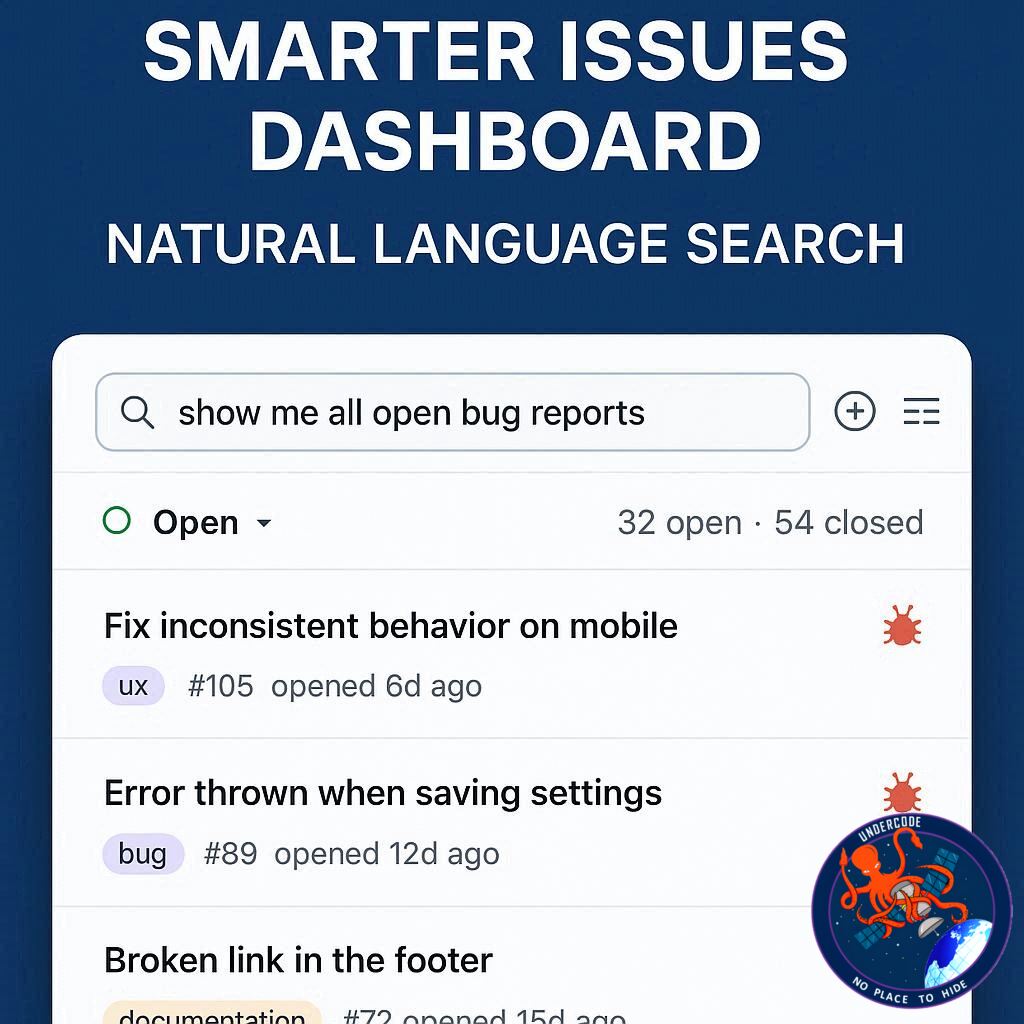
GitHub is taking a major step toward streamlining how developers track and manage issues across projects. With the rollout of semantic search on the Issues dashboard, users can now search for relevant issues using natural language, making the process faster, smarter, and far more intuitive. This update reflects GitHub’s ongoing commitment to improving developer productivity and responding to community feedback.
Streamlined Issue Search: What’s New
Starting this week, GitHub’s Issues dashboard will support semantic search in public preview. Unlike traditional keyword-based searches, semantic search understands the intent behind your queries, allowing you to find the most relevant issues across repositories using plain English. This enhancement extends the improved search experience first introduced for the issues index in January, following overwhelmingly positive feedback from the developer community.
Key Notes on Semantic Search
Searches not tied to a specific repository will be limited to your top 100 repositories.
Filter-only searches and exact-match queries (e.g., using quotation marks) will continue to use lexical search.
Users will see a preview banner on the dashboard with the option to revert to classic search if preferred.
Feedback can be shared directly in the GitHub Community.
Additional Improvements to GitHub Issues and Projects
GitHub isn’t stopping at search improvements. Several smaller but impactful updates have been made to enhance workflow efficiency:
Label and Milestone Pickers: Users who can apply labels but lack creation permissions will no longer see “Create new label/milestone” options.
Sub-Issue Creation: Clicking “Create sub-issue” now provides a loading indicator, giving immediate feedback while the form loads.
Third-Party Agent Assignment: In GitHub Projects, assigning a third-party agent to an issue now triggers the agent to start work immediately, fixing a previous delay.
Navigation Bar Optimization: To speed up page load times, GitHub Projects will no longer display issue counts in the top navigation while browsing repositories.
What Undercode Says: Analyzing the Impact
Semantic Search Enhances Developer Productivity
GitHub’s move toward semantic search reflects a broader trend in software development: AI-assisted tools that reduce friction in everyday workflows. By understanding query intent rather than relying purely on keywords, semantic search allows developers to locate relevant issues faster, especially in large, multi-repository projects.
Addressing Scalability Concerns
Limiting semantic searches to the top 100 repositories when not scoped to a single repository may seem restrictive, but it balances performance with utility. This approach ensures quick results without overloading GitHub’s search engine, which is critical for enterprise-scale projects.
Improved User Feedback Loops
The preview banner and optional switch back to classic search are excellent user-centric features. They allow developers to adapt gradually, experiment with the new system, and provide feedback, which GitHub can use to refine the feature before a full rollout.
Workflow Efficiency Through Minor Updates
The smaller updates—loading indicators, streamlined label/milestone pickers, and immediate agent activation—may appear minor but significantly enhance developer experience. Instant feedback during sub-issue creation reduces uncertainty, while fixing third-party agent assignment ensures smoother task delegation and project tracking.
Performance Optimizations Matter
Removing the top navigation issue count might seem subtle, but it demonstrates GitHub’s attention to page load times and overall responsiveness. For developers managing multiple repositories or working on large projects, even small performance improvements can have a cumulative impact on daily efficiency.
Integration with AI-Driven Development Tools
Semantic search aligns GitHub with a growing ecosystem of AI-powered development tools. As more teams adopt AI assistance for code review, debugging, and issue tracking, GitHub’s updates ensure it remains a central, intelligent hub for project management.
Community-Driven Development
The updates reflect GitHub’s responsiveness to user feedback, highlighting a collaborative development philosophy. By listening to the community, GitHub not only improves its platform but also fosters trust and long-term engagement with developers.
Long-Term Implications for Project Management
In the future, semantic search could evolve to include predictive suggestions, automated issue tagging, and AI-generated summaries. These enhancements would further reduce the time spent searching for issues and increase time spent on development.
Accessibility and Onboarding
By simplifying issue search and management, GitHub also lowers the barrier for new developers onboarding into complex projects. Semantic search helps newcomers understand project history and current bottlenecks without extensive prior knowledge.
Cross-Team Collaboration Benefits
The ability to quickly locate relevant issues across repositories improves cross-team collaboration. Teams can track dependencies, identify overlapping work, and prevent duplicate efforts, making large-scale projects more manageable.
Strategic Positioning in the Market
These updates also strengthen GitHub’s position against competitors like GitLab and Bitbucket. By offering a more intelligent, user-friendly interface and AI-assisted features, GitHub continues to lead in developer-centric innovation.
What This Means for Open Source Projects
For open source maintainers, semantic search allows for better triaging of community-reported issues. This can lead to faster bug fixes, more efficient feature development, and increased contributor satisfaction.
Potential Challenges and Limitations
Despite its advantages, semantic search is not a silver bullet. Users may encounter occasional inaccuracies in intent detection, especially with highly technical queries. Continuous iteration and community feedback will be crucial to address these limitations.
Conclusion: Incremental but Meaningful Upgrades
Overall, GitHub’s latest updates—semantic search and interface refinements—represent thoughtful, incremental improvements. They may not be revolutionary individually, but collectively they streamline workflows, reduce friction, and enhance developer productivity. GitHub continues to demonstrate that user-focused design and intelligent features are central to modern software development.
🔍 Fact Checker Results
✅ Semantic search rollout is confirmed in public preview for the Issues dashboard.
✅ Label/milestone picker updates and agent assignment fixes are live in GitHub Projects.
❌ No evidence suggests semantic search currently supports searches beyond the top 100 repositories without scoping.
📊 Prediction
GitHub’s semantic search is likely to become a standard tool for both enterprise and open-source projects, gradually expanding in capability. Future iterations could include AI-driven suggestions, cross-repository analytics, and predictive issue management, making GitHub not just a hosting platform but a central hub for intelligent project coordination.
If you want, I can also create a catchy, SEO-optimized headline version of this article that could attract more clicks and reads online.
🕵️📝✔️Let’s dive deep and fact‑check.
References:
Reported By: github.blog
Extra Source Hub (Possible Sources for article):
https://www.pinterest.com
Wikipedia
OpenAi & Undercode AI
Image Source:
Unsplash
Undercode AI DI v2
Bing
🔐JOIN OUR CYBER WORLD [ CVE News • HackMonitor • UndercodeNews ]
📢 Follow UndercodeNews & Stay Tuned:
𝕏 formerly Twitter 🐦 | @ Threads | 🔗 Linkedin | 🦋BlueSky | 🐘Mastodon


