
Listen to this Post
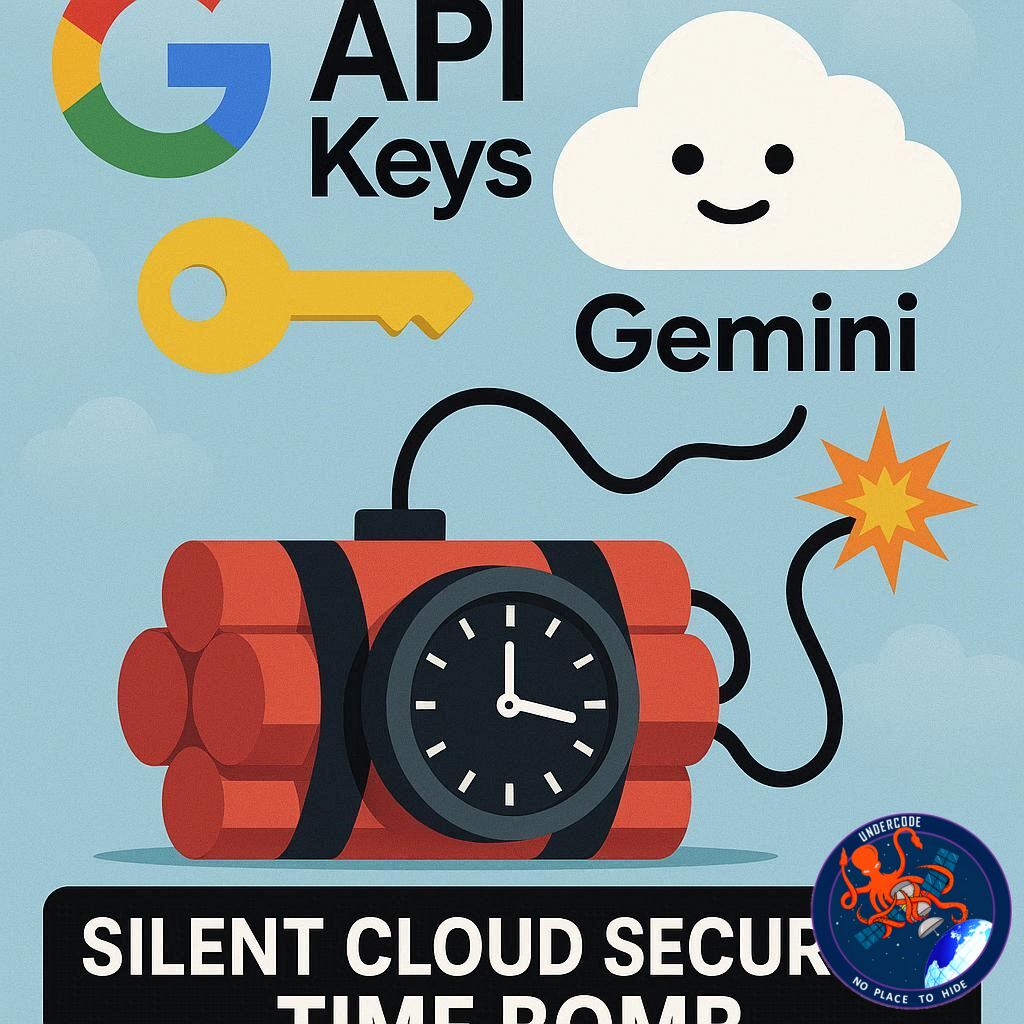
A Quiet Assumption That Suddenly Became Dangerous
For years, developers treated client-side Google API keys as harmless necessities—strings embedded in JavaScript to enable maps, analytics, video embeds, and Firebase features. They were widely considered “safe enough” to expose because their role was limited to identifying a project, not authorizing sensitive actions. That long-standing assumption is now cracking. As generative AI adoption accelerates, those same exposed keys can quietly transform into authentication tokens for Gemini, opening the door to unexpected access, data exposure, and real financial damage.
the Original
The article reveals a growing security issue tied to exposed Google API keys in public-facing JavaScript. Historically, these keys appeared openly across countless websites to support services like Maps or YouTube embeds. Developers assumed this exposure was acceptable because the keys acted mainly as identifiers rather than full credentials.
That assumption weakened dramatically with the rise of Gemini. When projects enable Gemini’s Generative Language API, existing API keys—some exposed for years—can suddenly authenticate AI requests. Without any change to the website code, a once-benign key may gain the ability to query Gemini endpoints, list models, and generate billable usage.
Researchers from TruffleSecurity analyzed the November 2025 snapshot of Common Crawl and discovered more than 2,800 live Google API keys embedded on public web pages. These keys spanned multiple industries and even appeared on properties owned by Google itself.
The researchers demonstrated that an exposed key could be used to interact with Gemini API endpoints, expanding the risk from simple identification to potential data access and billing abuse. The most alarming aspect is that this privilege escalation can happen automatically when Gemini is enabled in a cloud project—without developers realizing their old keys have become more powerful.
Google reportedly classified the issue as a single-service privilege escalation and says it has added protections. Official Gemini troubleshooting guidance suggests the company is proactively blocking Gemini access for known leaked keys. Still, developers are urged to audit their projects, review whether the Generative Language API is enabled, rotate exposed keys, apply strict usage restrictions, and move sensitive operations server-side wherever possible.
What Undercode Say:
This issue exposes a deeper problem in how cloud security assumptions age over time. API keys are not static in meaning; their power evolves alongside the services attached to them. A key that was relatively harmless in 2019 can become a financial liability in 2026 without a single line of frontend code changing.
The Gemini case highlights a structural risk in cloud ecosystems: privilege inheritance. When new services are added to a project, existing credentials often gain access by default. That design favors convenience and rapid adoption, but it quietly undermines the principle of least privilege. In practice, it means yesterday’s shortcuts become today’s vulnerabilities.
What makes this especially dangerous is visibility. Exposed JavaScript keys are easy for attackers to harvest at scale. Automated crawlers can scrape thousands of sites, test keys against Gemini endpoints, and immediately monetize them through token consumption. This is not a hypothetical threat—it is an automation-friendly abuse path with clear financial incentives.
There is also a psychological trap at play. Many developers still mentally categorize Google API keys as “semi-public.” That mindset lingers from years of documentation and examples that normalized exposing them. Gemini changes the risk profile entirely, yet developer habits lag behind platform evolution.
Google’s response—blocking known leaked keys and classifying the issue narrowly—helps reduce immediate damage, but it does not eliminate the underlying pattern. As more AI services integrate into existing cloud projects, similar privilege escalations are likely to surface. The real fix is cultural as much as technical: teams must treat all API keys as potentially sensitive credentials, regardless of historical precedent.
From a defensive standpoint, the recommendations are clear but often neglected. Key inventories are outdated, restrictions are too permissive, and rotation policies are inconsistent. Moving AI calls server-side is not just a best practice anymore; it is becoming a necessity for cost control and abuse prevention.
Ultimately, this incident is less about Gemini specifically and more about the hidden costs of cloud convenience. When platforms evolve faster than security assumptions, attackers are the first to notice—and the first to profit.
Fact Checker Results
The exposure of Google API keys in public JavaScript is a long-documented and verifiable practice.
The ability for enabled Gemini APIs to authenticate requests using existing keys aligns with Google Cloud’s permission model.
No evidence contradicts the claim that billing abuse is a realistic risk when exposed keys retain unrestricted access.
Prediction
As generative AI becomes a default feature in cloud platforms, similar API key privilege escalations will surface across other providers. Organizations that fail to reclassify “legacy” credentials as high-risk assets will see rising AI-related cloud bills, followed by a surge in security incidents driven not by new bugs—but by old assumptions.
🕵️📝✔️Let’s dive deep and fact‑check.
References:
Reported By: www.bitdefender.com
Extra Source Hub (Possible Sources for article):
https://stackoverflow.com
Wikipedia
OpenAi & Undercode AI
Image Source:
Unsplash
Undercode AI DI v2
Bing
🔐JOIN OUR CYBER WORLD [ CVE News • HackMonitor • UndercodeNews ]
📢 Follow UndercodeNews & Stay Tuned:
𝕏 formerly Twitter 🐦 | @ Threads | 🔗 Linkedin | 🦋BlueSky | 🐘Mastodon


