
Listen to this Post
Introduction: When Self-Help Meets Artificial Intelligence
Life coaching has always carried a certain stereotype. The endlessly optimistic mentor. The calm smile. The carefully curated affirmations. For many people, especially those skeptical of motivational culture, that brand of positivity feels artificial, even exhausting. So what happens when life coaching moves into the digital age and trades incense and inspirational quotes for behavioral algorithms and machine learning?
That question becomes even more intriguing when the coach behind the app is Mark Manson, the blunt voice behind the bestselling book The Subtle Art of Not Giving a Fck. Instead of preaching relentless positivity, Manson built his reputation dismantling it. His philosophy centers on responsibility, self-awareness, and confronting uncomfortable truths. Now, that philosophy powers an AI mentor called Purpose, an app designed to guide users through personal growth with honesty rather than flattery.
A Skeptic’s Decision to Try an AI Life Coach
The reviewer had never worked with a life coach before. In fact, the idea of one felt unappealing. The typical life coach persona seemed overly cheerful and detached from real-world struggle. But discovering that Mark Manson had developed an AI-powered coaching app changed the equation.
Purpose promised something different. It claimed to avoid toxic positivity and instead offer grounded, behavioral-science-driven feedback. Rather than vague inspiration, it aimed to deliver direct guidance. That alone made it worth exploring.
What Is Purpose and How Does It Work?
Purpose functions as a conversational AI mentor. Users share thoughts, challenges, and frustrations. The system responds with AI-generated feedback designed to challenge thinking patterns, identify recurring themes, and convert abstract self-help ideas into daily, measurable action.
It feels similar to a focused version of ChatGPT, but with memory. The app tracks ongoing conversations, remembers previous concerns, and builds a psychological profile over time. It is less about answering random questions and more about mapping behavioral patterns and personal narratives.
Grounded in behavioral science principles and Manson’s direct philosophy, the goal is not inspiration alone. It is structured change.
The Onboarding Assessment and Psychological Profiling
The experience begins with a structured onboarding process. Users answer detailed questions about their values, struggles, goals, and perceived obstacles. From these responses, the app constructs an initial psychological snapshot.
Surprisingly, the reviewer felt the system quickly captured core personality traits and recurring thought patterns. While it could not replicate the nuanced understanding of a longtime friend, its psychological insights felt precise enough to be impressive.
This early accuracy built credibility. It suggested the AI was not just offering generic advice but tailoring responses based on personal data.
Conversational Depth and Pattern Recognition
As conversations continued, the app demonstrated contextual memory. It recalled previous discussions and highlighted recurring themes. When similar excuses or limiting beliefs resurfaced, the AI pointed them out.
This was not a passive chatbot. It actively monitored behavioral loops and confronted self-sabotage. If a justification sounded like avoidance, the app said so. If patterns repeated, it identified them.
That confrontation, while uncomfortable, became one of the defining features of the experience.
The Emotional Discomfort of AI Introspection
Talking to an AI about personal struggles is not immediately natural. Sharing inner doubts with a digital system creates a strange tension. It feels personal, yet artificial.
The reviewer admitted that the interaction never felt entirely natural. Yet perhaps that discomfort was part of the value. The slight emotional distance may allow users to be more honest, precisely because the AI is not human.
There is no fear of judgment. But there is still accountability.
Quests: Turning Reflection into Action
Purpose goes beyond conversation. It introduces “quests,” structured missions designed to address specific life areas such as career clarity, relationship health, or breaking bad habits.
Each quest includes reflection exercises, micro-actions, progress tracking, and pattern recognition. Instead of simply discussing problems, users take incremental steps toward change.
One standout experience was the Personal Growth Potential quest. It explored mindset type, inner dialogue, and resilience levels. The structured format forced reflection in a way that felt deliberate and focused. Rather than vague journaling, it created measurable forward movement.
Tough Love as a Feature, Not a Bug
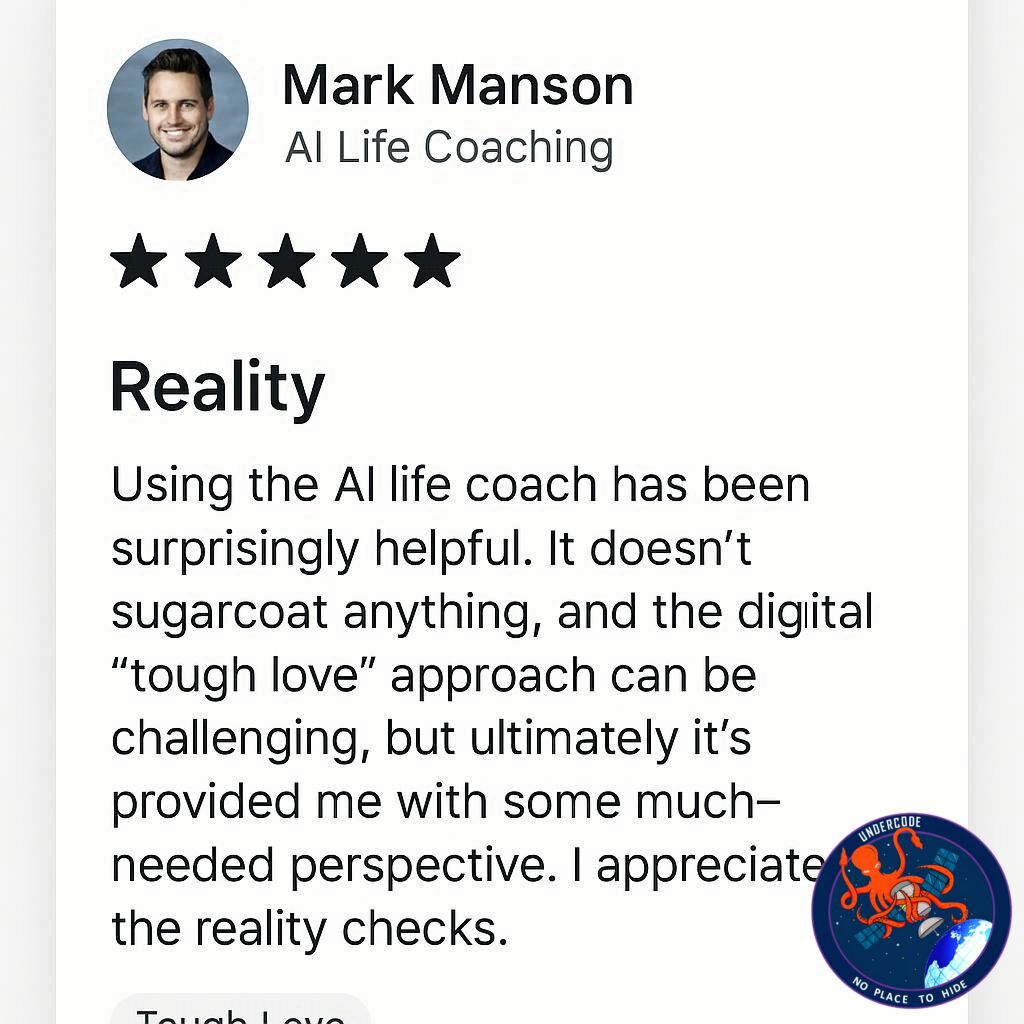
Purpose is not designed to flatter. It is not a yes-man. When the system detects excuses or rationalizations, it challenges them directly.
For users seeking affirmation, this approach may feel abrasive. For those craving honest accountability, it may feel refreshing.
The app positions tough love as a strength. It assumes growth requires friction. And it is consistent in delivering that friction.
Pricing and Accessibility
Purpose offers a seven-day free trial. After that, the premium subscription costs $19.99 per month. That places it in the same range as many wellness apps, though with a distinctly different tone.
The value proposition depends largely on whether users respond well to AI-driven accountability.
What Undercode Say:
The Rise of AI as a Behavioral Mirror
Purpose represents a broader cultural shift. Artificial intelligence is no longer just a productivity tool. It is becoming a psychological mirror. Instead of helping us write emails faster, it is helping us think differently.
The real innovation here is not the chatbot interface. It is persistent pattern tracking. Humans are notoriously bad at noticing their own cognitive loops. We rationalize. We justify. We rewrite our narratives to protect our ego. An AI system that logs conversations over time can detect repetition without emotional bias.
That changes the coaching dynamic.
The Commercialization of Digital Accountability
At $19.99 per month, Purpose sits at the intersection of self-improvement and subscription economics. Traditional life coaching can cost hundreds of dollars per session. Compared to that, the app appears affordable. Yet the scalability of AI means the company can offer personalized feedback at mass scale with minimal marginal cost.
This raises a key question. Is AI coaching democratizing personal development, or monetizing emotional vulnerability?
The answer may be both.
Behavioral Science Meets Algorithmic Feedback
The app’s reliance on behavioral science frameworks adds legitimacy. Structured reflection, micro-actions, and habit loops are well-documented psychological tools. By embedding these into daily interactions, Purpose creates a system of continuous reinforcement.
The strength lies in repetition. Growth rarely comes from a single insight. It comes from repeated confrontation with the same truth until behavior shifts.
An AI that never forgets becomes uniquely positioned to enforce that repetition.
Emotional Safety Versus Emotional Depth
There is still a ceiling to AI coaching. Empathy, lived experience, and nuanced emotional intelligence remain deeply human traits. While the app can simulate understanding, it does not feel.
For some users, that neutrality is empowering. For others, it may feel hollow.
The future of digital coaching may lie in hybrid models. AI for pattern detection and structure. Humans for emotional resonance.
Cultural Resistance to “Toxic Positivity”
Mark Manson’s involvement is strategic. His brand rejects feel-good slogans and embraces uncomfortable accountability. That philosophy aligns perfectly with algorithmic coaching. Machines do not need to protect your feelings. They optimize for logic and consistency.
This creates a cultural contrast. Traditional self-help often emphasizes affirmation. Purpose emphasizes correction.
In a society increasingly skeptical of performative positivity, that may resonate deeply.
Data, Privacy, and Psychological Exposure
One overlooked dimension is data security. Sharing intimate fears and patterns with an AI requires trust. Users are effectively building a psychological dossier inside a digital system.
For AI life coaching to mature, transparency about data usage and storage will be critical. Emotional data is arguably more sensitive than financial data.
The companies that succeed will be those that treat it with equivalent seriousness.
The Long-Term Impact on Self-Improvement Culture
If AI mentors become normalized, the barrier to introspection lowers dramatically. Millions of people who would never hire a human coach may engage with a digital one.
That could lead to a generation more comfortable with structured self-reflection. Or it could produce dependency on algorithmic validation.
The outcome depends on how these tools are framed. As support systems, they empower. As authority figures, they risk replacing internal judgment.
Purpose, at least in its current form, seems designed to strengthen internal accountability rather than override it.
Fact Checker Results
✅ Purpose is developed under the philosophy of Mark Manson and reflects his anti–toxic positivity stance.
✅ The app includes onboarding assessments, conversational memory, and structured “quests” for growth.
❌ The app does not replace licensed therapy or guarantee clinical psychological outcomes.
Prediction
🔮 AI life coaching platforms will expand rapidly as subscription-based wellness tools gain traction.
📈 Hybrid models combining human mentors with AI pattern tracking are likely to dominate the market.
⚖️ Increased scrutiny around data privacy and emotional AI ethics will shape the next phase of development.
🕵️📝✔️Let’s dive deep and fact‑check.
References:
Reported By: www.techradar.com
Extra Source Hub (Possible Sources for article):
https://www.instagram.com
Wikipedia
OpenAi & Undercode AI
Image Source:
Unsplash
Undercode AI DI v2
Bing
🔐JOIN OUR CYBER WORLD [ CVE News • HackMonitor • UndercodeNews ]
📢 Follow UndercodeNews & Stay Tuned:
𝕏 formerly Twitter 🐦 | @ Threads | 🔗 Linkedin | 🦋BlueSky | 🐘Mastodon


