
Listen to this Post
A Strategic Display Upgrade That Redefines Apple’s Monitor Lineup
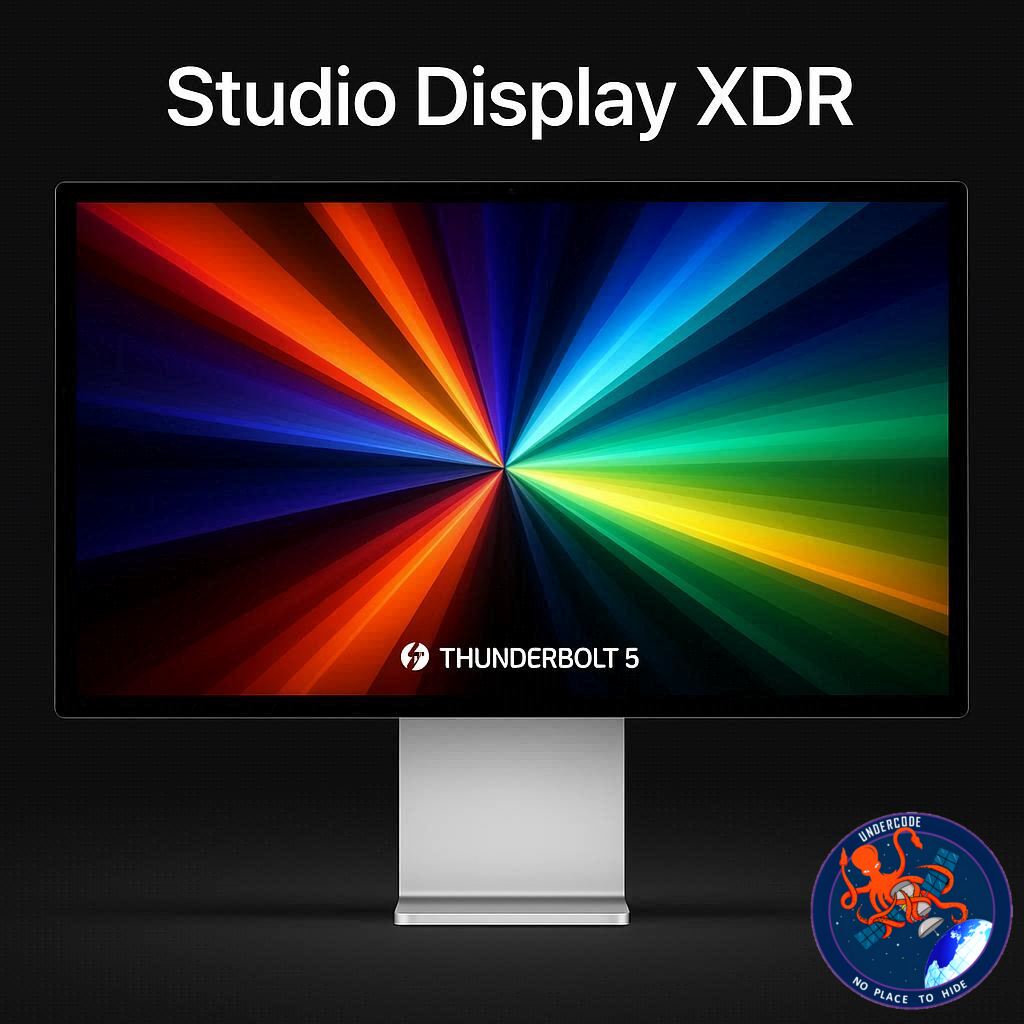
Apple has officially refreshed its external monitor lineup, introducing the second-generation Studio Display alongside a brand-new high-end model, the Studio Display XDR. While the standard model keeps its familiar 27-inch 5K Retina panel and $1,599 starting price, the real story lies in the refinements: better audio, upgraded connectivity, and a smarter camera system. Meanwhile, the Studio Display XDR steps in to replace the Pro Display XDR, delivering mini-LED backlighting, ProMotion 120Hz refresh rate, and brightness levels that push into professional territory.
Preorders begin March 4, 2026, with shipping scheduled for March 11, 2026. Apple is clearly repositioning its display ecosystem under one unified Studio branding strategy, aiming to serve both creative professionals and demanding enterprise users without fragmenting the lineup.
The Core Studio Display Stays Familiar but Gets Smarter
The second-generation Studio Display retains the 27-inch 5K Retina panel that first launched in 2022. It still offers 5120 by 2880 resolution, over 14 million pixels, P3 wide color support, and brightness up to 600 nits. The refresh rate remains capped at 60Hz, meaning users hoping for ProMotion on the standard model will need to look elsewhere.
Yet Apple’s restraint with the panel does not mean stagnation. Instead of altering the display itself, the company focused on improving the surrounding experience.
Upgraded 12MP Center Stage Camera With Desk View
One of the biggest improvements is the enhanced 12-megapixel Center Stage camera. It now supports Desk View, a feature designed for creators, educators, and professionals who frequently demonstrate products or documents during video calls. Apple has also refined image processing, promising better clarity and more natural framing.
This signals Apple’s recognition that monitors are no longer passive screens. In a remote-first world, they function as communication hubs.
Enhanced Six-Speaker Audio With Deeper Bass
The Studio Display already had a surprisingly capable sound system, but Apple has strengthened it further. The new version features a six-speaker array with four force-canceling woofers and two tweeters. According to Apple, bass response is 30 percent deeper than the previous generation.
For users who rely on built-in audio rather than external speakers, this matters. The display becomes more self-sufficient, reinforcing its plug-and-play philosophy.
Thunderbolt 5 Brings Future-Ready Connectivity
Connectivity receives one of the most important upgrades. The new Studio Display now includes two Thunderbolt 5 ports alongside two USB-C ports with up to 96W power delivery. Thunderbolt 5 dramatically increases bandwidth, enabling faster data transfer and improved support for high-resolution workflows.
This change future-proofs the display, especially for Mac users investing in next-generation hardware.
Pricing Strategy Remains Steady at $1,599
Despite the upgrades, Apple keeps the entry price at $1,599 for the tilt-adjustable stand version. This stability may surprise observers given the addition of Thunderbolt 5 and audio improvements.
Apple appears intent on maintaining accessibility for creative professionals who want a premium external display without stepping into ultra-high-end territory.
Studio Display XDR Replaces Pro Display XDR
The new Studio Display XDR enters as the spiritual successor to the Pro Display XDR, but with a redesigned philosophy. Instead of a massive 32-inch panel, Apple opts for a 27-inch 5K Retina XDR display powered by advanced mini-LED technology.
The starting price is $3,299, positioning it firmly in the professional market. However, unlike its predecessor, the stand is included in the base price.
Mini-LED Backlighting With 2,000+ Dimming Zones
The Studio Display XDR incorporates over 2,000 local dimming zones via mini-LED backlighting. This allows for significantly better contrast ratios and more precise control over brightness compared to traditional LED panels.
HDR performance reaches up to 2,000 nits peak brightness, while SDR can sustain up to 1,000 nits. These numbers place the XDR model among elite professional monitors designed for video editing, color grading, and high-dynamic-range workflows.
ProMotion 120Hz With Adaptive Sync
Unlike the standard Studio Display, the XDR model supports ProMotion with a variable refresh rate ranging from 47Hz to 120Hz. Adaptive Sync dynamically adjusts based on content, ensuring smoother scrolling, responsive gaming visuals, and better playback performance.
This is the feature many hoped would arrive on the base model, but Apple reserves it for the premium tier.
Medical Imaging Calibration and DICOM Support
One unexpected addition is the Medical Imaging Calibrator and DICOM preset support, allowing radiologists to accurately view diagnostic images. Apple notes that macOS Medical Imaging Calibrator is pending FDA clearance in the United States.
This move pushes Apple into specialized enterprise sectors, expanding beyond creative professionals into healthcare environments.
Unified Design Language Across Both Models
The Studio Display XDR drops the lattice rear design of the Pro Display XDR and instead mirrors the aesthetic of the standard Studio Display. The result is a cohesive, aluminum-focused design language across the entire lineup.
It is slightly thicker and heavier, but visually consistent.
Preorders and Included Accessories
Both models include a one-meter Thunderbolt 5 cable in the box. Preorders begin March 4, 2026, with shipments starting March 11, 2026.
Apple now offers only two monitors under the Studio branding, simplifying its display strategy.
What Undercode Say:
Apple’s move here is less about radical innovation and more about ecosystem consolidation. The company understands that displays are long-term investments. Most professionals do not upgrade monitors annually. They expect longevity, reliability, and seamless Mac integration.
By keeping the base Studio Display at 60Hz, Apple draws a clear line between consumer and professional tiers. This is deliberate segmentation, not technical limitation. A 120Hz panel would blur differentiation and potentially cannibalize XDR sales.
Thunderbolt 5 may be the quiet revolution in this update. As workflows shift toward 8K video, AI-assisted rendering, and real-time 3D modeling, bandwidth becomes critical. Apple is preparing users for heavier computational tasks without forcing them to buy the premium model.
The XDR model’s mini-LED implementation suggests Apple is aligning its desktop displays with technologies used in high-end MacBook Pro panels. Consistency across product lines reinforces brand identity and simplifies color workflow matching.
The addition of medical imaging calibration is particularly strategic. Healthcare institutions represent high-value, long-term procurement contracts. Entering regulated industries requires confidence in calibration precision. Apple signaling FDA clearance ambitions indicates serious enterprise intentions.
From a pricing standpoint, maintaining $1,599 for the base model protects Apple’s mid-tier dominance. At $3,299, the XDR version competes not only with premium creative monitors but also with reference-grade displays used in production studios.
The risk lies in perception. Some consumers may view the unchanged 60Hz refresh rate as stagnation. In an era where even mid-range monitors push 144Hz, Apple bets that resolution, color accuracy, and integration outweigh refresh rate for most of its audience.
Another interesting factor is display size. Apple’s decision to keep both models at 27 inches may disappoint those seeking larger canvases. Yet pixel density at 5K remains optimal at this size, preserving sharpness without scaling compromises.
Ultimately, this release demonstrates Apple’s preference for iterative refinement over disruptive redesign. The company is not chasing spec-sheet headlines. It is reinforcing a controlled ecosystem where hardware, software, and workflow converge seamlessly.
The real test will come in hands-on evaluations, especially regarding HDR performance consistency and sustained brightness under professional workloads.
Fact Checker Results
✅ The standard Studio Display retains a 27-inch 5K Retina panel with 60Hz refresh rate.
✅ The Studio Display XDR features mini-LED backlighting with over 2,000 dimming zones and up to 120Hz refresh rate.
❌ The base Studio Display does not include ProMotion 120Hz support.
Prediction
📊 Apple’s Thunderbolt 5 integration will accelerate adoption among creative professionals upgrading to next-gen Macs.
📊 The Studio Display XDR is likely to gain traction in healthcare and high-end production studios if FDA clearance proceeds smoothly.
📊 Future iterations may introduce larger panel sizes to address demand for expanded workspace without sacrificing pixel density.
🕵️📝✔️Let’s dive deep and fact‑check.
References:
Reported By: www.techradar.com
Extra Source Hub (Possible Sources for article):
https://www.github.com
Wikipedia
OpenAi & Undercode AI
Image Source:
Unsplash
Undercode AI DI v2
Bing
🔐JOIN OUR CYBER WORLD [ CVE News • HackMonitor • UndercodeNews ]
📢 Follow UndercodeNews & Stay Tuned:
𝕏 formerly Twitter 🐦 | @ Threads | 🔗 Linkedin | 🦋BlueSky | 🐘Mastodon


