
Listen to this Post
Introduction: A Silent Weapon in the Cybercrime Arsenal
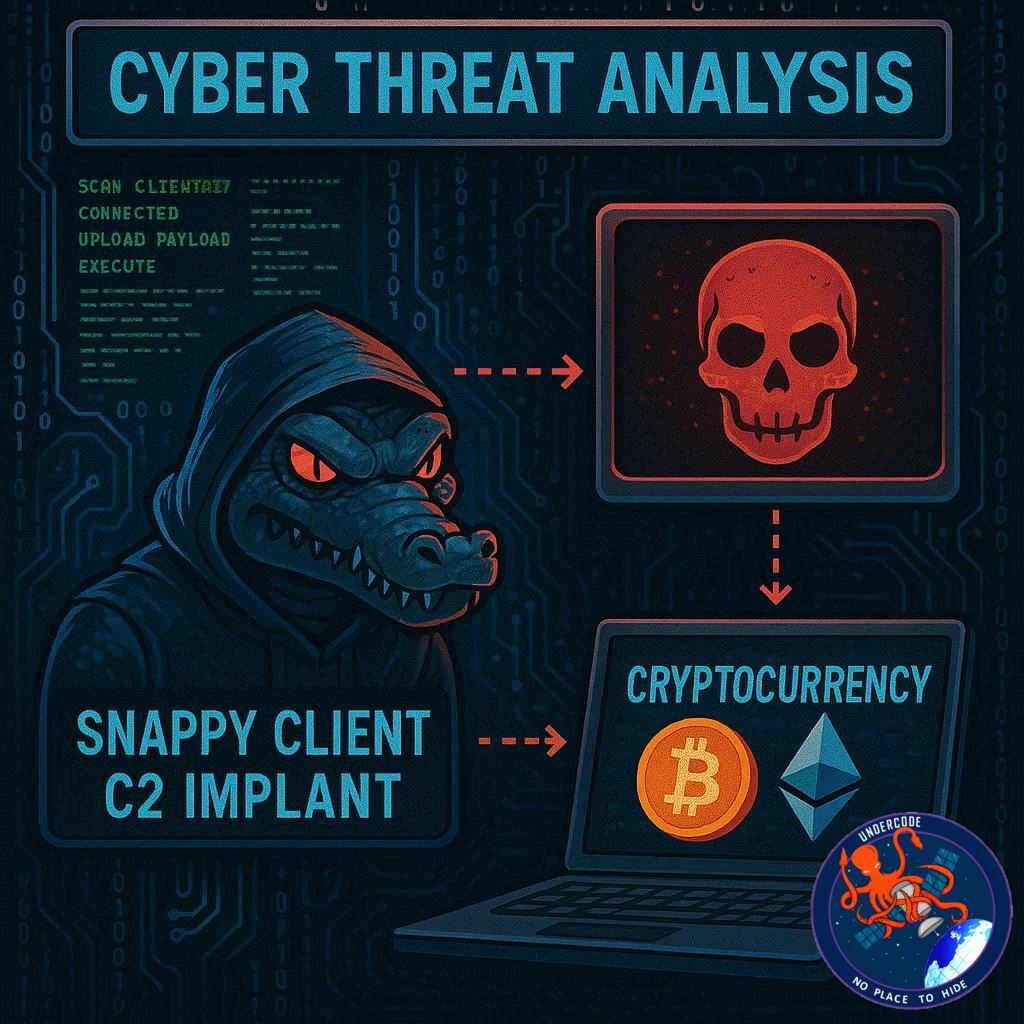
Cyber threats are no longer loud, destructive events that immediately alert victims. Instead, modern attacks are engineered for silence, persistence, and precision. The emergence of the SnappyClient command-and-control implant reflects this evolution. Designed not just to infiltrate systems but to remain hidden while siphoning valuable data, this malware represents a new class of cyber espionage tools focused heavily on cryptocurrency theft. Its ability to blend into legitimate processes while maintaining full remote control over infected systems makes it particularly dangerous in today’s digital economy.
Deep Summary: Inside the Mechanics of SnappyClient Malware
SnappyClient, first identified in December 2025, is a sophisticated command-and-control implant written in C++. It functions as a powerful backdoor, giving attackers remote access to compromised machines while enabling a wide range of malicious activities. Unlike basic malware, SnappyClient is built with modular flexibility and stealth as its core design principles.
The malware supports numerous commands that allow attackers to fully monitor and control an infected system. These include capturing screenshots, logging keystrokes, stealing browser data, extracting sensitive application information, and executing remote shell commands. This effectively transforms the victim’s system into a controlled node within an attacker’s infrastructure.
One of the most concerning aspects of SnappyClient is its ability to evade detection. It employs advanced techniques such as bypassing the Antimalware Scan Interface and executing direct system calls. It also injects malicious code into legitimate processes, allowing it to operate under the disguise of trusted applications. These methods significantly reduce the likelihood of detection by traditional security tools.
The malware is typically delivered through a loader known as HijackLoader, a modular malware distribution tool. HijackLoader itself has a history of being used to deploy other dangerous threats, including credential stealers and banking malware. Its modular nature allows attackers to dynamically load and execute different payloads, making it highly adaptable.
Attack campaigns involving SnappyClient often begin with social engineering tactics. In one instance, attackers created a fake website mimicking a major telecommunications company. When users visited the site, a malicious executable was automatically downloaded. Once executed, it deployed SnappyClient onto the system. In another method, attackers used a ClickFix technique, demonstrating their ability to diversify infection vectors.
Once installed, SnappyClient ensures persistence by modifying Windows registry autorun keys or creating scheduled tasks. It then establishes encrypted communication with its command-and-control servers using the ChaCha20-Poly1305 encryption algorithm. This ensures that all data exchanged between the infected system and the attacker remains hidden from monitoring tools.
The malware is highly compatible across multiple browsers, including Chrome, Firefox, Edge, Brave, and Opera. It can extract login credentials, cookies, and session data, giving attackers access to user accounts, particularly cryptocurrency wallets. Additionally, attackers can dynamically update the malware’s configuration, instructing it to target specific applications or data sources over time.
Unlike ransomware, which is immediately visible due to its disruptive nature, SnappyClient operates quietly. It is designed for long-term infiltration, allowing attackers to maintain access for extended periods without detection. This makes it especially dangerous for organizations and individuals dealing with sensitive financial data.
What Undercode Say: The Strategic Shift Toward Silent Cyber Warfare
The emergence of SnappyClient is not just another malware story. It signals a deeper shift in cyberattack strategy, where persistence and invisibility outweigh immediate impact. Attackers are no longer interested in quick wins alone. Instead, they are investing in tools that allow them to stay embedded within systems for weeks or even months, extracting value over time.
This approach aligns perfectly with the rise of cryptocurrency as a primary target. Unlike traditional banking systems, crypto wallets often lack centralized recovery mechanisms. Once access is gained and assets are transferred, recovery becomes nearly impossible. This makes stealthy implants like SnappyClient extremely valuable to cybercriminals.
Another critical insight lies in the integration between HijackLoader and SnappyClient. This relationship suggests a potential ecosystem of malware tools being developed in parallel, possibly by the same group or closely connected actors. The modular design indicates a level of professionalism and scalability that resembles legitimate software development practices.
The use of advanced encryption like ChaCha20-Poly1305 further highlights the technical maturity of these attackers. Encryption is no longer just a defensive tool. It has become a weapon for attackers to hide their operations in plain sight. Security systems that rely heavily on traffic inspection struggle to identify malicious communication when it is strongly encrypted.
Social engineering also plays a central role in this threat landscape. The use of highly convincing fake websites shows that attackers understand human psychology as well as they understand code. Technical defenses can be bypassed if the user is manipulated effectively, making awareness and behavioral training just as important as antivirus solutions.
Another important angle is the shift away from noisy malware like ransomware. While ransomware still exists, it attracts attention quickly and triggers incident response. In contrast, C2 implants like SnappyClient operate under the radar, making them more suitable for long-term campaigns such as espionage or financial siphoning.
Organizations must rethink their defense strategies. Traditional signature-based detection is no longer sufficient. Behavioral analysis, anomaly detection, and zero-trust architectures are becoming essential. Monitoring unusual system calls, unexpected persistence mechanisms, and irregular encrypted traffic patterns may provide the only clues of an ongoing compromise.
The broader implication is clear: cybersecurity is entering an era where the most dangerous threats are the ones that do not reveal themselves. SnappyClient is a perfect example of this silent evolution, combining stealth, adaptability, and precision targeting into a single tool.
Fact Checker Results
✅ SnappyClient is confirmed as a C2 implant with data theft and remote control capabilities
✅ HijackLoader has been previously used to distribute multiple malware families
❌ No definitive public attribution links SnappyClient to a specific threat group yet
Prediction
📊 Stealth-focused malware like SnappyClient will dominate future cyberattacks
📊 Cryptocurrency platforms will remain primary targets due to irreversible transactions
📊 Security solutions will increasingly rely on AI-driven behavioral detection rather than signatures
▶️ Related Video (88% Match):
🕵️📝✔️Let’s dive deep and fact‑check.
References:
Reported By: www.darkreading.com
Extra Source Hub (Possible Sources for article):
https://www.facebook.com
Wikipedia
OpenAi & Undercode AI
Image Source:
Unsplash
Undercode AI DI v2
Bing
🔐JOIN OUR CYBER WORLD [ CVE News • HackMonitor • UndercodeNews ]
📢 Follow UndercodeNews & Stay Tuned:
𝕏 formerly Twitter 🐦 | @ Threads | 🔗 Linkedin | 🦋BlueSky | 🐘Mastodon


