
Listen to this Post
A New Pathway to Digital Employment
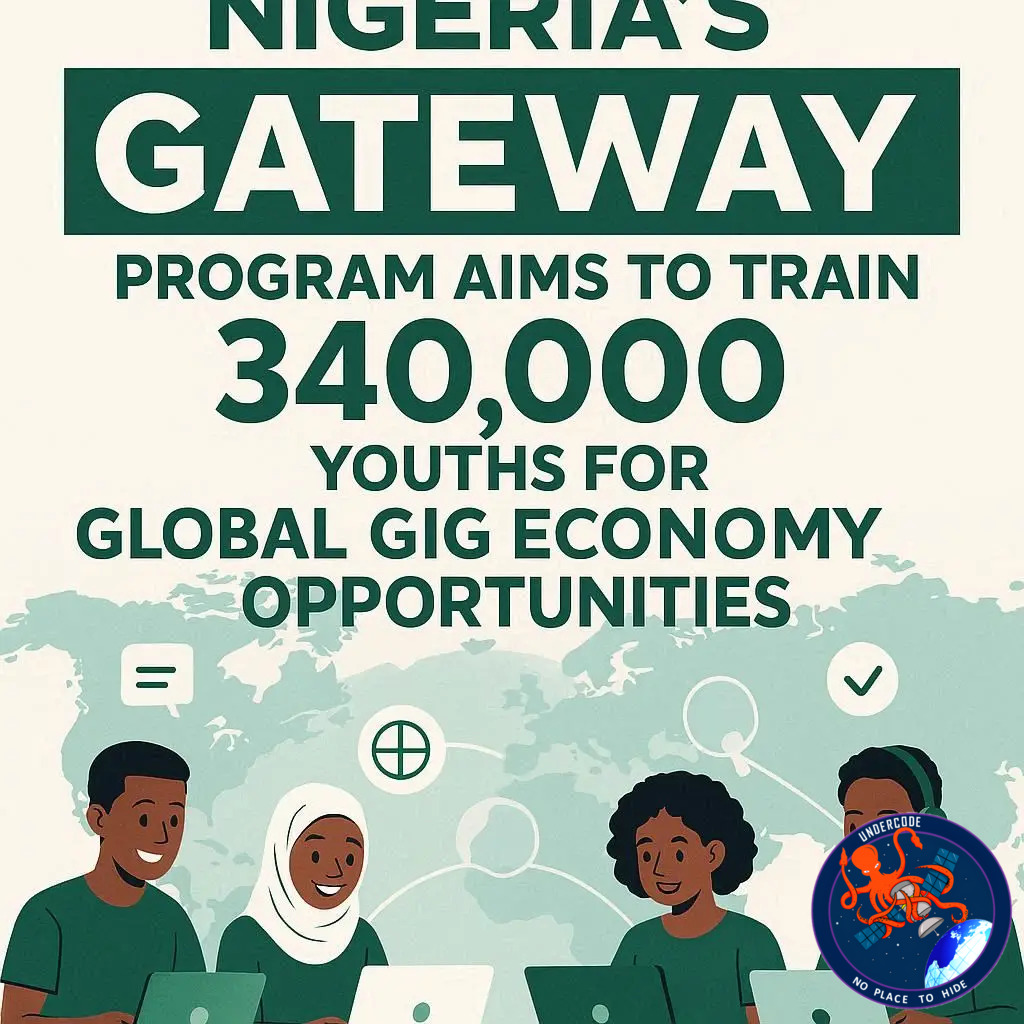
Nigeria is taking a bold step toward tackling youth unemployment with the launch of the GATEWAY Program, a large-scale initiative designed to prepare young people for the fast-growing global gig economy. With digital work becoming a dominant force worldwide, this program offers a timely opportunity for Nigerian youths to gain relevant skills and access international income streams. The initiative not only focuses on training but also on real employment outcomes, ensuring participants can transition into sustainable careers rather than temporary learning experiences.
Summary of the Initiative
The GATEWAY Program, implemented by Co-creation HUB Ltd, has officially opened registration for a five-year plan aimed at equipping 340,000 young Nigerians with in-demand digital skills and connecting them to global gig work opportunities. This ambitious project is built around the rapid expansion of the gig economy, which is projected to reach a staggering $1.85 trillion by 2032, creating vast opportunities for remote and freelance work.
At its core, the program seeks to bridge the persistent gap between skills acquisition and employment in Nigeria. Rather than simply offering training, GATEWAY is structured to guide participants into real income-generating opportunities. The initiative is tailored to support both beginners and experienced individuals through two learning tracks: the Foundations Pathway for those new to digital skills, and the Growth Pathway for individuals looking to enhance their existing capabilities and portfolios.
Participants will be trained in four high-demand creative and digital fields that are highly relevant in today’s remote work landscape: Digital Marketing, Video Production and Editing, Graphic Design, and UI/UX Design. These areas were carefully selected due to their strong demand across freelance platforms and global businesses seeking remote talent.
Inclusivity is a central pillar of the program. GATEWAY deliberately prioritizes underserved populations, including women, persons with disabilities, and displaced youth, ensuring that the benefits of the digital economy are accessible to a broader segment of society. By doing so, the initiative aims to reduce inequality while empowering marginalized communities with tools for economic independence.
The program will be rolled out across ten key Nigerian states, including Lagos, Abuja, Kano, and Rivers, among others. This geographic spread is designed to maximize reach and impact, ensuring that opportunities are not limited to major urban centers alone.
According to Ojoma Ochai, the program represents more than just training. It is a transformative intervention aimed at helping young Nigerians become immediate income earners by linking them directly to global gig opportunities. The emphasis is on dignity, sustainability, and long-term economic empowerment rather than short-term skill acquisition.
Registration for the program is now open through its official portal, giving thousands of young Nigerians the chance to build their skills, strengthen their portfolios, and gain access to international freelance markets. The initiative stands as one of the most comprehensive efforts to harness Nigeria’s youthful population and align it with global digital trends.
What Undercode Say:
A Strategic Response to a Growing Crisis
Nigeria’s youth unemployment challenge is not new, but the scale at which GATEWAY operates signals a shift in how the problem is being addressed. Instead of relying on traditional job creation models, the program embraces the borderless nature of digital work, allowing participants to earn globally while living locally. This is a crucial pivot in a world where geography is no longer a limitation for skilled workers.
The Gig Economy as a Real Solution
The global gig economy is often viewed as unstable, but for developing nations, it presents a unique advantage. By training youths in high-demand digital skills, GATEWAY positions Nigeria as a potential talent hub for international businesses. This could significantly increase foreign income inflow and reduce reliance on local job markets that are already saturated.
Skills Selection Matters
The choice of Digital Marketing, UI/UX Design, Graphic Design, and Video Editing is not accidental. These are skills with relatively low entry barriers but high global demand. More importantly, they are portfolio-driven fields, meaning talent can be showcased without formal degrees. This aligns perfectly with the realities of many Nigerian youths who may lack access to traditional higher education.
Inclusivity as a Growth Multiplier
One of the strongest aspects of the program is its intentional focus on inclusivity. By targeting women and persons with disabilities, GATEWAY is not just addressing unemployment but also systemic inequality. This approach could have long-term social impacts, especially in communities where these groups are often excluded from economic participation.
The Real Challenge: Execution
While the vision is impressive, the success of GATEWAY will depend heavily on execution. Training 340,000 individuals is one thing; ensuring they secure consistent gig work is another. The program must build strong partnerships with global freelance platforms and companies to create real job pipelines.
Sustainability Beyond Training
Many skill programs fail because they stop at education. GATEWAY’s promise to transition participants into actual income streams is what sets it apart. However, this requires continuous mentorship, access to tools, and possibly even financial support for participants to compete globally.
Digital Infrastructure and Accessibility
Another factor to consider is Nigeria’s digital infrastructure. Stable internet access, electricity, and affordable devices are critical for success in the gig economy. Without addressing these foundational issues, even the best training programs may fall short of their full potential.
A Model for Other Nations
If successful, GATEWAY could become a blueprint for other developing countries facing similar unemployment challenges. It demonstrates how leveraging global digital trends can create local economic transformation at scale.
Fact Checker Results
✅ The GATEWAY Program is indeed designed to train 340,000 Nigerian youths over five years
✅ The focus on digital skills like UI/UX and digital marketing aligns with current global demand
❌ The long-term success in securing sustainable gig jobs remains unproven and dependent on execution
Prediction
🔮 The program is likely to produce a new wave of Nigerian freelancers entering global platforms within the next two years
🌍 Nigeria could emerge as a competitive digital talent hub if placement pipelines are effectively built
⚠️ Without strong post-training support, a portion of participants may struggle to convert skills into stable income
🕵️📝✔️Let’s dive deep and fact‑check.
References:
Reported By: www.legit.ng
Extra Source Hub (Possible Sources for article):
https://www.pinterest.com
Wikipedia
OpenAi & Undercode AI
Image Source:
Unsplash
Undercode AI DI v2
Bing
🔐JOIN OUR CYBER WORLD [ CVE News • HackMonitor • UndercodeNews ]
📢 Follow UndercodeNews & Stay Tuned:
𝕏 formerly Twitter 🐦 | @ Threads | 🔗 Linkedin | 🦋BlueSky | 🐘Mastodon


