
Listen to this Post
Introduction
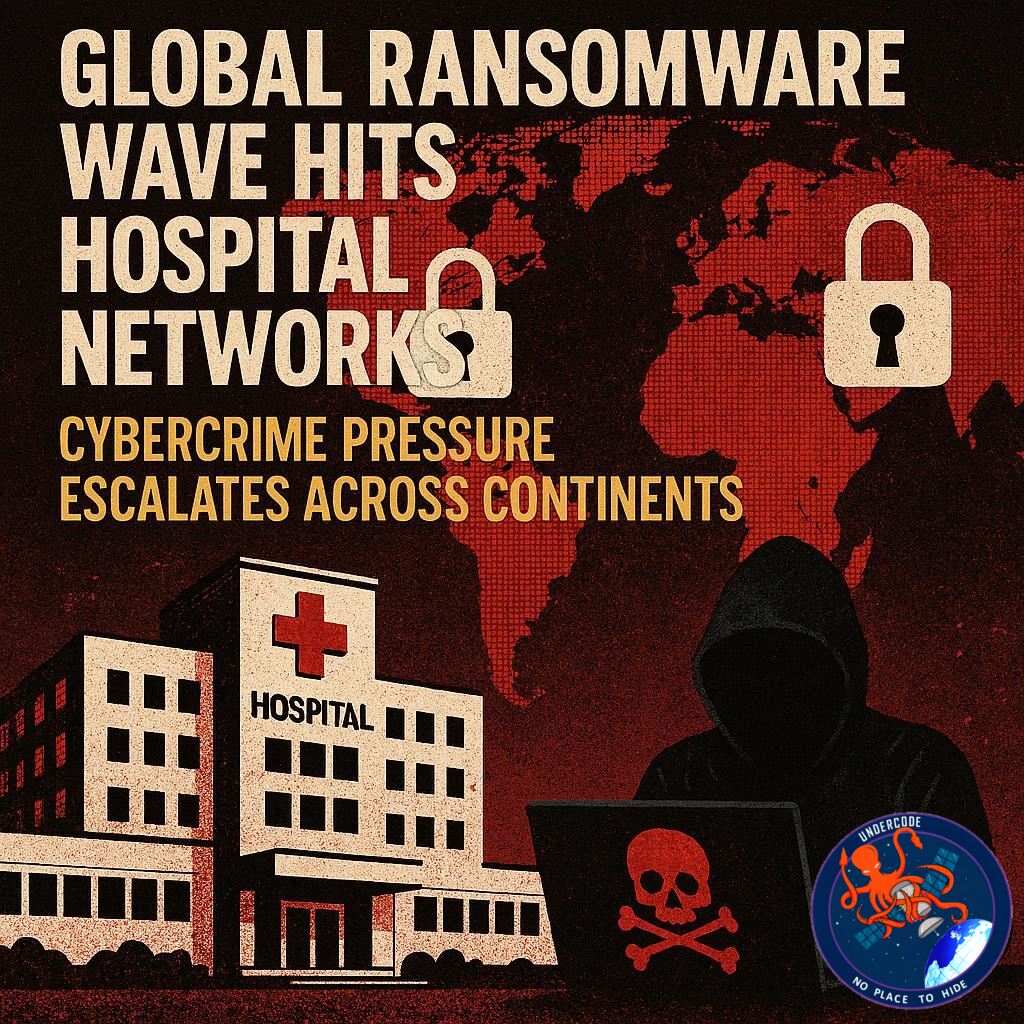
A fresh wave of ransomware activity is putting global infrastructure under renewed pressure, with incidents reported across Europe, Australia, and Central Asia. One of the latest victims includes Autovista, a major system operator currently responding to a coordinated ransomware attack that has disrupted parts of its digital environment. At the same time, law enforcement agencies have arrested a 35-year-old man in Kazakhstan accused of leading a ransomware group targeting hospitals and residential apartment servers. These parallel developments highlight how ransomware is becoming increasingly transnational, organized, and financially motivated, with attackers relying heavily on cryptocurrency payments to exploit critical systems. As investigations continue, cybersecurity experts warn that these incidents reflect a broader pattern of escalating digital extortion campaigns affecting both private enterprises and public services.
the Original Cybersecurity Report
Autovista has confirmed it is actively dealing with a ransomware incident affecting multiple systems across Europe and Australia.
The attack has caused operational disruption, forcing internal security teams and external experts to step in.
Investigations are ongoing to determine the origin, method, and full scope of the breach.
Containment measures have been implemented to prevent further spread of the malware.
The company has prioritized restoring affected applications as quickly as possible.
However, no official timeline for full recovery has been announced yet.
The situation remains fluid as cybersecurity teams continue forensic analysis.
In a separate but related development, authorities in Kazakhstan arrested a 35-year-old man.
He is accused of leading a ransomware group responsible for multiple cyberattacks.
The group reportedly targeted hospital systems and residential apartment infrastructure.
Victims were allegedly forced into paying ransom in Bitcoin to regain access to encrypted data.
Law enforcement agencies are now working to dismantle the wider network connected to the suspect.
Authorities have also indicated plans to distribute decryption tools through KISA.
This would potentially help victims recover data without paying the ransom.
The incidents highlight increasing coordination among international cybercrime units.
They also show the growing reliance on cryptocurrency in cyber extortion schemes.
Both cases emphasize the vulnerability of essential digital infrastructure.
Organizations in different regions are being targeted simultaneously.
Attackers are becoming more sophisticated in their methods of intrusion and encryption.
The overall situation suggests a rising global ransomware threat landscape.
Cybersecurity teams are focusing heavily on containment and recovery operations.
Investigations remain ongoing in both corporate and criminal contexts.
No confirmed data leak details have been fully disclosed yet.
Authorities continue to monitor for further activity linked to the attacks.
The incidents have raised concern among cybersecurity analysts worldwide.
They are being treated as part of a broader pattern of ransomware escalation.
Businesses and public services are being urged to strengthen defensive systems.
The attacks underline the importance of rapid incident response mechanisms.
Global cooperation is becoming essential in combating ransomware networks.
What Undercode Say:
The recent ransomware wave targeting Autovista and critical infrastructure systems is not an isolated incident but part of a structured global escalation in cybercrime operations.
The dual nature of these events, one affecting corporate systems in Europe and Australia, and another involving a criminal arrest in Kazakhstan, shows how geographically distributed ransomware networks have become.
Attackers no longer rely on single-region operations; instead, they deploy cross-border strategies that complicate law enforcement response times.
The Autovista attack highlights a growing trend where infrastructure service providers are prime targets due to their dependency on continuous system availability.
Even short disruptions can trigger cascading operational failures across multiple regions.
This makes such organizations high-value targets for ransom-based extortion.
Meanwhile, the Kazakhstan case illustrates the increasing role of structured ransomware groups that operate almost like corporate entities.
They recruit technical operators, manage negotiation processes, and demand cryptocurrency payments to reduce traceability.
The use of Bitcoin as a ransom channel remains a consistent pattern because it allows partial anonymity while still being liquid enough for conversion.
Law enforcement’s move to distribute decryption tools through KISA signals a shift in strategy from purely punitive action to victim recovery support.
This dual approach is becoming more common as authorities recognize that prevention alone is insufficient in modern cyber warfare.
Another important factor is the targeting of hospitals and residential systems, which indicates a willingness to exploit socially critical infrastructure.
This raises ethical stakes significantly because such attacks can impact human safety directly, not just financial systems.
The speed of containment at Autovista suggests improved incident response maturity, but the lack of recovery timeline shows how unpredictable ransomware recovery can be.
Even with backups, system integrity checks and malware removal can take extensive time.
The broader implication is that ransomware groups are evolving faster than many defensive frameworks.
Security teams are now forced to operate in reactive and predictive modes simultaneously.
International cooperation is improving, but jurisdictional limitations still slow down enforcement.
The Kazakhstan arrest demonstrates progress, but also reveals how many similar operators may still be active globally.
Overall, the cyber threat landscape is shifting toward sustained pressure campaigns rather than isolated attacks.
Organizations must now assume that exposure is not a question of if, but when.
Resilience, redundancy, and rapid recovery capability are becoming the core pillars of cybersecurity strategy.
Fact Checker Results
✔ Reports of ransomware targeting multi-region systems align with recent global cybercrime trends
⚠ Arrest details require official confirmation from law enforcement statements for full verification
✔ Use of cryptocurrency, especially Bitcoin, remains a dominant method in ransomware extortion cases 🔐
Prediction
Ransomware activity is likely to intensify over the coming months as cybercriminal groups refine cross-border coordination and target more infrastructure-heavy organizations.
We may see increased government-led initiatives focused on rapid decryption tool distribution and international cyber task forces.
Attacks will likely shift further toward critical services such as healthcare, logistics, and cloud-based enterprise systems as attackers seek higher leverage and faster payouts.
🕵️📝✔️Let’s dive deep and fact‑check.
References:
Reported By: x.com
Extra Source Hub (Possible Sources for article):
https://www.quora.com
Wikipedia
OpenAi & Undercode AI
Image Source:
Unsplash
Undercode AI DI v2
Bing
🔐JOIN OUR CYBER WORLD [ CVE News • HackMonitor • UndercodeNews ]
📢 Follow UndercodeNews & Stay Tuned:
𝕏 formerly Twitter 🐦 | @ Threads | 🔗 Linkedin | 🦋BlueSky | 🐘Mastodon


