
Listen to this Post
Introduction
Escalating Cyber Threats Targeting Education Systems in Northern Ireland and Beyond
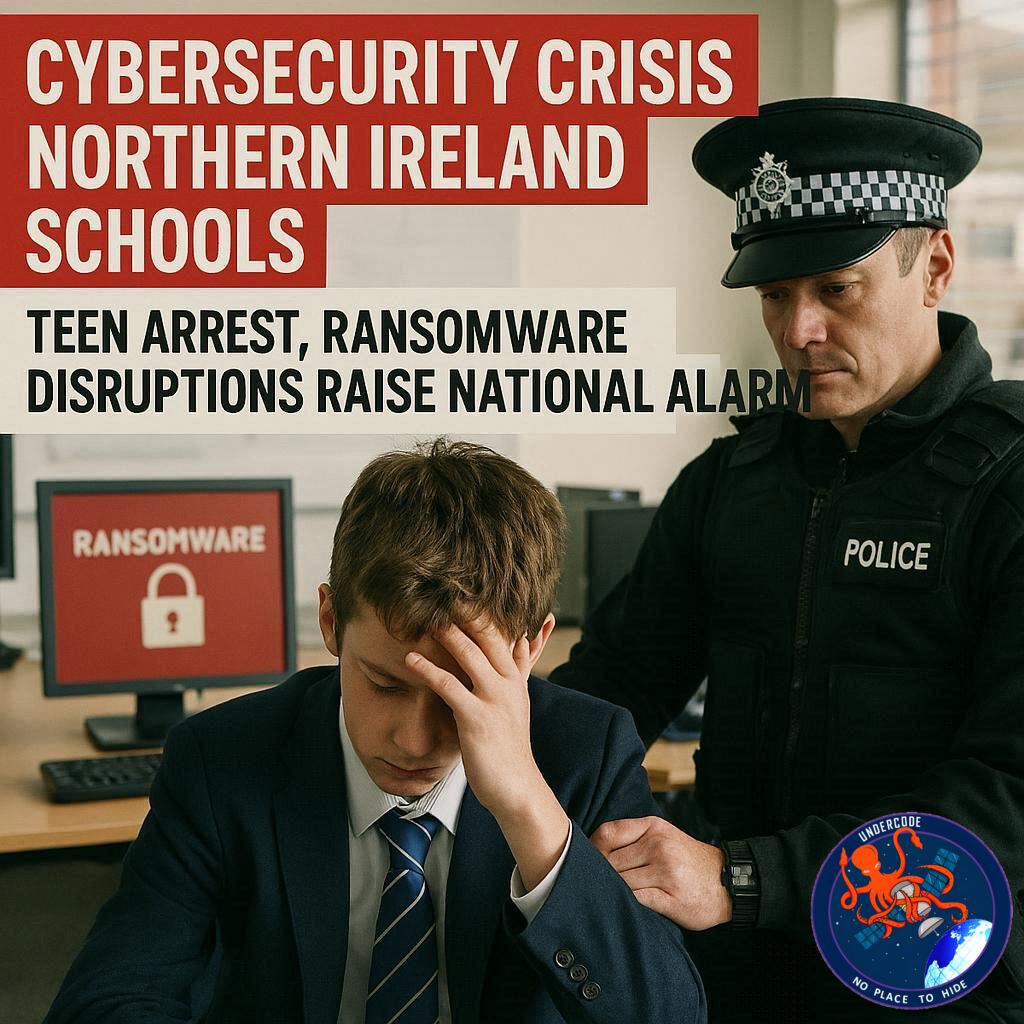
The recent cyberattack involving Northern Ireland’s C2K school network has intensified concerns about the vulnerability of educational digital infrastructure. A 16-year-old has been arrested in Portadown in connection with the incident, which reportedly disrupted critical school services and raised fears of potential exposure of sensitive personal data. At the same time, a separate but similar wave of attacks in other regions, including a ransomware incident that forced schools to shut down operations, highlights a growing global trend. Educational institutions, often underfunded in cybersecurity defenses, are becoming prime targets for attackers seeking disruption, data theft, or ransom payments. Authorities continue to investigate the full scope of the breach, while schools struggle to restore essential systems and maintain continuity of learning.
Incident
How the C2K School Network Attack and Related Ransomware Events Unfolded
The cyberattack on the C2K school network in Northern Ireland triggered immediate concern among education authorities and cybersecurity experts.
A 16-year-old suspect was arrested in Portadown following early investigative leads.
The breach reportedly disrupted digital services used by schools across the region.
Systems linked to communication, administration, and possibly student data access were affected.
Authorities have not yet confirmed the full scale of the data exposure risk.
Investigations are ongoing with cooperation between law enforcement and cybersecurity specialists.
At the same time, similar attacks have been reported elsewhere, including a ransomware incident affecting school systems in another region.
Spring Lake Park Schools, for example, were forced to cancel all classes due to unauthorized network access.
Critical systems such as email and internal support tools were taken offline as a precaution.
Cybersecurity teams isolated affected infrastructure to prevent further spread of the attack.
Law enforcement agencies are now involved in both incidents, treating them as serious cybercrime cases.
The disruption has raised immediate concerns over continuity of education for thousands of students.
School administrators are working on temporary solutions while systems remain unstable.
The ransomware nature of one of the attacks suggests possible financial or extortion motives.
Both incidents demonstrate increasing sophistication in targeting school networks.
Authorities emphasize that recovery efforts may take days or even weeks depending on system damage.
Parents and staff have been advised to remain alert for potential data-related risks.
The attacks have sparked renewed discussion about cybersecurity funding in education sectors.
Experts believe these incidents may not be isolated cases but part of a broader trend.
The investigations are still active and evolving as digital forensic evidence is analyzed.
What Undercode Say:
The Rising Pattern of Educational Cyberattacks and Systemic Weaknesses
The attack on the C2K network reflects a wider structural vulnerability in education systems.
Schools increasingly rely on centralized digital infrastructure for daily operations.
This creates a single point of failure when cybersecurity is not strong enough.
The involvement of a teenager highlights how accessible cyber tools have become.
Low barriers to entry in hacking communities are reshaping threat landscapes.
Educational networks often lack enterprise-grade defensive systems.
This makes them easier targets compared to heavily fortified corporate environments.
The simultaneous ransomware incident suggests coordinated or inspired attack behavior.
Cybercriminals are increasingly exploiting downtime sensitivity in schools.
Disruption alone can be as damaging as data theft in educational contexts.
Authorities are now forced to balance criminal investigation with urgent system recovery.
The reputational impact on institutions may be long-lasting even after restoration.
Student data exposure risks create additional legal and ethical complications.
Cybersecurity awareness in school staff remains uneven across regions.
Many institutions still depend on outdated systems with limited monitoring.
The attacks demonstrate the urgent need for proactive threat detection.
Incident response time is becoming a critical factor in minimizing damage.
Governments may need to enforce stricter cybersecurity compliance in education.
There is also a growing argument for centralized national protection frameworks.
Without structural upgrades, similar attacks are likely to continue escalating.
Fact Checker Results
Schools in Northern Ireland confirmed service disruption linked to cyberattack ✔️
Arrest of a 16-year-old suspect reported but full legal details remain under investigation ⚠️
Ransomware-related school shutdowns align with recent global education sector trends ✔️
Prediction
Future Outlook for Cybersecurity Threats in Education Networks
Cyberattacks targeting schools are likely to increase in frequency over the next few years.
Attackers will continue exploiting weak infrastructure and limited cybersecurity budgets.
Ransomware campaigns may shift toward disruption-first strategies instead of pure extortion.
Governments are expected to introduce stricter digital security regulations for schools.
More arrests involving young hackers may emerge as cyber tools become more accessible.
🕵️📝✔️Let’s dive deep and fact‑check.
References:
Reported By: x.com
Extra Source Hub (Possible Sources for article):
https://www.reddit.com/r/AskReddit
Wikipedia
OpenAi & Undercode AI
Image Source:
Unsplash
Undercode AI DI v2
Bing
🔐JOIN OUR CYBER WORLD [ CVE News • HackMonitor • UndercodeNews ]
📢 Follow UndercodeNews & Stay Tuned:
𝕏 formerly Twitter 🐦 | @ Threads | 🔗 Linkedin | 🦋BlueSky | 🐘Mastodon


