
Listen to this Post
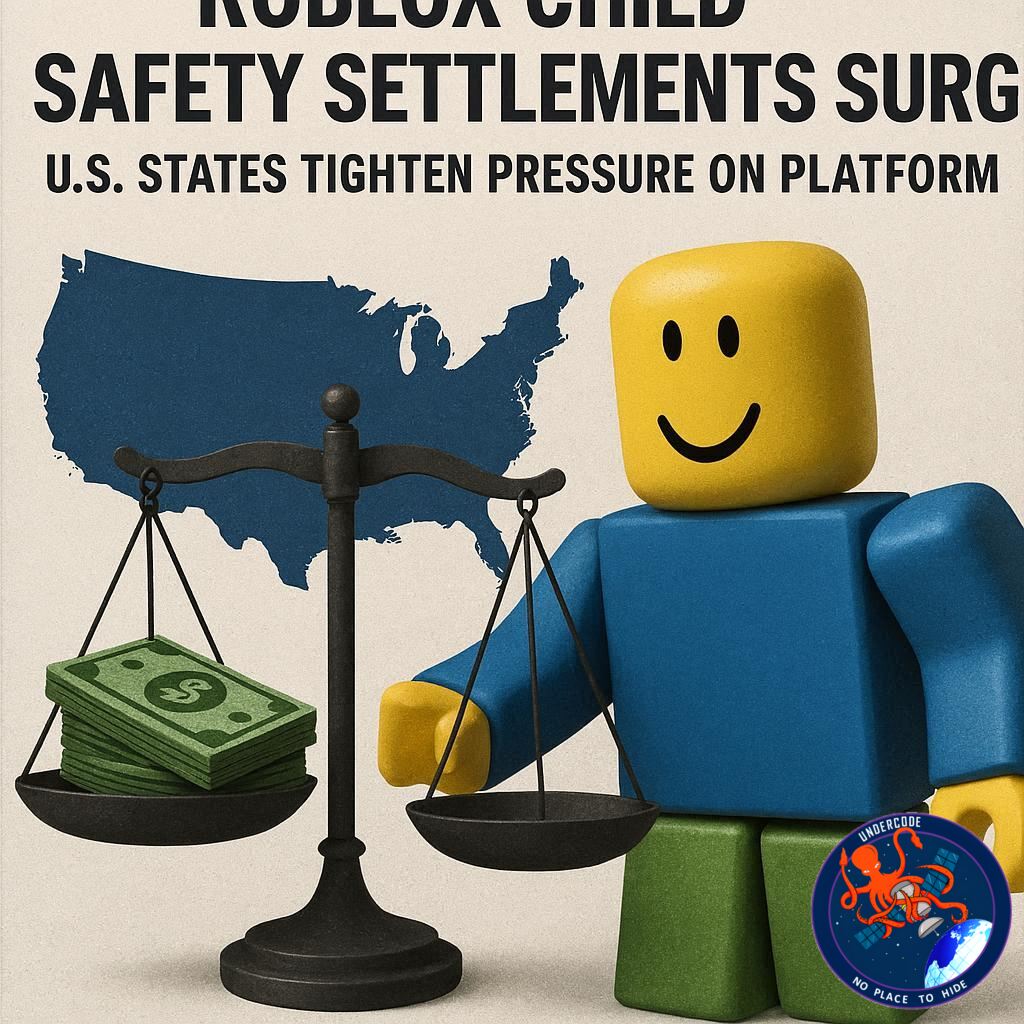 Introduction: Rising Legal Pressure on Roblox and Child Safety Concerns
Roblox is facing one of the most intense waves of legal and regulatory pressure in its history as multiple US states move forward with settlements over child safety concerns.
The platform, widely used by children and teenagers, has been criticized for years over its moderation systems and alleged exposure of minors to inappropriate interactions.
Now, state attorneys general are no longer just warning the company but are actively enforcing financial penalties and strict operational changes.
In just a short span of days, settlements have accumulated into tens of millions of dollars, signaling a coordinated push for accountability.
At the center of the issue are allegations that Roblox failed to adequately protect children from online predators and unsafe communications.
the Original (Expanded Overview)
Roblox has been under growing scrutiny for its child safety systems and how effectively it protects younger users.
On April 21, Alabama Attorney General Steve Marshall announced a $12.2 million settlement with Roblox.
On the same day, West Virginia reached an $11 million settlement with the company.
A week earlier, Nevada had already secured a $12 million agreement, showing a rapid chain of enforcement actions.
These settlements are driven by concerns that Roblox did not sufficiently protect children from predators.
As part of the Alabama agreement, Roblox must implement mandatory age checks for all users.
These checks will use facial age estimation or government identification verification starting May 1.
Both new and existing users must comply with these verification requirements.
The company is also required to monitor user behavior to detect false age information.
Communication rules between adults and minors are being significantly tightened.
Adults and users under 16 cannot communicate unless they are on a trusted friend list.
This friend list must be created through QR codes or phone contact imports.
Users who fail to verify their age will lose access to chat functions entirely.
All communication involving minors must remain unencrypted to allow law enforcement access.
West Virginia’s settlement adds a requirement that minors be warned when entering private chats.
Roblox had already introduced some age verification rules earlier in the year.
However, the new agreements expand restrictions further into gameplay access itself.
Starting in June, Roblox will introduce a three-tier account system.
Roblox Kids will serve ages 5 to 8 with no chat access and limited game exposure.
Users who do not verify their age will also be placed into restricted modes.
Roblox Select will serve ages 9 to 15 with moderated features.
Standard accounts will be reserved for users aged 16 and above.
Beyond these three settlements, more legal action is already underway in multiple states.
Texas, Florida, Louisiana, Iowa, Nebraska, Kentucky, and Tennessee are pursuing similar claims.
These states argue Roblox misled parents about safety protections.
Los Angeles County has also sued the company over alleged exposure to grooming risks.
Nearly 80 federal lawsuits have been filed in California alone by families.
Australia’s eSafety Commissioner has also issued compliance notices requiring transparency.
Failure to comply could result in significant daily fines for Roblox.
The settlements also include funding allocations for safety and education programs.
Alabama will support school safety officers through its Safe School Initiative.
Nevada will fund youth organizations and online safety awareness campaigns.
West Virginia will invest in parental workshops and dedicated safety specialists.
Despite these measures, concerns remain about the effectiveness of Roblox’s systems.
Critics argue age verification technology still has accuracy issues.
There are fears that users can bypass safeguards or be misclassified.
The situation highlights ongoing tension between platform growth and child safety enforcement.
What Undercode Say:
Roblox is now in a critical regulatory phase where legal pressure is shaping product design more than internal policy ever did.
The settlements show a shift from warnings to enforced structural change across the platform.
Age verification is becoming the central control mechanism for platform access.
However, biometric and ID-based systems are never fully reliable at scale.
False positives and misclassification remain major technical risks.
A teenager appearing older could be placed in unsafe communication categories.
An adult could potentially be misclassified into child-safe environments.
Both outcomes create new types of exposure risk rather than eliminating it.
The trusted friend system introduces another layer of social engineering vulnerability.
QR-based friend additions can easily spread beyond intended control circles.
Encrypted communication removal improves law enforcement access but raises privacy questions.
It also changes the fundamental architecture of private digital interaction.
The three-tier system effectively restructures Roblox into age-segmented ecosystems.
This may reduce exposure risk but could also fragment the user base significantly.
Legal settlements do not necessarily equal technical resolution of safety issues.
They often represent negotiated compliance rather than proven system effectiveness.
There is a growing gap between regulatory expectations and AI moderation capabilities.
Facial recognition and age estimation tools remain probabilistic, not deterministic systems.
The more Roblox tightens controls, the more incentives may emerge for evasion tactics.
Third-party marketplaces already show that enforcement gaps are being exploited.
Parents remain the last and most consistent layer of supervision in this ecosystem.
State involvement indicates child safety is now a national-level policy issue.
The volume of lawsuits suggests systemic dissatisfaction with platform governance.
Financial penalties are becoming a secondary concern compared to structural reform demands.
Regulators are focusing not just on punishment but on forced redesign of interaction systems.
Roblox is effectively becoming a test case for youth safety governance in gaming platforms.
If successful, similar models may be applied to other social gaming environments.
If unsuccessful, it may reinforce skepticism toward platform-led safety solutions.
The core challenge remains balancing accessibility, safety, and user freedom at scale.
No current system fully resolves all three without trade-offs.
This tension defines the future regulatory landscape for online youth platforms.
Fact Checker Results
Roblox has confirmed multiple settlements with US states over child safety concerns.
✔ Evidence supports increasing legal and regulatory action across multiple jurisdictions.
❌ Effectiveness of new age verification systems is still not independently proven at scale.
Prediction
Regulatory pressure on Roblox is likely to expand beyond the US into other major markets.
The platform will continue introducing stricter age verification and communication controls.
However, technical limitations in AI-based age estimation will likely remain a long-term challenge.
🕵️📝✔️Let’s dive deep and fact‑check.
References:
Reported By: www.malwarebytes.com
Extra Source Hub (Possible Sources for article):
https://www.medium.com
Wikipedia
OpenAi & Undercode AI
Image Source:
Unsplash
Undercode AI DI v2
Bing
🔐JOIN OUR CYBER WORLD [ CVE News • HackMonitor • UndercodeNews ]
📢 Follow UndercodeNews & Stay Tuned:
𝕏 formerly Twitter 🐦 | @ Threads | 🔗 Linkedin | 🦋BlueSky | 🐘Mastodon


