
Listen to this Post
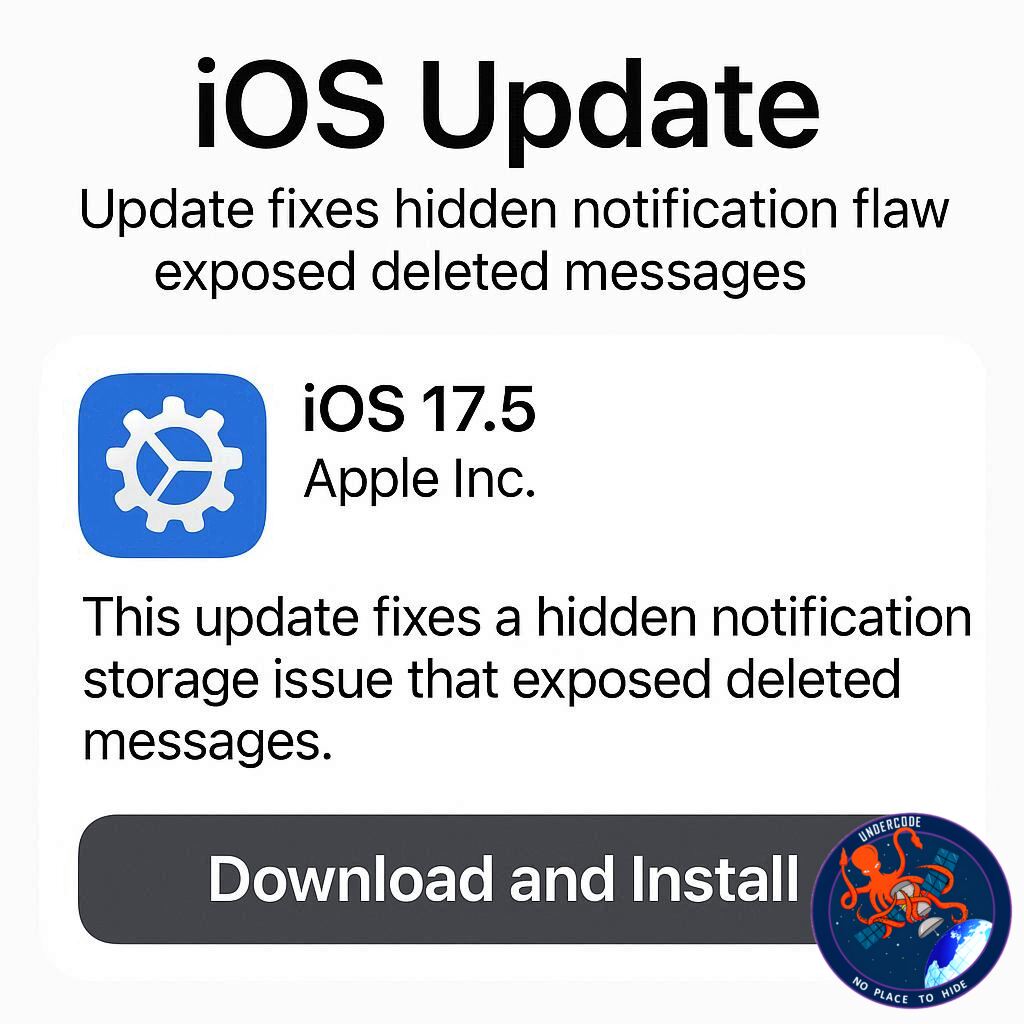
Introduction: A Silent Privacy Leak Inside iPhone Notifications
Apple has released an important security update for iOS and iPadOS after discovering a serious flaw in its Notification Services system. The issue allowed notifications marked for deletion to remain stored on devices instead of being fully removed. This raised concerns about hidden data retention, especially in sensitive messaging apps. Tracked as CVE-2026-28950, the bug highlights how even routine system features like notifications can unintentionally become privacy risks when logging systems fail to properly redact data. Apple addressed the issue by improving how notification data is handled and removed, reinforcing the importance of system-level privacy controls in modern mobile devices.
the Incident and Apple’s Response (30-line breakdown)
Apple discovered a flaw affecting its iOS and iPadOS notification systems.
The bug caused deleted notifications to remain stored on devices.
Normally, deleted notifications should be fully removed from system logs.
Instead, remnants of these notifications were retained unexpectedly.
The issue was classified as a logging problem in Notification Services.
Apple identified it as CVE-2026-28950.
The vulnerability does not yet have a CVSS severity score.
Apple confirmed that the issue has now been fixed through an update.
The fix improves how data is redacted and removed from logs.
Affected devices include a wide range of iPhones and iPads.
iOS 26.4.2 and iPadOS 26.4.2 resolve the issue on newer devices.
Older devices are patched under iOS 18.7.8 and iPadOS 18.7.8.
The flaw impacted models from iPhone XR up to the latest iPhone 16 series.
It also affected multiple generations of iPads including Pro, Air, and Mini models.
The issue gained attention after forensic research findings surfaced.
A report showed that Signal message data could be extracted.
This extraction occurred even after the app was deleted.
The data came from stored push notification content.
This raised concerns about how notifications are handled internally.
It was unclear whether this was intentional or a system bug.
Apple’s update suggests it was an unintended software flaw.
The timeline of when the bug was introduced is still unknown.
Authorities may have previously accessed similar stored data.
Signal users were particularly impacted due to message sensitivity.
Signal already offers notification privacy controls in settings.
Users can limit message previews in notifications.
Security experts emphasized physical device access risks.
EFF highlighted concerns about metadata exposure through notifications.
Signal confirmed no user action is required after the update.
Apple’s fix automatically deletes previously retained notification data.
What Undercode Say:
Apple’s fix is more than a routine patch, it exposes a deeper structural issue in how mobile operating systems handle transient data like notifications.
Modern smartphones are built on layers of caching and logging for performance, debugging, and system reliability.
However, these same layers can become unintended storage points for sensitive information.
In this case, deleted notifications were not truly deleted at the system level.
Instead, they were quietly preserved in logging structures tied to Notification Services.
This creates a gap between user expectations and actual data handling behavior.
Most users assume “delete” means immediate and complete removal.
In reality, deletion often means “marked for removal” with residual traces still existing.
That distinction becomes critical when dealing with encrypted messaging apps like Signal.
Even if messages are encrypted in transit, notification previews can leak plaintext content.
The forensic angle is particularly important here.
Security researchers and law enforcement tools often rely on system-level artifacts.
Push notification databases become a hidden archive of user activity.
This raises ethical questions about passive data retention.
Was the system designed for debugging convenience or overlooked privacy implications.
Apple’s decision to implement improved redaction suggests acknowledgment of design flaws.
However, it also shows how long such issues can exist unnoticed.
The most concerning aspect is uncertainty about historical exploitation.
If the bug existed for years, forensic tools may have silently benefited.
This is especially relevant in legal investigations involving mobile devices.
The Signal case highlights the weakest link in secure communication systems.
End-to-end encryption does not protect metadata or notification previews.
Privacy depends on every layer of the operating system, not just the app.
EFF’s warning about metadata extraction is particularly significant.
Users rarely have visibility into what notification systems store behind the scenes.
The fix improves redaction, but transparency remains limited.
This incident reinforces a broader truth in mobile security.
Even deleted data can persist in unexpected system layers.
Trust in device privacy must include trust in system architecture behavior.
Apple’s response is fast, but the lesson is structural, not temporary.
Fact Checker Results
✔ Apple confirmed a real vulnerability in Notification Services affecting iOS and iPadOS
✔ CVE-2026-28950 was patched through updates 26.4.2 and 18.7.8
❌ No evidence that Signal encryption itself was broken, only notification storage behavior
Prediction
Future iOS updates will likely introduce stricter isolation of notification data from system logs.
Security pressure from encrypted messaging apps will push Apple to further reduce background data retention.
Expect increased transparency features showing what data is temporarily stored or cached by the system.
🕵️📝✔️Let’s dive deep and fact‑check.
References:
Reported By: thehackernews.com
Extra Source Hub (Possible Sources for article):
https://www.quora.com/topic/Technology
Wikipedia
OpenAi & Undercode AI
Image Source:
Unsplash
Undercode AI DI v2
Bing
🔐JOIN OUR CYBER WORLD [ CVE News • HackMonitor • UndercodeNews ]
📢 Follow UndercodeNews & Stay Tuned:
𝕏 formerly Twitter 🐦 | @ Threads | 🔗 Linkedin | 🦋BlueSky | 🐘Mastodon


