
Listen to this Post
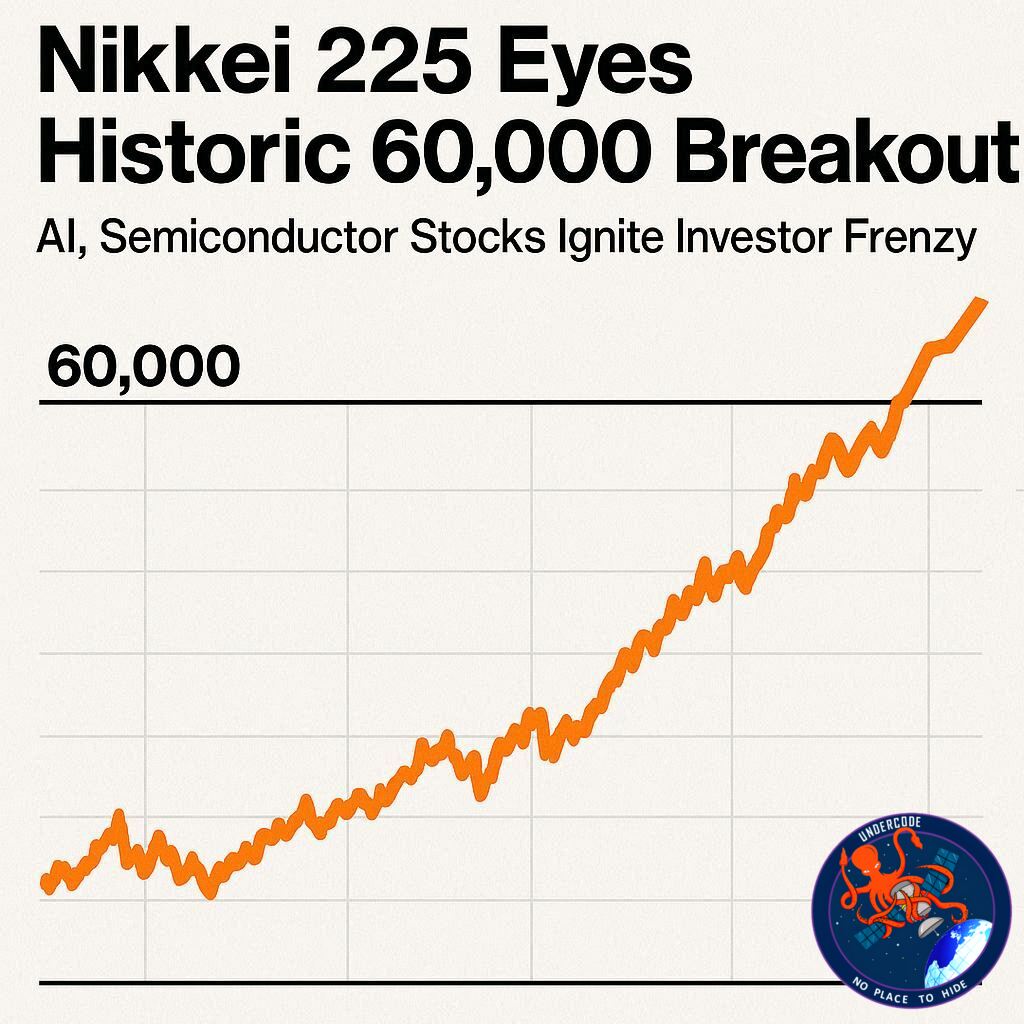 Tokyo Markets Prepare for Another Explosive Rally Fueled by AI Optimism
Japan’s stock market is entering another potentially historic phase as investors return from the Golden Week holiday with growing confidence in artificial intelligence and semiconductor-related companies. After a powerful rally in April that pushed Japanese equities to levels not seen in decades, analysts now believe the next major target for the Nikkei 225 could be the psychologically critical 60,000-point range.
Much of the excitement is being driven by so-called “high-beta” stocks, companies that react more aggressively to market momentum and investor sentiment. These shares often surge faster during bullish periods, and the current global AI investment wave has created ideal conditions for speculative growth. Semiconductor manufacturers, AI infrastructure firms, and advanced technology suppliers are becoming the center of attention for both domestic and international investors.
The momentum intensified after the U.S. stock market delivered another strong performance. On May 6, the Philadelphia Semiconductor Index, commonly known as the SOX Index, climbed 492 points, or 4.4%, reaching 11,472. This index is closely watched in Japan because of its strong correlation with Japanese semiconductor and technology shares. The rally signaled that global demand for AI chips and computing infrastructure remains extremely strong despite ongoing concerns about inflation and interest rates.
Japanese traders now expect that enthusiasm surrounding AI-related industries will continue to dominate market activity in the weeks ahead. Investors are aggressively buying companies connected to data centers, chip manufacturing equipment, robotics, cloud computing, and next-generation automation technologies. These sectors are increasingly viewed as the backbone of the future digital economy.
Another major factor supporting Japanese equities is the ongoing weakness of the usd. A weaker currency boosts the overseas profits of export-oriented Japanese corporations, especially technology and semiconductor firms. Foreign investors, who have already returned aggressively to Tokyo markets over the past year, continue to see Japanese stocks as relatively undervalued compared to major U.S. technology giants.
Financial institutions are also playing a critical role. Many portfolio managers who previously stayed cautious are now being pressured to increase exposure to AI-linked assets after seeing competitors outperform during the recent rally. This creates a cycle where more institutional buying pushes prices even higher, reinforcing bullish momentum.
The market’s current structure reflects a shift in investor psychology. Instead of focusing only on defensive or value-oriented stocks, traders are now embracing higher-risk growth assets again. High-beta names are benefiting the most because they offer amplified exposure to the AI narrative that currently dominates global financial markets.
There is also increasing speculation that Japan may experience a structural transformation similar to the U.S. technology boom. Government support for semiconductor manufacturing, domestic investment in AI infrastructure, and partnerships with global chipmakers are strengthening confidence in Japan’s long-term technology ambitions.
Still, some analysts warn that rapid rallies can create overheating risks. When market enthusiasm becomes too concentrated around a single theme, valuations may rise beyond realistic earnings expectations. If global AI spending slows or interest rates remain elevated longer than expected, high-beta technology stocks could face significant volatility.
Despite those concerns, many investors remain optimistic because the AI revolution still appears to be in its early stages. Demand for advanced chips, data processing capabilities, and automation systems continues to expand across industries ranging from healthcare to automotive manufacturing. Japanese companies positioned within those supply chains are attracting renewed investor attention almost daily.
Another reason behind the bullish sentiment is the lack of sellers in the market. Many long-term investors are reluctant to exit positions while momentum remains strong. This “seller shortage” creates conditions where even moderate buying pressure can push stock prices sharply higher. Analysts believe this supply-demand imbalance could help the Nikkei stabilize above 60,000 if buying momentum continues after the holiday period.
Foreign hedge funds and institutional investors are also reportedly increasing leverage in technology-related positions. This adds fuel to short-term rallies and creates rapid upward movements in benchmark indices. AI-linked enthusiasm has effectively become a global macro trade, and Japan is emerging as one of its biggest beneficiaries.
The semiconductor industry remains the central pillar of this optimism. AI systems require enormous computing power, and that demand directly benefits companies involved in chip production, testing equipment, memory technologies, and manufacturing tools. Japanese firms have critical roles in several of these supply chains, making them attractive to global investors seeking exposure outside the United States.
Meanwhile, retail investors in Japan are becoming more active participants in equity markets. Younger investors especially are chasing AI-related opportunities, influenced by the extraordinary growth stories seen in American tech giants. Social media discussions and financial media coverage have intensified interest in technology-focused investments.
If the rally continues, the Nikkei’s movement toward 60,000 would represent one of the most remarkable market recoveries in modern Japanese financial history. Only a few years ago, such levels seemed almost unimaginable due to decades of stagnation and deflationary pressures that defined Japan’s economy.
Now, the narrative has changed dramatically. AI is no longer viewed simply as a technological trend, but as a transformational economic force capable of reshaping industries and corporate profitability on a global scale. Japan’s market appears determined to capitalize on that shift.
What Undercode Say:
The current excitement surrounding Japanese equities is not just another temporary market rally. What makes this situation different is the convergence of several powerful macroeconomic and technological trends happening simultaneously. AI is serving as the emotional catalyst, but beneath the surface there are deeper structural forces supporting the momentum.
One of the most important developments is the return of global capital into Japanese markets after years of relative neglect. For decades, Japan struggled with slow growth, weak inflation, and limited investor excitement. International funds often viewed Tokyo as a mature market lacking innovation momentum. That perception is now rapidly changing.
The AI boom has effectively given Japan a new identity in global finance. Instead of being seen only as a conservative manufacturing economy, Japan is now increasingly viewed as a critical infrastructure supplier for the AI era. This distinction matters because infrastructure providers often benefit regardless of which AI software company ultimately dominates the market.
Japanese semiconductor equipment makers occupy extremely valuable positions in global supply chains. Many investors initially focused only on American AI leaders, but the market is now broadening its attention toward the hidden industrial backbone powering the entire ecosystem. Japan fits perfectly into that narrative.
Another fascinating element is the psychological behavior driving the rally. Markets do not move solely because of earnings numbers. They move because investors collectively believe future growth will accelerate. Right now, AI represents a rare theme capable of generating both genuine technological transformation and speculative excitement at the same time.
The “seller shortage” mentioned in the original report is particularly important. Bull markets often become explosive when investors stop looking for reasons to sell. That creates thin liquidity on the supply side, meaning prices can rise rapidly even with moderate demand increases. This condition can produce surprisingly aggressive index movements.
However, the danger lies in concentration risk. When too much money flows into a single narrative, valuations eventually disconnect from reality. We saw similar behavior during the dot-com bubble, where technological optimism overshadowed fundamental analysis. Some AI-linked companies today already trade at extremely stretched valuations.
Still, comparing the current AI cycle directly to the dot-com era may oversimplify the situation. Unlike many internet startups of the late 1990s, today’s AI leaders are generating real revenues, securing enterprise adoption, and integrating into essential industries. The infrastructure demand supporting semiconductors is tangible and measurable.
Another overlooked factor is geopolitics. Countries increasingly view semiconductor independence as a national security issue. This strategic importance means governments are willing to subsidize domestic chip production aggressively. Japan benefits from this environment because it possesses advanced manufacturing expertise and industrial reliability.
Currency dynamics also amplify the rally. A weaker usd makes Japanese exports more competitive globally and boosts overseas earnings when converted back into domestic currency. Investors know this dynamic can artificially strengthen corporate profits, especially for technology exporters.
Retail investor participation adds another layer of volatility. Younger traders influenced by social media-driven investment culture often chase momentum aggressively. This can accelerate rallies far beyond what institutional investors alone would create. Japan is beginning to experience a more modern retail trading culture similar to trends seen in the United States.
There is also a symbolic dimension to the Nikkei potentially reaching 60,000. Psychological levels matter enormously in financial markets because they attract media attention, trigger fear of missing out, and reinforce bullish narratives. Once major milestones appear achievable, they often become self-fulfilling targets in the short term.
Yet sustainability remains the ultimate question. AI enthusiasm alone cannot permanently support markets if economic conditions deteriorate elsewhere. Rising interest rates, slowing global growth, or weaker consumer demand could eventually challenge technology valuations worldwide.
Another concern is whether corporate earnings can truly justify the speed of recent stock appreciation. Markets sometimes price in perfect future scenarios far too early. If companies fail to deliver the extraordinary profit growth investors expect, corrections can become severe.
Even so, Japan’s transformation story appears stronger than many expected. Corporate governance reforms, shareholder-focused policies, foreign investment inflows, and renewed industrial competitiveness are creating a more attractive investment environment than the country had a decade ago.
The most interesting takeaway may be that AI is reshaping not just technology companies, but entire financial ecosystems. Capital flows, investor psychology, national policy, and market identity are all being redefined through the AI narrative. Japan is positioning itself at the center of that transition rather than remaining on the sidelines.
If this momentum continues, the Nikkei’s journey toward 60,000 may eventually be remembered not as a speculative anomaly, but as the beginning of a broader revaluation of Japan’s role in the global technology economy.
📊 Prediction
📈 AI-related Japanese equities are likely to remain dominant throughout the year as global semiconductor demand continues expanding.
🤖 The Nikkei could test the 60,000 level faster than many analysts expect if U.S. tech markets maintain bullish momentum.
⚠️ Short-term volatility may intensify sharply if investors begin questioning whether AI valuations are running ahead of real earnings growth.
🔍 Fact Checker Results
✅ The Philadelphia Semiconductor Index (SOX) is widely used as a benchmark for global semiconductor market sentiment.
✅ AI and semiconductor-related stocks have become major drivers of recent Japanese market rallies.
❌ There is no guarantee the Nikkei will permanently stabilize above 60,000, as market conditions remain highly sensitive to global economic risks.
▶️ Related Video (80% Match):
🕵️📝Let’s dive deep and fact‑check.
References:
Reported By: xtechnikkeicom_f59abcbc3008f0fc8f9141d5
Extra Source Hub (Possible Sources for article):
https://www.facebook.com
Wikipedia
OpenAi & Undercode AI
Image Source:
Unsplash
Undercode AI DI v2
Bing
🔐JOIN OUR CYBER WORLD [ CVE News • HackMonitor • UndercodeNews ]
📢 Follow UndercodeNews & Stay Tuned:
𝕏 formerly Twitter 🐦 | @ Threads | 🔗 Linkedin | 🦋BlueSky | 🐘Mastodon


