
Listen to this Post
Introduction
The Taiwan High-Speed Rail network, a backbone of national transportation and one of Asia’s most advanced rail systems, faced a rare and alarming disruption during the busy Qingming Festival period. What initially appeared to be a technical malfunction quickly escalated into a serious cybersecurity investigation. Authorities later confirmed that the incident was not caused by system failure but by deliberate signal interference carried out by a 23-year-old university student. The case has raised urgent questions about the resilience of critical infrastructure, especially systems that rely on long-standing communication protocols and outdated security assumptions.
the Incident and Investigation Findings
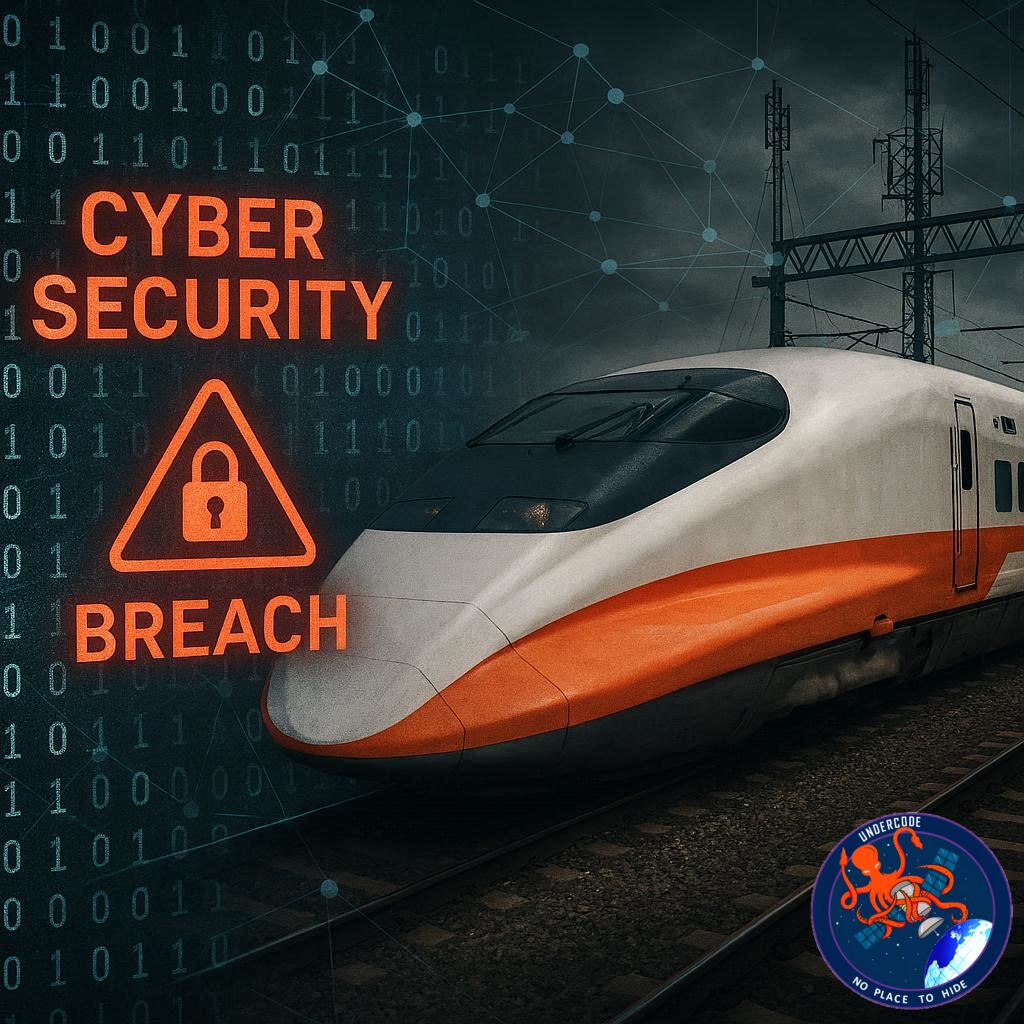
Taiwan High-Speed Rail operations were disrupted when four trains suddenly stopped during peak holiday travel, leaving passengers stranded and causing widespread delays across the network. Initial confusion pointed to a possible system fault, but further investigation revealed a coordinated cyber intrusion. The attacker, a university student with a strong interest in radio technology, used commercially available software-defined radio tools to analyze and replicate train communication signals. By intercepting TETRA-based communication parameters, he was able to decode and reproduce internal system behavior. He then programmed handheld radio devices to mimic legitimate infrastructure signals used by Taiwan High Speed Rail Corp. Authorities confirmed that the student triggered a false “General Alarm” message, which is treated as a critical emergency command within railway safety protocols. As a result, multiple trains were forced into emergency stop mode almost simultaneously. The disruption lasted approximately 48 minutes and impacted hundreds of passengers traveling during the holiday rush. Investigators later discovered that the communication parameters exploited in the attack had remained unchanged for nearly two decades, significantly increasing system vulnerability. The suspect was arrested after authorities traced the unauthorized signals through network logs and surveillance data. A total of 11 handheld radios, an SDR device, and a laptop were seized during the investigation. A second individual, aged 21, was also identified as having provided partial technical support. Prosecutors stated that the actions may violate multiple laws related to transportation safety, unauthorized communications interference, and cyber intrusion, with potential penalties reaching up to 10 years in prison. The Ministry of Transportation and Communications has since pledged to strengthen railway communication security and review existing protocols to prevent similar incidents in the future. The case has drawn national attention, not only for the disruption it caused but also for exposing how accessible tools can be used to exploit critical infrastructure weaknesses.
What Undercode Say:
The incident is a textbook example of how legacy communication systems can become a liability in modern infrastructure environments.
The use of TETRA technology, while historically reliable, shows clear limitations when security parameters remain static for nearly 20 years.
The attack did not rely on advanced state-level cyber capabilities, but on accessible hardware and open-source tools, which lowers the barrier for similar incidents.
This shifts the cybersecurity threat model from purely institutional attackers to individuals with technical curiosity and basic equipment.
The most critical failure here is not the student’s action, but the absence of routine cryptographic rotation and signal authentication upgrades.
Critical infrastructure systems often prioritize operational stability over security modernization, which creates long-term exposure.
The ability to trigger a “General Alarm” through signal imitation highlights insufficient validation layers in emergency command systems.
Modern rail networks increasingly depend on hybrid systems combining analog and digital communication, which can be exploited at protocol boundaries.
This case reinforces the importance of layered authentication rather than single-channel trust in operational commands.
It also exposes the risk of assuming physical proximity or specialized hardware limits attacker capability.
The investigation shows that signal intelligence techniques, once restricted to state actors, are now widely accessible through SDR tools.
This democratization of radio analysis tools creates a new category of infrastructure risk often underestimated by operators.
The 48-minute disruption may appear limited, but in high-density transport systems, even short outages can cascade into national-scale delays.
The response time by authorities suggests that detection mechanisms exist, but prevention mechanisms were insufficient.
A key concern is whether other transportation systems in the region rely on similarly outdated communication configurations.
The case also raises ethical questions about experimentation versus criminal intent in technology exploration.
Even if framed as a “test,” interference with public safety systems crosses a clear legal boundary.
Cybersecurity in physical infrastructure must now consider hobbyist-level threat actors, not only organized cybercrime groups.
Future upgrades will likely require encrypted signaling, dynamic key rotation, and real-time anomaly detection at the protocol level.
Ultimately, this incident is less about one student and more about systemic inertia in upgrading legacy infrastructure security.
Fact Checker Results
✔ The disruption was caused by signal interference, not mechanical failure.
✔ A student used SDR tools to replicate railway communication signals.
❌ No evidence suggests a sophisticated state-sponsored cyberattack was involved.
Prediction
In the coming years, transportation systems will accelerate migration toward encrypted, rotating communication frameworks 🔐.
Regulators are likely to enforce stricter certification rules for radio-frequency systems used in public infrastructure 🚆.
Incidents involving low-cost hardware exploitation may increase before global standards fully adapt to this new threat landscape 📡.
▶️ Related Video (82% Match):
🕵️📝Let’s dive deep and fact‑check.
References:
Reported By: securityaffairs.com
Extra Source Hub (Possible Sources for article):
https://www.digitaltrends.com
Wikipedia
OpenAi & Undercode AI
Image Source:
Unsplash
Undercode AI DI v2
Bing
🔐JOIN OUR CYBER WORLD [ CVE News • HackMonitor • UndercodeNews ]
📢 Follow UndercodeNews & Stay Tuned:
𝕏 formerly Twitter 🐦 | @ Threads | 🔗 Linkedin | 🦋BlueSky | 🐘Mastodon


