
Listen to this Post
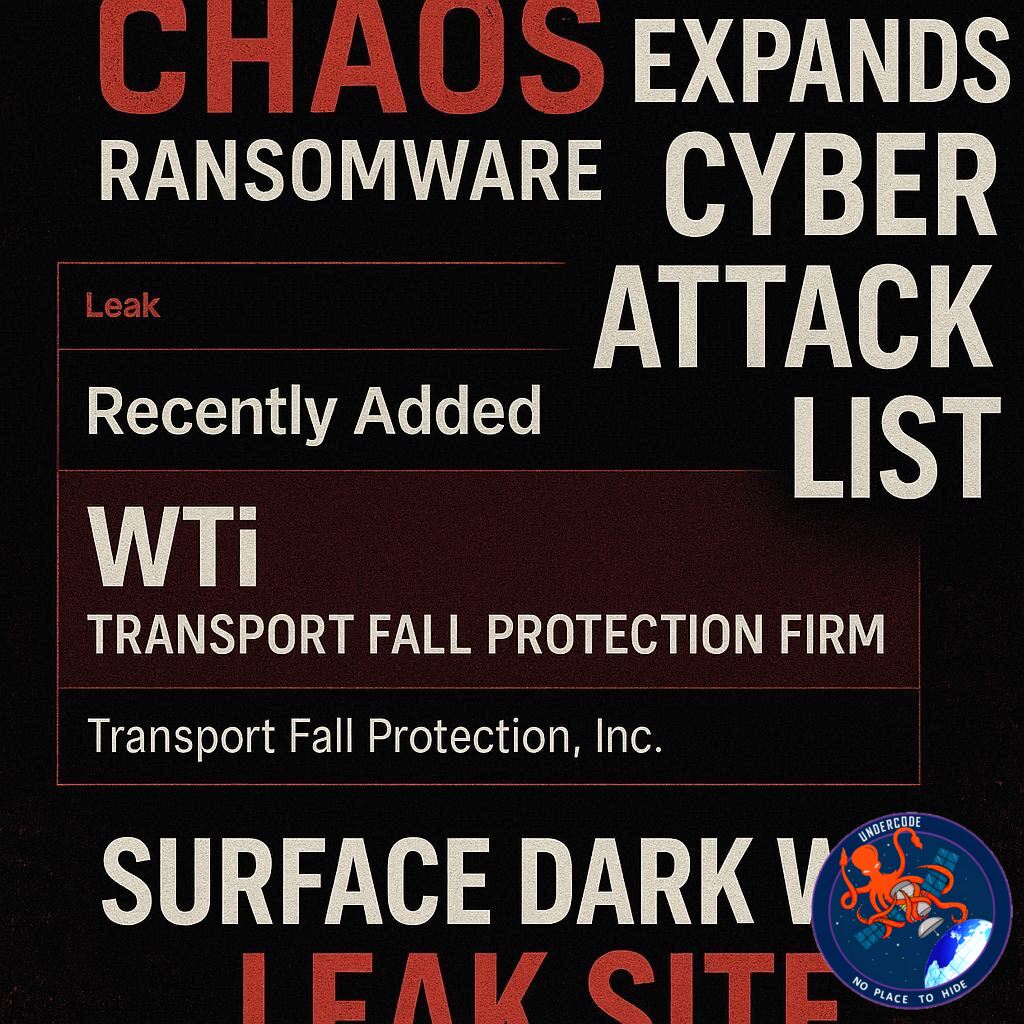 A New Wave of Cyber Fear Hits the Transportation and Safety Industries
The ransomware ecosystem continues to grow more aggressive in 2026, and the latest activity linked to the notorious Chaos ransomware group is raising fresh concerns across multiple industries. According to monitoring reports shared by the ThreatMon Threat Intelligence Team on X, the cybercriminal organization known as “Chaos” has allegedly added two new companies to its growing victim list: WTI Transport
and Fall Protect
.
The announcement appeared through dark web ransomware tracking activity observed by cybersecurity researchers. While no official breach disclosures have yet been publicly released by the affected organizations, the listings suggest that the threat actors may claim to possess stolen corporate data or have compromised internal systems.
The incident demonstrates how ransomware gangs are increasingly targeting organizations outside the traditional high-profile sectors such as banking or healthcare. Transportation logistics firms and workplace safety equipment providers are now becoming attractive targets due to their operational dependency on digital infrastructure and the potential disruption caused by downtime.
ThreatMon’s alert stated that the ransomware activity was detected on May 17, 2026, with timestamps indicating both companies were added to the Chaos leak portal within minutes of each other. The coordinated timing may suggest either a broader campaign or simultaneous exploitation efforts carried out by the same threat operators.
Transportation Companies Remain Prime Ransomware Targets
The inclusion of WTI Transport is particularly concerning because logistics and transportation companies hold sensitive operational data involving shipping routes, delivery schedules, customer information, and supply chain coordination. Cybercriminal groups understand that downtime in transportation can rapidly lead to financial losses, delayed shipments, and contractual damage.
Ransomware gangs frequently target logistics firms because they often rely on legacy infrastructure mixed with modern cloud systems, creating inconsistent security environments. If attackers gain access to dispatch systems or internal communication networks, they can potentially cripple operations within hours.
The transportation sector has experienced a dramatic rise in ransomware incidents over the past several years, especially after attackers realized that supply chain interruptions pressure companies into faster ransom negotiations. Even a short outage can create cascading effects across regional and international deliveries.
Fall Protection Industry Targeted in Unexpected Cyber Move
The second alleged victim, Fall Protect, operates in the industrial safety sector and specializes in OSHA-compliant fall arrest systems designed to protect workers in hazardous environments. On the surface, this may appear to be an unusual target for ransomware operators. However, engineering firms often store sensitive blueprints, manufacturing specifications, vendor contracts, and compliance documentation.
Industrial firms are becoming increasingly valuable to cybercriminals because proprietary engineering data can hold immense financial value. Beyond ransom payments, stolen intellectual property may be sold on underground forums or leveraged for extortion.
The targeting of a workplace safety company also highlights how ransomware groups are no longer limiting themselves to giant enterprises. Mid-sized engineering and manufacturing organizations are now heavily exposed due to weaker cybersecurity budgets and limited incident response capabilities.
The Chaos Ransomware Group Continues Building Its Reputation
The Chaos ransomware name has circulated across underground cybercrime communities for years, though multiple variants and imitators have appeared over time. Some versions were linked to destructive malware campaigns, while others evolved into more organized extortion operations.
Modern ransomware gangs operate more like businesses than isolated hackers. They maintain leak websites, negotiation portals, affiliate programs, and public “announcement” channels designed to pressure victims into paying. Listing a company on a leak site often serves as psychological warfare, signaling that stolen data may soon be released publicly.
Cybersecurity analysts increasingly warn that ransomware groups are focusing on reputation management within criminal communities. The more successful attacks they claim, the easier it becomes to recruit affiliates and spread fear among future targets.
Dark Web Leak Sites Become Digital Pressure Weapons
One of the most alarming trends in ransomware operations is the use of public leak portals. Instead of quietly encrypting files and demanding payment, attackers now publicly shame victims online.
These dark web leak pages often include company names, countdown timers, screenshots of internal files, and threats to release sensitive data unless negotiations begin. Even when attacks are not fully verified, the reputational impact alone can damage organizations significantly.
For companies suddenly named on ransomware leak sites, the crisis extends beyond technical recovery. Public trust, client relationships, regulatory obligations, and legal exposure all become immediate concerns.
Cybersecurity experts frequently note that ransomware attacks now involve triple extortion tactics:
Encrypting company systems
Stealing sensitive data
Threatening public exposure
This evolution has transformed ransomware from a purely technical threat into a full-scale business crisis.
What Undercode Says:
The Timing of These Listings Is Highly Suspicious
The nearly identical timestamps associated with both alleged victims strongly suggest a coordinated posting strategy rather than random individual disclosures. Cybercriminal groups often batch-upload victims after successful exploitation campaigns or after failed ransom negotiations.
This timing pattern may indicate that Chaos recently completed a broader targeting operation focused on industrial and operational businesses.
Smaller Firms Are No Longer Safe From Advanced Threat Actors
One of the biggest misconceptions in cybersecurity is that only billion-dollar corporations attract ransomware attention. In reality, medium-sized organizations frequently become easier and more profitable targets because they possess valuable operational data but lack enterprise-grade defenses.
Transportation and engineering firms often prioritize uptime and operational continuity over cybersecurity modernization. Attackers know this and exploit it aggressively.
Public Exposure Has Become the Real Weapon
Years ago, ransomware attacks focused mostly on encrypting files. Today, the public naming of victims may create even greater damage than the encryption itself.
When organizations appear on dark web leak portals, customers, partners, insurers, and regulators immediately begin questioning the company’s security posture. Even before any data leak is verified, reputational harm spreads rapidly across social media and industry networks.
This psychological pressure is now a central part of modern ransomware operations.
Cybercriminals Are Acting Like Media Organizations
Ransomware groups increasingly behave like PR firms mixed with extortion networks. They carefully manage branding, announcements, and public visibility.
Groups like Chaos understand that visibility amplifies fear. Public victim announcements create headlines, social media engagement, and panic inside targeted organizations. In many cases, the attackers rely on that fear to accelerate negotiations.
The modern ransomware landscape is no longer hidden in the shadows. It is deliberately theatrical.
Industrial Sectors Face a Dangerous Security Gap
Manufacturing, logistics, and engineering firms remain among the most vulnerable sectors globally because operational technology environments are difficult to secure. Many businesses still rely on outdated industrial systems that cannot easily receive security updates.
These environments create ideal conditions for ransomware operators:
Weak segmentation
Legacy credentials
Limited monitoring
Poor employee cyber awareness
Inconsistent patch management
Attackers only need one successful entry point.
Supply Chain Pressure Makes Transportation Firms Easy Targets
Transportation companies operate on speed and reliability. That urgency creates leverage for cybercriminals.
A delayed shipment, disrupted dispatch system, or inaccessible logistics platform can trigger contractual penalties and customer losses within hours. Attackers understand that operational pressure increases the likelihood of ransom discussions.
This is why logistics remains one of the fastest-growing ransomware target categories globally.
The Human Factor Still Drives Most Intrusions
Despite advances in cybersecurity technology, many ransomware incidents still begin with phishing emails, stolen credentials, or employee mistakes.
Attackers frequently exploit:
Weak passwords
Reused credentials
Unpatched VPN systems
Remote desktop exposure
Malicious email attachments
The technical sophistication of ransomware matters less when human error opens the door first.
Cybersecurity Visibility Is Becoming a Competitive Requirement
In 2026, cybersecurity is no longer just an IT issue. Clients increasingly expect transparency, incident response readiness, and measurable security maturity from vendors and partners.
Companies lacking clear cybersecurity strategies may face long-term reputational disadvantages even after recovering from attacks.
The market is shifting toward cyber resilience as a business expectation rather than a technical bonus.
🔍 Fact Checker Results
✅ Verified Threat Intelligence Source
ThreatMon publicly posted alerts identifying both companies as alleged Chaos ransomware victims on May 17, 2026.
✅ No Official Breach Confirmation Yet
At the time of reporting, there is no verified public statement confirming data theft or operational compromise from the affected organizations.
❌ Dark Web Listings Do Not Always Equal Full Breach Validation
Ransomware groups occasionally exaggerate claims or publish victim names before independently verified forensic confirmation emerges.
📊 Prediction
Cyber Extortion Campaigns Against Mid-Sized Businesses Will Surge
The ransomware landscape is likely entering a phase where mid-sized operational businesses become the primary hunting ground for cybercriminal groups. Transportation, engineering, manufacturing, and industrial service providers may experience a sharp rise in targeted extortion attempts due to their dependency on uninterrupted operations.
Leak Sites Will Become More Aggressive and Public
Ransomware operators are expected to intensify psychological pressure campaigns by using social media visibility, countdown leaks, and public naming tactics more aggressively. The line between cybercrime and digital intimidation campaigns will continue to blur.
Regulatory Pressure Could Increase After Repeated Incidents
Governments and insurance providers may begin demanding stricter cybersecurity compliance standards for operational industries. Companies unable to demonstrate adequate protections could face higher insurance costs, legal liabilities, and contract restrictions in the near future.
🕵️📝Let’s dive deep and fact‑check.
References:
Reported By: x.com
Extra Source Hub (Possible Sources for article):
https://www.facebook.com
Wikipedia
OpenAi & Undercode AI
Image Source:
Unsplash
Undercode AI DI v2
Bing
🔐JOIN OUR CYBER WORLD [ CVE News • HackMonitor • UndercodeNews ]
📢 Follow UndercodeNews & Stay Tuned:
𝕏 formerly Twitter 🐦 | @ Threads | 🔗 Linkedin | 🦋BlueSky | 🐘Mastodon


