
Listen to this Post
Introduction
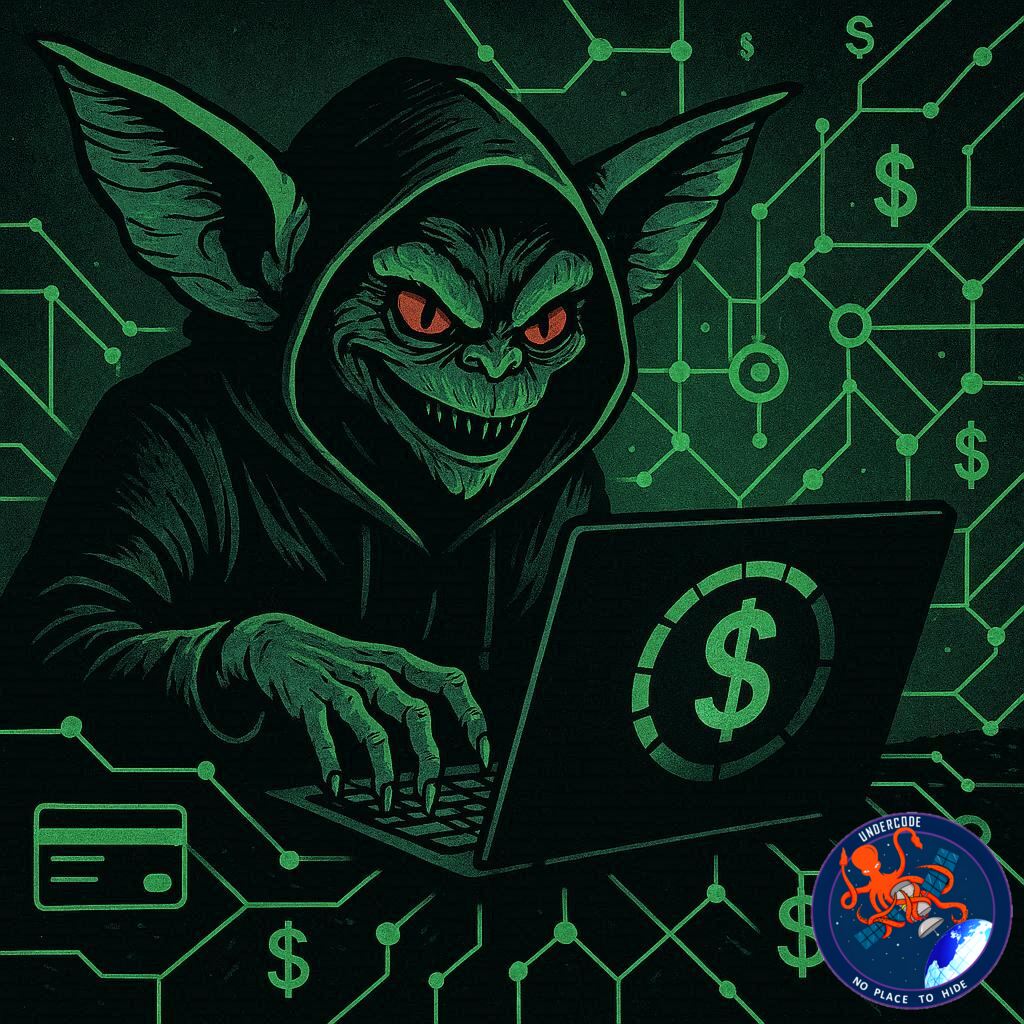
The latest variant of the Gremlin stealer malware represents a significant shift in modern cybercrime tooling, moving far beyond simple credential theft. Once considered a lightweight information stealer, it has now evolved into a modular and highly evasive attack framework focused on financial fraud, identity theft, and persistent system compromise. By abusing .NET resource files and embedding encrypted payloads in obscure sections of compiled code, Gremlin demonstrates how commodity malware is rapidly adopting techniques previously seen in advanced persistent threats.
Summary of the Original Report
The newest version of Gremlin stealer has introduced a major upgrade in stealth capabilities by weaponizing .NET resource files to conceal its malicious payload. Instead of storing executable logic in obvious code sections, it hides critical components inside resource blocks and decrypts them at runtime using a simple XOR-based routine. This allows it to evade both signature-based detection systems and basic heuristic analysis tools.
When executed, Gremlin gathers a wide range of sensitive data from infected systems. It collects payment card information, browser cookies, session tokens, clipboard content, cryptocurrency wallet details, and even credentials from FTP and VPN services. All stolen data is compressed into a ZIP archive labeled with the victim’s public IP address and exfiltrated to attacker-controlled infrastructure.
Earlier versions of Gremlin were relatively easy to analyze due to a lack of obfuscation and exposed internal symbols. However, the current variant introduces staged loading, where functions are decrypted and mapped into memory only when required, making static analysis significantly more difficult.
The malware is also packed using a commercial obfuscation tool that applies multiple layers of protection. This includes randomizing variable names, encrypting strings such as URLs, and implementing control flow obfuscation that creates unnecessary and confusing execution paths.
Security researchers have also identified expanded capabilities in this version. Gremlin now includes a Discord token stealer, a crypto clipboard hijacker that replaces wallet addresses in real time, and a WebSocket-based session hijacking module designed to bypass modern authentication protections.
At the infrastructure level, indicators of compromise include a command and control server hosted at a defanged IP address and multiple SHA256 hashes linked to different samples of the malware. At the time of discovery, some of these artifacts showed no detections on public scanning platforms, highlighting the effectiveness of its stealth mechanisms.
What Undercode Say:
Gremlin stealer is no longer a simple information grabber, it is evolving into a full-scale financial exploitation platform. The shift toward .NET resource abuse shows a deliberate attempt to exploit common development patterns used in enterprise applications, making detection harder in corporate environments.
One of the most concerning aspects is the malware’s transition from passive theft to active transaction manipulation. The crypto clipboard hijacker does not wait for data exfiltration, it intervenes directly in real-time financial activity, which increases the speed and impact of theft.
The use of staged decryption and runtime mapping is another indicator that malware developers are investing in reducing forensic visibility. Static analysis tools struggle when code only exists temporarily in memory, leaving fewer artifacts for investigators.
Control-flow obfuscation and string encryption are not new techniques, but their combination with .NET resource abuse creates a layered defense against reverse engineering. This suggests the authors are borrowing techniques from commercial packers and advanced APT toolkits.
The inclusion of Discord token theft highlights a shift toward targeting modern communication platforms, not just browsers and file systems. This expands the attack surface significantly, especially for users who rely on Discord for both personal and professional communication.
The crypto clipper module is particularly dangerous because it requires no user interaction after infection. Any copied wallet address becomes a potential point of exploitation, making even routine transactions unsafe.
Session hijacking through WebSocket interception shows awareness of modern authentication flows that rely on persistent connections rather than static cookies. This reflects a deeper understanding of web application architecture.
The malware’s ability to remain undetected at the time of discovery raises concerns about the speed at which new variants are bypassing traditional antivirus ecosystems. Signature-based defenses are clearly lagging behind.
From an operational perspective, the ZIP archiving of stolen data by victim IP suggests structured data management on the attacker side, likely supporting large-scale campaigns.
Overall, Gremlin is converging toward a modular malware-as-a-service model, where capabilities can be added or removed depending on the target profile.
This modularity also suggests that future versions could integrate additional financial fraud techniques, such as banking session manipulation or API-based account takeover.
The evolution from simple stealer to adaptive fraud toolkit signals a broader trend in cybercrime automation and specialization.
Security teams should treat such threats as dynamic platforms rather than static malware samples.
Detection strategies must shift toward behavioral monitoring and memory analysis rather than relying solely on file signatures.
The use of .NET is particularly important because it is widely used in enterprise software, increasing the likelihood of environmental blending.
This makes Gremlin harder to isolate in real-world corporate environments where .NET applications are common.
The malware’s reliance on runtime decryption also implies that sandbox environments may fail to fully capture its behavior.
Attackers are clearly optimizing for evasion at every stage of execution.
This places greater responsibility on endpoint detection systems to correlate activity across multiple layers rather than single events.
Fact Checker Results
✔ Gremlin stealer uses .NET resource-based obfuscation and XOR decryption techniques
✔ It steals financial and identity-related data including wallets, cookies, and session tokens
✔ Some samples initially show zero detections on public malware scanning platforms
Prediction
Gremlin is likely to evolve further into a fully modular malware-as-a-service platform with plug-and-play fraud modules. Future versions may expand into direct banking API abuse, AI-assisted phishing automation, and deeper integration with encrypted communication channels to evade detection even further.
🕵️📝Let’s dive deep and fact‑check.
References:
Reported By: cyberpress.org
Extra Source Hub (Possible Sources for article):
https://www.reddit.com/r/AskReddit
Wikipedia
OpenAi & Undercode AI
Image Source:
Unsplash
Undercode AI DI v2
Bing
🔐JOIN OUR CYBER WORLD [ CVE News • HackMonitor • UndercodeNews ]
📢 Follow UndercodeNews & Stay Tuned:
𝕏 formerly Twitter 🐦 | @ Threads | 🔗 Linkedin | 🦋BlueSky | 🐘Mastodon


