
Listen to this Post
Introduction
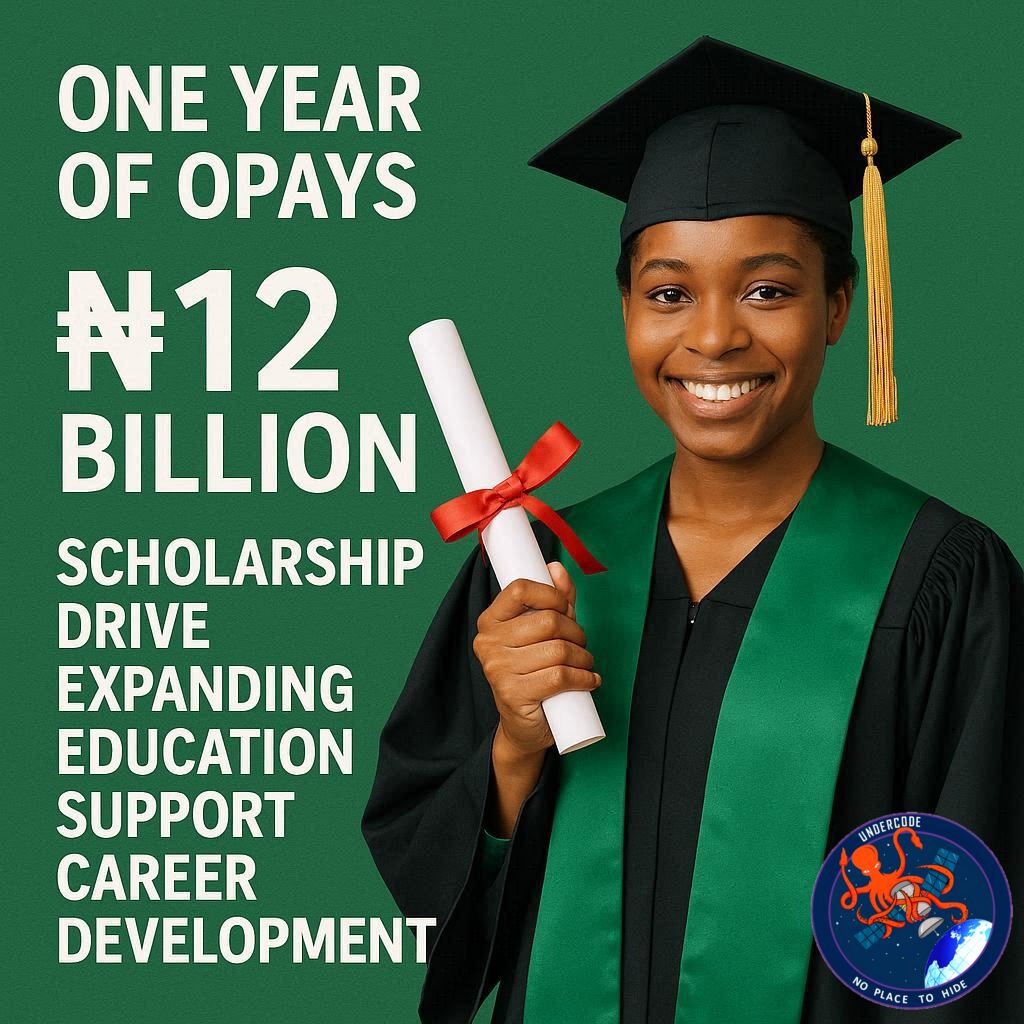
Access to higher education in Nigeria is often described as a milestone, but for many students, the real struggle begins after admission. Tuition fees, living costs, and academic pressure frequently push capable students to the edge of dropping out. Over the past year, OPay has positioned itself within this challenge through a long-term scholarship program designed not only to fund education but to stabilize the academic journey of thousands of students. What started as financial relief has gradually evolved into a broader educational support system that blends funding with opportunity, mentorship, and long-term empowerment.
Original Summary
OPay’s ₦1.2 billion scholarship initiative, launched as a 10-year commitment, is designed to support outstanding and financially challenged students across more than 20 tertiary institutions in Nigeria.
The program has already spent a year in operation, providing tuition assistance and reducing financial pressure for beneficiaries.
Many students report significant relief, with reduced dependence on loans and fewer financial disruptions during their academic sessions.
Parents of beneficiaries have also experienced reduced burden, especially in managing school fee obligations.
For several students, the scholarship has enabled them to focus more on academics instead of part-time survival jobs.
The initiative is framed not only as financial support but also as a dignity-restoring intervention for struggling households.
Across universities from Ife to Zaria and Calabar, students have shared testimonies of improved academic stability and emotional relief.
OPay’s intervention is presented as part of its broader corporate social responsibility strategy.
However, the company is not stopping at scholarships alone.
A new expansion plan titled OPay Scholars is being introduced to extend support beyond funding.
The 2026 edition will include OPay Futures, a National Innovation Challenge, and a structured career development pathway.
Students will be encouraged to propose real-world solutions to societal and technological problems.
The program will also feature webinars and expert-led bootcamps focused on technology, entrepreneurship, and career growth.
Industry professionals are expected to mentor participating students throughout the process.
A major highlight will be the Empowering Futures Conference, which will showcase student innovation and leadership.
The initiative aims to bridge the gap between academic learning and real-world employability.
OPay is positioning itself as a long-term partner in education, not just a financial sponsor.
The broader goal is to combine funding, mentorship, and exposure into one ecosystem.
The program reflects a shift from charity-based support to structured human capital development.
It also highlights the growing role of fintech companies in social development initiatives.
In a country where youth unemployment remains a challenge, such interventions are seen as strategic.
The scholarship model demonstrates how private companies can influence educational outcomes.
OPay’s sustained commitment signals long-term planning rather than short-term CSR activity.
The program continues to grow in scope, visibility, and expected impact.
Ultimately, it aims to help students transition from education into meaningful careers.
The initiative is increasingly being viewed as both an academic and economic empowerment tool.
It reflects a broader trend of corporate involvement in education reform efforts in Nigeria.
The expansion into innovation challenges suggests a focus on creativity and problem-solving.
OPay’s approach merges financial assistance with skill development pathways.
The initiative continues to evolve as it enters its next phase of implementation.
What Undercode Say:
OPay’s scholarship initiative represents a shift from traditional CSR models toward structured human capital investment.
The ₦1.2 billion, 10-year framework signals long-term strategic intent rather than short-term publicity efforts.
Education funding alone is no longer the core focus, but rather a blended model of support and career readiness.
This approach aligns with global trends where fintech companies expand into social infrastructure roles.
However, sustainability will depend on consistent execution beyond initial announcements and branding cycles.
The success of such programs is heavily tied to transparency in selection and distribution of scholarships.
Without proper oversight, large-scale scholarship schemes risk becoming symbolic rather than impactful.
OPay’s inclusion of innovation challenges introduces a competitive element that may increase student engagement.
Bootcamps and mentorship programs can significantly improve employability if properly implemented.
Yet, the real test lies in whether students actually transition into employment or entrepreneurship afterward.
Nigeria’s education system already produces graduates with limited job market alignment.
This initiative attempts to address that gap by integrating practical exposure early.
If successful, it could serve as a blueprint for private-sector education interventions.
The emphasis on leadership and innovation suggests a shift toward talent pipeline development.
Still, scalability across 20+ institutions will require strong coordination mechanisms.
There is also a risk of uneven impact depending on institutional partnerships.
The program’s success will depend on continuous feedback loops from beneficiaries.
It also raises questions about how outcomes will be measured over the 10-year period.
Key performance indicators such as graduate employability rates will be essential.
The inclusion of national conferences adds visibility but must translate into real opportunity access.
Corporate education programs often struggle when they become event-driven instead of outcome-driven.
OPay’s challenge will be balancing publicity with measurable impact.
If maintained properly, this initiative could reshape expectations for CSR in Nigeria’s fintech sector.
It also highlights the increasing privatization of educational support systems.
Long-term, such programs may influence how universities engage with private partners.
The model may inspire other fintech companies to adopt similar education pipelines.
However, dependency on corporate funding could also raise systemic concerns.
Diversification of funding sources remains important for educational stability.
Overall, the initiative is ambitious, structured, and socially relevant.
Its real value will only be proven through student outcomes over time.
Execution quality will determine whether it becomes a landmark program or a short-lived CSR milestone.
Fact Checker Results:
✅ The scholarship fund and 10-year ₦1.2 billion commitment are consistent with reported CSR frameworks.
⚠️ Details about future program outcomes and effectiveness are projections, not verified results.
❌ No confirmed long-term impact data is available yet for the 2026 expansion phase.
Prediction:
OPay’s scholarship ecosystem will likely expand into a full talent pipeline program over the next 3–5 years 🎓🚀
If execution remains consistent, it could become a benchmark CSR model in African fintech education support systems 📊
However, without measurable employment outcomes, its long-term reputation impact may remain limited ⚖️
🕵️📝Let’s dive deep and fact‑check.
References:
Reported By: www.legit.ng
Extra Source Hub (Possible Sources for article):
https://www.stackexchange.com
Wikipedia
OpenAi & Undercode AI
Image Source:
Unsplash
Undercode AI DI v2
Bing
🔐JOIN OUR CYBER WORLD [ CVE News • HackMonitor • UndercodeNews ]
📢 Follow UndercodeNews & Stay Tuned:
𝕏 formerly Twitter 🐦 | @ Threads | 🔗 Linkedin | 🦋BlueSky | 🐘Mastodon


