
Listen to this Post
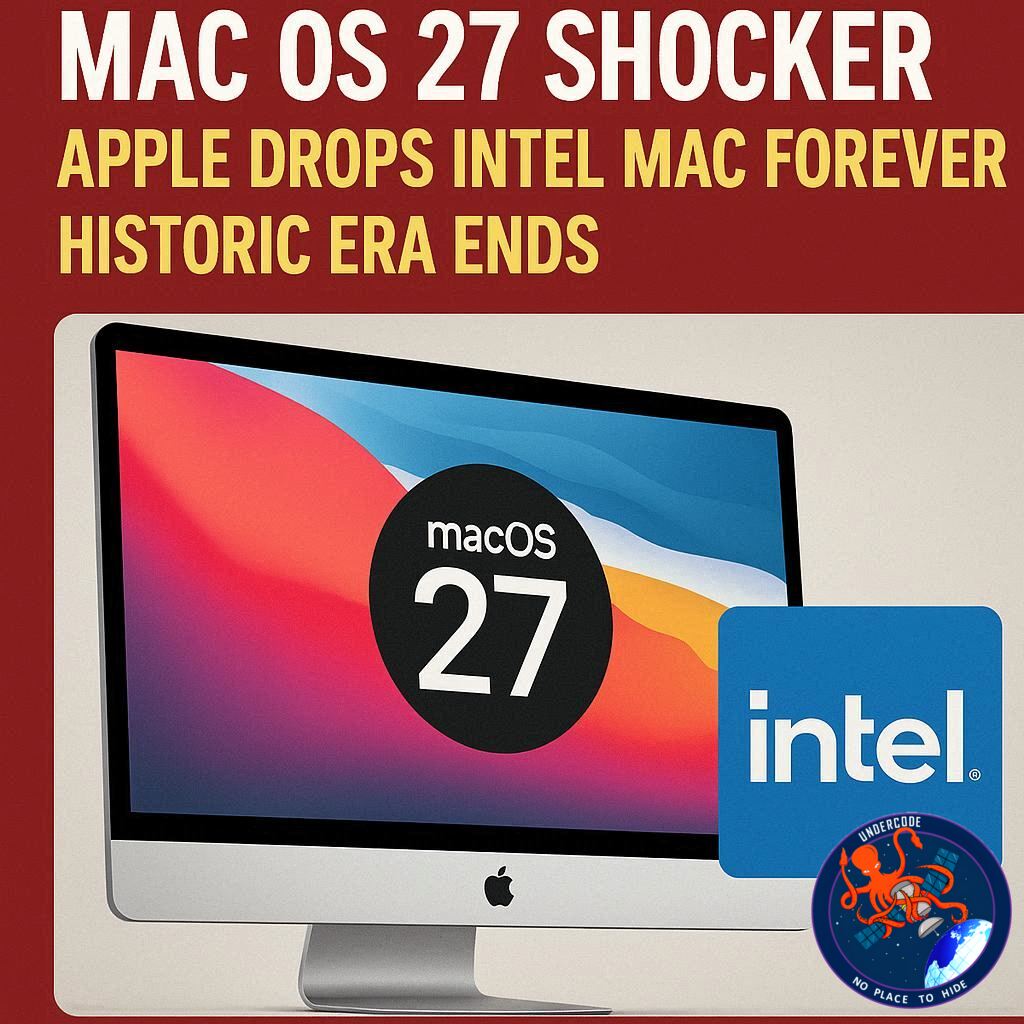 🔥 A Turning Point in Mac History No One Can Ignore
Apple is preparing to unveil macOS 27 at WWDC in just a few weeks, and the update is already shaping up to be one of the most controversial and defining releases in Mac history. While new features are expected to dominate the stage, the real headline is far more disruptive: macOS 27 will officially end support for Intel-based Macs. This marks the final phase of Apple’s long transition toward Apple silicon, closing the door on an entire generation of machines that once powered the Mac ecosystem.
For millions of users still relying on Intel Macs, this is not just another software update—it is a forced turning point that signals the end of the road for their devices.
🧠 macOS 27 Compatibility Breakdown: The End of Intel Support
macOS 27 represents a major architectural shift in Apple’s software strategy, becoming the first macOS version designed exclusively for Apple silicon. Apple had already telegraphed this move at WWDC last year, stating that macOS Tahoe would be the final release supporting Intel Macs. Now that warning is becoming reality.
The most significant change is the removal of support for four key Intel Mac models, which are currently the last surviving Intel machines still eligible for updates. Once macOS 27 arrives, these systems will no longer be able to install the new operating system or receive future macOS-level improvements.
This change effectively locks Intel Macs at macOS Tahoe, freezing their software evolution while Apple continues advancing its Apple silicon ecosystem.
💻 The Four Macs Losing Support in macOS 27
The following models are confirmed to be excluded from macOS 27 compatibility:
MacBook Pro (16-inch, 2019)
MacBook Pro (13-inch, 2020, Four Thunderbolt 3 ports)
iMac (2020)
Mac Pro (2019)
These devices represent the final generation of Intel-based Macs still officially supported. Their removal marks the end of Apple’s gradual phase-out strategy, which has been unfolding since the introduction of the M1 chip.
For users of these machines, macOS Tahoe will become the final major operating system update they receive, with only limited security patches likely continuing for a short period afterward.
🍏 Apple Silicon Becomes the Absolute Standard
Apple’s transition to Apple silicon is now entering its final and most decisive stage. With macOS 27, the company is fully committing its entire Mac lineup to its in-house chip architecture. This shift brings tighter hardware-software integration, improved performance efficiency, and longer-term optimization opportunities that Intel systems can no longer match.
Importantly, Apple is expected to continue supporting M1 Macs and newer models for several more years, meaning the Apple silicon ecosystem still has a long lifecycle ahead. However, Intel Macs are now officially being phased out of the future software roadmap.
This move simplifies Apple’s engineering process but creates a sharp divide between legacy users and modern Mac hardware.
⚠️ What This Means for Intel Mac Users
For users still operating Intel-based Macs, macOS 27 introduces a moment of unavoidable transition. While the devices will continue functioning, they will gradually become less compatible with future software innovations, developer tools, and optimized applications.
This shift does not immediately render Intel Macs useless, but it does signal a slow decline in relevance within Apple’s ecosystem. Over time, users may begin noticing reduced software support, fewer updates, and limited feature access compared to Apple silicon devices.
In practical terms, macOS 27 is the point where Intel Macs transition from active participants in Apple’s ecosystem to legacy hardware.
📱 A Broader Pattern Across Apple’s Ecosystem
Interestingly, reports suggest that Apple’s transition strategy is not limited to Macs. Early rumors indicate that iOS 27 may also drop support for several older iPhone models this year, continuing Apple’s broader push toward modern hardware ecosystems.
This pattern reflects Apple’s long-term strategy: reducing fragmentation, improving performance consistency, and focusing entirely on newer chip architectures across all devices.
The message is clear—Apple is accelerating the retirement of older hardware across its entire product line.
📊 Market and User Impact of the Transition
The removal of Intel Mac support will likely have mixed effects across the user base. On one hand, Apple silicon optimization allows for faster innovation cycles and more advanced features. On the other, it forces long-time Mac users into upgrade cycles sooner than expected.
Businesses and creative professionals using Intel Macs may feel the impact most strongly, as software compatibility and long-term stability become increasingly tied to Apple silicon systems.
At the same time, this shift could increase demand for used Apple silicon Macs, especially M1 and M2 models, as entry points into the modern macOS ecosystem.
📦 The Strategic Reason Behind Apple’s Decision
Apple’s decision is not sudden—it is the result of a carefully staged transition that began with the introduction of Apple silicon in 2020. By gradually reducing Intel support year after year, Apple ensured a smooth migration path for users while maintaining ecosystem stability.
Now, with performance parity long surpassed and efficiency gains clearly established, maintaining Intel support offers diminishing returns. Dropping it entirely allows Apple to streamline macOS development and focus on innovation without legacy constraints.
This also reduces engineering complexity, allowing macOS to evolve faster and integrate more deeply with Apple’s custom hardware.
🧩 What Undercode Say:
🧠 The End of Hybrid Mac Development Reality
macOS 27 marks the final breakdown of Apple’s dual-architecture era. Supporting both Intel and Apple silicon created long-term engineering friction, and this move ends that complexity entirely.
⚙️ Performance Optimization Over Compatibility
Apple is prioritizing efficiency, battery life, and unified architecture over backward compatibility. This decision reflects a long-term performance-first strategy rather than user retention of legacy systems.
📉 Intel Macs Enter a Controlled Obsolescence Phase
Rather than an abrupt cutoff, Apple is phasing Intel Macs into gradual obsolescence. Security updates may continue, but feature development ends, ensuring a smooth but inevitable retirement.
🚀 Apple Silicon Ecosystem Acceleration
With Intel removed, macOS development can now fully optimize for Apple silicon. This will likely lead to faster innovation cycles, more advanced AI integration, and deeper hardware-software synergy.
💼 Enterprise and User Migration Pressure
Businesses still relying on Intel Macs will increasingly face upgrade pressure as app developers begin prioritizing Apple silicon-only optimizations, accelerating migration timelines.
🔍 Fact Checker Results
✅ macOS 27 Intel Drop Confirmation
Apple has previously stated macOS Tahoe would be the last Intel-supported version, making the transition to Apple silicon exclusivity expected and consistent with official roadmap signals.
⚠️ Device List Accuracy
The listed Mac models (2019–2020 Intel devices) align with the final generation of Intel Macs still actively supported in recent macOS versions.
📌 Transition Timeline Validity
Apple’s phased migration from Intel to Apple silicon since 2020 supports the claim that macOS 27 represents the final cutoff point for Intel compatibility.
📈 Prediction
🔮 Full Apple Silicon Exclusivity Will Redefine macOS Evolution
macOS 27 is likely to be the beginning of a faster innovation cycle where Apple fully exploits its hardware-software integration, leading to major performance and AI-driven feature expansions in future updates.
💻 Intel Macs Will Shift Into Long-Term Legacy Status
Within a few years, Intel Macs will likely receive only minimal security patches before being fully retired from Apple’s active support ecosystem.
📉 Secondary Market Surge for Apple Silicon Devices
As Intel Macs lose support, demand for entry-level Apple silicon machines is expected to rise, reshaping the resale and upgrade market significantly.
🕵️📝Let’s dive deep and fact‑check.
References:
Reported By: 9to5mac.com
Extra Source Hub (Possible Sources for article):
https://www.stackexchange.com
Wikipedia
OpenAi & Undercode AI
Image Source:
Unsplash
Undercode AI DI v2
Bing
🔐JOIN OUR CYBER WORLD [ CVE News • HackMonitor • UndercodeNews ]
📢 Follow UndercodeNews & Stay Tuned:
𝕏 formerly Twitter 🐦 | @ Threads | 🔗 Linkedin | 🦋BlueSky | 🐘Mastodon


