
Listen to this Post
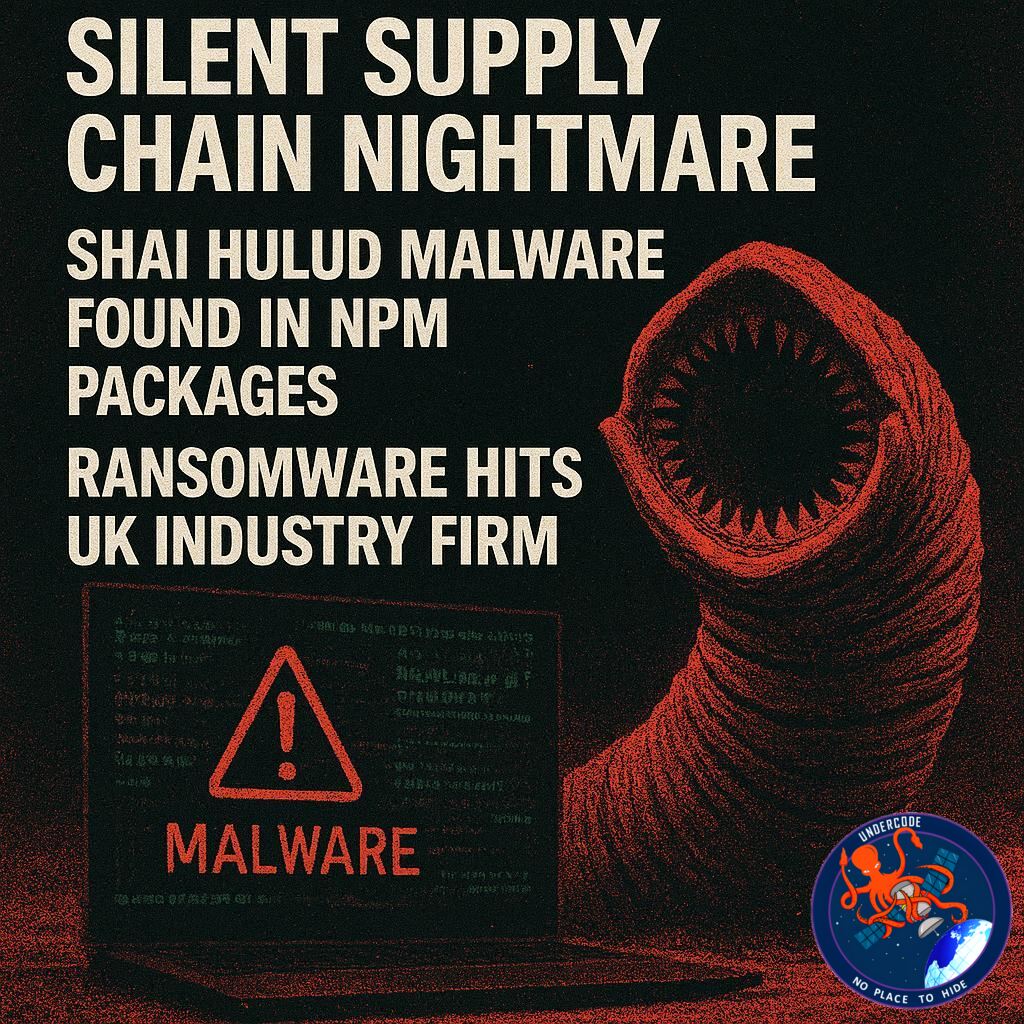 🧨 Introduction: A Double Cyber Strike Shaking Developers and Businesses
The global cybersecurity landscape has been hit by two alarming developments that expose how fragile modern digital infrastructure has become. On one side, malicious npm packages were discovered distributing the “Shai-Hulud” malware, a stealthy threat targeting developers by stealing sensitive credentials, wallet data, and internal secrets. On the other side, a long-established UK printing company has reportedly fallen victim to a ransomware attack, disrupting operations and raising concerns about potential data exposure. Together, these incidents highlight how both open-source ecosystems and traditional industries are increasingly under siege from highly organized cybercriminal groups.
📌 the Incident (Expanded Overview)
The Shai-Hulud malware campaign was identified inside compromised npm packages widely used in development environments
Attackers embedded the malware in seemingly legitimate open-source dependencies to maximize distribution
Once installed, it silently harvested developer credentials and authentication tokens
The malware was also designed to extract stored secrets from development environments
Wallet-related data was specifically targeted, suggesting possible crypto-focused monetization
In some cases, browser and system-stored account information was also stolen
Security researchers confirmed that the malware operated in a highly stealth-driven manner
Its purpose was to remain undetected while continuously exfiltrating sensitive data
A particularly dangerous variant included capabilities to transform infected systems into a DDoS botnet
This means compromised machines could be remotely used in large-scale traffic attacks
The attack demonstrates the growing risk of supply-chain infiltration in open-source ecosystems
Developers using npm packages may have unknowingly introduced the malware into production systems
The second incident involved a UK-based company in the printing sector founded in 1977
The firm reportedly suffered a ransomware attack attributed to a known cybercriminal group
Operations were disrupted as internal systems were locked or compromised
There are indications that sensitive business data may have been accessed or stolen
Ransomware attackers often demand payment in exchange for restoring system access
The attack highlights that even legacy industrial companies are not immune to modern cyber threats
Cybersecurity analysts believe the incidents reflect an increase in opportunistic and targeted cybercrime
Open-source ecosystems continue to be a primary vector for stealth malware distribution
Traditional businesses remain highly vulnerable due to outdated infrastructure
The dual nature of these attacks shows both software supply-chain and direct intrusion risks
Security experts are urging stricter package verification in development environments
Companies are also being advised to improve endpoint monitoring and incident response readiness
The Shai-Hulud malware campaign is considered particularly dangerous due to its modular design
Meanwhile, ransomware groups continue to evolve their tactics for higher financial impact
These incidents reinforce the importance of layered cybersecurity defenses across all sectors
Both events together signal a broader escalation in cyber threat complexity worldwide
What Undercode Say:
🧠 The Supply Chain is Now the Main Battlefield
The emergence of Shai-Hulud inside npm packages shows how attackers no longer need to breach systems directly
Instead, they poison the software pipeline itself, turning trusted tools into silent attackers
🧬 Open-Source Trust is Being Systematically Exploited
npm and similar ecosystems rely heavily on community trust, which attackers are actively abusing
Even widely used dependencies can now become hidden delivery mechanisms for malware payloads
💣 Multi-Purpose Malware Indicates Industrial-Level Cybercrime
The inclusion of credential theft, wallet targeting, and DDoS capabilities suggests a modular attack framework
This is no longer simple theft but a scalable cyber weapon system
🏴 Developer Environments Are High-Value Targets
Developers often hold elevated access keys, API tokens, and production credentials
Compromising one machine can lead to full infrastructure exposure
🔐 Ransomware Continues to Pressure Legacy Industries
The attack on a decades-old UK printing firm shows that traditional sectors remain soft targets
Outdated systems and weak segmentation make them ideal ransomware victims
⚙️ Dual-Front Cyber Threat Reality
The combination of supply-chain malware and ransomware incidents reflects a dual-layer threat landscape
One infiltrates development pipelines, the other cripples operational systems
📡 DDoS Capability Expands Attack Surface Risk
Turning infected machines into botnet nodes adds another dimension to the threat
This enables attackers to launch distributed attacks without additional infrastructure
💰 Financial Motivation Remains Central
Both credential theft and ransomware are ultimately driven by monetization strategies
Stolen data and system access are now treated as high-value digital commodities
🧯 Detection Remains a Critical Weak Point
The stealth nature of Shai-Hulud suggests that many organizations may already be compromised
Traditional antivirus tools are often insufficient against supply-chain malware
🌐 Ecosystem-Wide Security Reform is Needed
These incidents highlight the urgent need for dependency auditing and stricter package validation
Without systemic reform, open-source ecosystems remain vulnerable entry points
🔍 Fact Checker Results
✔️ Malware Presence in npm Confirmed
Security reports indicate malicious packages were used as delivery vectors for credential-stealing malware
✔️ Ransomware Attack Pattern Matches Known Groups
The attack on the UK printing firm aligns with typical ransomware disruption and data extortion tactics
⚠️ Attribution Details Still Limited
Specific technical attribution for Shai-Hulud and the ransomware group may still be under active investigation
📊 Prediction
Cybersecurity analysts are likely to uncover additional compromised npm packages in the coming weeks
More developer-focused supply-chain attacks are expected as attackers refine stealth injection methods
Ransomware activity against mid-sized legacy industries will likely increase due to weaker defenses
Security tools will shift toward automated dependency verification and real-time package integrity monitoring
Governments and tech ecosystems may push for stricter open-source security compliance frameworks
Overall cyber threat activity is expected to escalate in both frequency and sophistication through 2026
🕵️📝Let’s dive deep and fact‑check.
References:
Reported By: x.com
Extra Source Hub (Possible Sources for article):
https://www.quora.com/topic/Technology
Wikipedia
OpenAi & Undercode AI
Image Source:
Unsplash
Undercode AI DI v2
Bing
🔐JOIN OUR CYBER WORLD [ CVE News • HackMonitor • UndercodeNews ]
📢 Follow UndercodeNews & Stay Tuned:
𝕏 formerly Twitter 🐦 | @ Threads | 🔗 Linkedin | 🦋BlueSky | 🐘Mastodon


