
Listen to this Post
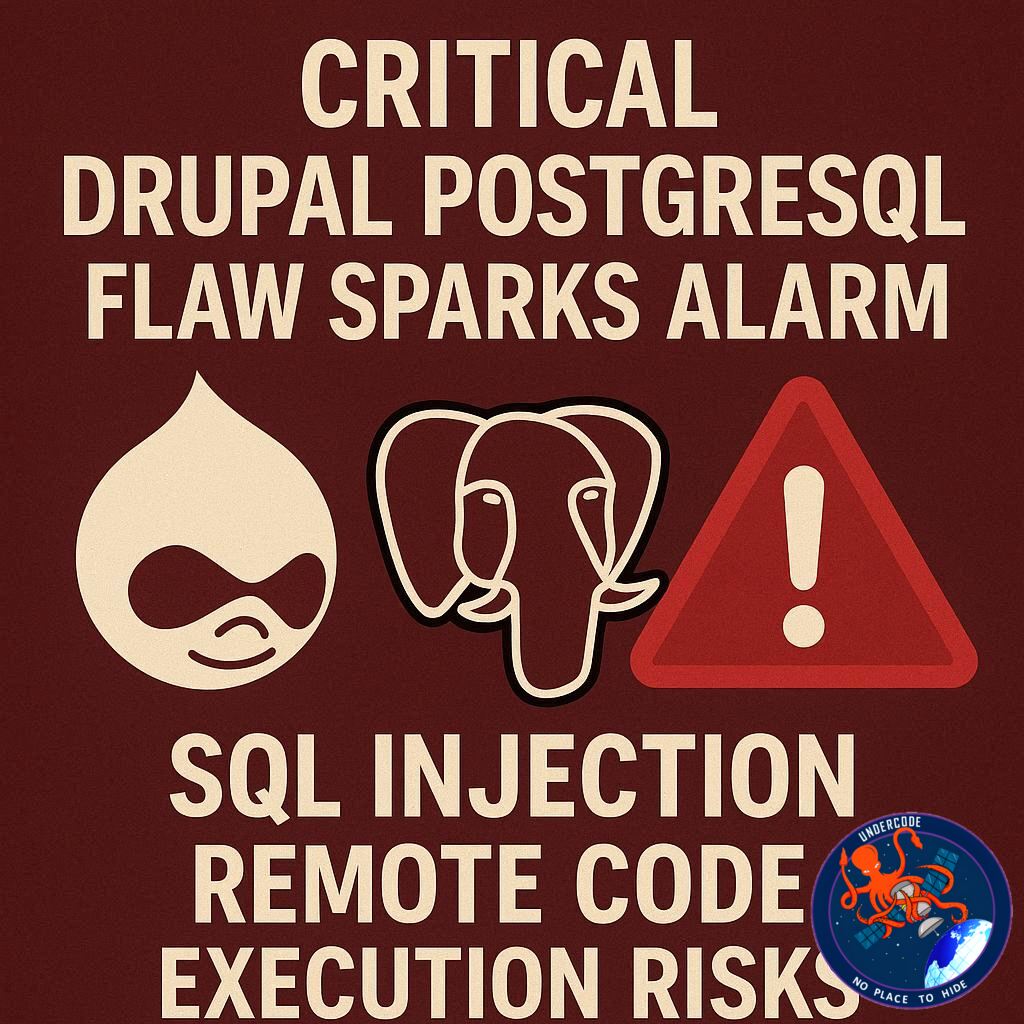 A New Drupal Security Crisis Raises Serious Questions for Website Administrators
A newly disclosed vulnerability affecting Drupal Core has triggered urgent concern across the cybersecurity industry after security researchers revealed that the flaw could allow attackers to compromise vulnerable websites through SQL injection attacks. The issue, tracked as CVE-2026-9082, specifically impacts PostgreSQL-based Drupal deployments and has already gained attention among threat intelligence communities on X and cybersecurity monitoring platforms.
According to reports shared by Cybersecurity News Everyday, the vulnerability is considered critical because it opens the door to multiple forms of exploitation, including privilege escalation, sensitive information disclosure, database manipulation, and potentially even remote code execution. For organizations relying on Drupal to power enterprise websites, government portals, educational platforms, and media networks, the implications are extremely serious.
The flaw appears to affect sites configured with PostgreSQL databases rather than the more common MySQL or MariaDB environments. While this limits the overall exposure compared to a universal Drupal vulnerability, PostgreSQL remains heavily used in high-security and enterprise deployments where scalability and advanced database capabilities are required.
Security researchers warn that attackers could exploit the weakness to inject malicious SQL commands into backend systems. Once successful, threat actors may gain unauthorized access to sensitive information, elevate user permissions, or manipulate website content. In worst-case scenarios, attackers could potentially execute arbitrary code remotely, giving them direct control over vulnerable servers.
Drupal developers responded quickly by releasing security patches designed to mitigate the threat. Administrators were strongly advised to update their installations immediately and review database permissions, web application firewall configurations, and access logs for unusual activity.
The timing of this vulnerability disclosure comes during an especially difficult year for defenders. Cybersecurity analysts have noted that vulnerability disclosures continue to accelerate at an unprecedented rate. Reports referenced in the same social media discussion indicate that more than 48,000 CVEs were recorded during 2025 alone, reflecting the enormous pressure faced by security teams worldwide.
Researchers also highlighted a growing imbalance between vulnerability discovery and remediation efforts. Exploitation campaigns are now developing faster than organizations can patch systems, creating dangerous exposure windows that attackers actively exploit. Despite the rising number of vulnerabilities, only a relatively small subset of high-priority CVEs receives broad defensive attention, leaving many organizations exposed to overlooked risks.
The rise of AI-assisted attack development is adding even more pressure to cybersecurity operations. Automated reconnaissance tools, AI-enhanced phishing campaigns, and machine-assisted vulnerability discovery are helping attackers scale operations faster than ever before. At the same time, weak visibility into software supply chains and poor patch management practices continue to create opportunities for compromise.
Drupal has faced critical security moments before, including infamous vulnerabilities like Drupalgeddon, which demonstrated how rapidly attackers weaponize publicly disclosed flaws. Because Drupal powers thousands of public-facing websites globally, newly disclosed critical vulnerabilities often become immediate targets for scanning bots and exploitation frameworks within hours of publication.
Cybersecurity experts recommend several urgent defensive actions. Organizations should apply official Drupal patches immediately, restrict unnecessary database permissions, monitor server behavior for anomalies, enable web application firewalls, and conduct full vulnerability scans across production infrastructure. Teams are also encouraged to verify backup integrity in case incident recovery becomes necessary.
For companies operating high-profile Drupal deployments, the incident serves as another reminder that modern cybersecurity defense requires constant vigilance, rapid patch deployment, and proactive threat monitoring rather than reactive incident response alone.
What Undercode Says:
The Real Danger Is Not Just the Vulnerability — It’s the Speed of Exploitation
The disclosure of CVE-2026-9082 highlights a larger and more troubling trend in cybersecurity: attackers are becoming operationally faster than defenders. The technical details of the flaw are alarming on their own, but the broader concern is how quickly cybercriminals can industrialize exploitation once a vulnerability becomes public knowledge.
Drupal remains a preferred platform for governments, universities, NGOs, and enterprise organizations because of its flexibility and modular architecture. Unfortunately, that popularity also makes it an attractive target. Attackers know that even a niche database-specific flaw can expose valuable infrastructure.
The PostgreSQL-only limitation may initially sound reassuring, but in practice, PostgreSQL environments are often associated with larger, more security-sensitive deployments. That means successful exploitation could impact systems holding regulated data, confidential records, or mission-critical services.
Another important factor is attacker automation. Modern threat groups no longer rely solely on manual reconnaissance. Automated scanners continuously sweep the internet for exposed Drupal instances, outdated plugins, and unpatched database integrations. The moment a CVE becomes public, weaponization efforts often begin immediately.
AI is accelerating this ecosystem dramatically. Threat actors now use AI-assisted scripting to generate exploit variations, identify weak configurations, and automate privilege escalation paths. Defensive teams meanwhile still depend heavily on human approval chains, maintenance windows, and fragmented patch management workflows.
This imbalance is becoming one of cybersecurity’s biggest structural problems.
The reference to over 48,000 CVEs during 2025 is particularly revealing. Security teams are drowning in alerts, advisories, and patch notices. In many organizations, vulnerability management has shifted from a prevention model into a prioritization exercise where teams simply cannot address every issue fast enough.
That creates dangerous blind spots.
Even more concerning is the fact that many organizations assume database-layer attacks are less likely than web-layer exploits. In reality, SQL injection vulnerabilities remain among the most devastating attack vectors because they directly target the logic connecting applications to their data stores.
If remote code execution is achievable through this Drupal flaw, the situation becomes significantly more severe. RCE vulnerabilities often allow attackers to move from website compromise into full infrastructure takeover. Once inside, threat actors can pivot laterally across networks, deploy ransomware, steal credentials, or establish long-term persistence.
This incident also demonstrates why “security through obscurity” fails repeatedly. Some administrators may believe using PostgreSQL instead of more common databases reduces exposure. However, attackers actively analyze less common deployment models precisely because they are sometimes patched more slowly.
Patch latency remains one of the biggest risks in enterprise cybersecurity. Many organizations delay updates due to operational concerns, compatibility fears, or maintenance scheduling limitations. Unfortunately, attackers understand this behavior and design campaigns around the predictable delay between disclosure and remediation.
Another overlooked issue is visibility. Many enterprises still do not have complete inventories of their public-facing applications, shadow IT assets, or forgotten development environments. A patched production server does not help if staging systems remain vulnerable and internet-accessible.
The mention of supply chain security in the broader discussion is also important. Modern web platforms depend heavily on third-party modules, APIs, plugins, and cloud services. Every integration expands the attack surface. Even if Drupal Core is patched quickly, related components may introduce secondary risks.
Organizations should treat this event as a strategic warning rather than a temporary security alert.
The cybersecurity industry is entering an era where continuous exposure management matters more than occasional patch cycles. Reactive security models are becoming obsolete against automated adversaries operating at machine speed.
Security teams that survive this transition will likely rely more heavily on behavioral analytics, attack surface monitoring, automated patch validation, and real-time threat intelligence integration.
The Drupal vulnerability itself may eventually disappear from headlines, but the operational lessons behind it are likely to shape cybersecurity strategy for years.
🔍 Fact Checker Results
✅ CVE-2026-9082 was reported as a critical Drupal Core vulnerability affecting PostgreSQL deployments and associated with SQL injection risks.
✅ Security concerns involving privilege escalation, information disclosure, and possible remote code execution are consistent with the reported threat descriptions.
❌ There is currently no public evidence in the provided source confirming large-scale active exploitation campaigns against this specific vulnerability yet.
📊 Prediction
The next major phase of cybersecurity defense will focus less on traditional antivirus protection and more on automated exposure management platforms capable of identifying vulnerable assets in real time. Vulnerabilities like CVE-2026-9082 demonstrate how quickly attackers can weaponize flaws after disclosure. Over the next few years, organizations running open-source platforms such as Drupal will increasingly adopt AI-assisted patch prioritization, autonomous monitoring systems, and continuous attack-surface validation tools to reduce human response delays. At the same time, threat actors will continue targeting high-value CMS platforms because they offer scalable access to governments, enterprises, and media infrastructure worldwide.
🕵️📝Let’s dive deep and fact‑check.
References:
Reported By: x.com
Extra Source Hub (Possible Sources for article):
https://www.quora.com/topic/Technology
Wikipedia
OpenAi & Undercode AI
Image Source:
Unsplash
Undercode AI DI v2
Bing
🔐JOIN OUR CYBER WORLD [ CVE News • HackMonitor • UndercodeNews ]
📢 Follow UndercodeNews & Stay Tuned:
𝕏 formerly Twitter 🐦 | @ Threads | 🔗 Linkedin | 🦋BlueSky | 🐘Mastodon | 📺Youtube


