
Listen to this Post
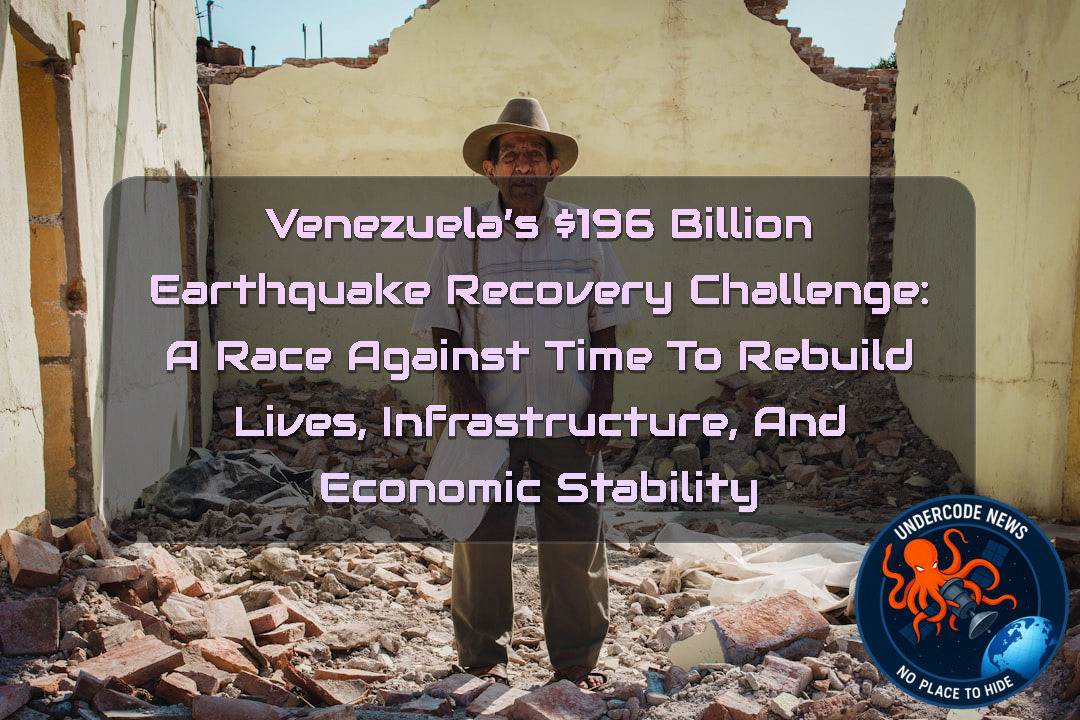 Introduction: A Nation Facing One of Its Greatest Reconstruction Challenges
Almost one month after powerful earthquakes struck Venezuela, the country faces a massive humanitarian and economic challenge. The disaster has left behind damaged homes, disrupted public services, weakened infrastructure, and created a long road toward recovery. According to a World Bank Group assessment, the earthquakes may have caused approximately $19.6 billion (€17.2 billion) in direct physical damage, making it one of the most significant natural disasters Venezuela has experienced in decades.
The scale of destruction highlights a difficult reality: rebuilding will not only require repairing buildings and roads, but also restoring economic confidence, protecting vulnerable communities, and creating stronger systems capable of surviving future disasters. The recovery process will depend heavily on how quickly Venezuela can organize resources, attract investment, and prioritize the communities most affected.
World Bank Assessment Reveals Massive Scale of Earthquake Damage
The World Bank Group’s Global Rapid Damage Estimation (GRADE) report provided one of the earliest comprehensive evaluations of the earthquake impact. The assessment was designed to help Venezuela’s government and international development partners understand the extent of the damage and determine where recovery efforts should begin.
The report estimated that the earthquake caused nearly $19.6 billion in direct physical losses. This figure represents damage to homes, infrastructure, commercial structures, and other essential assets across affected regions.
World Bank Vice President for Latin America and the Caribbean, Susana Cordeiro Guerra, emphasized that reliable information is essential after major disasters. Without accurate data, governments risk wasting resources or failing to support the communities that need assistance most.
The assessment provides Venezuela with an evidence-based foundation for planning reconstruction efforts and identifying the sectors requiring immediate attention.
Residential Buildings Suffered the Largest Share of Destruction
According to the GRADE assessment, residential buildings absorbed the largest portion of earthquake damage, representing approximately 47% of total losses.
This means millions of families may face housing insecurity, displacement, or difficult living conditions during the reconstruction period. Damaged homes create challenges beyond physical structures because they affect employment, education, healthcare access, and community stability.
Infrastructure accounted for approximately 27% of the damage, while non-residential buildings represented around 26%. Damage to infrastructure is especially concerning because roads, electricity networks, water systems, and public facilities are essential for supporting recovery.
The states of La Guaira and Distrito Capital experienced some of the heaviest impacts, together accounting for roughly half of the total estimated damage.
Economic Recovery Depends on the Speed of Reconstruction
The earthquake’s consequences extend far beyond destroyed buildings. The pace of reconstruction will determine whether Venezuela experiences a faster recovery or prolonged economic hardship.
The World Bank analysis warned that if reconstruction moves slowly, Venezuela could require more than a decade to fully recover. Limited public and private investment capacity means reconstruction funding could compete with other economic priorities.
A delayed rebuilding process could reduce economic growth, increase unemployment pressures, and deepen existing social difficulties.
However, faster reconstruction supported by stronger investment could significantly reduce long-term economic damage. Rapid rebuilding could restore business activity, protect communities, and prevent temporary damage from becoming permanent economic decline.
The GRADE Method Uses Advanced Technology to Measure Disaster Impact
The World Bank’s GRADE methodology provides a rapid and independent way to estimate disaster damage after major events.
Instead of relying only on traditional ground inspections, the system combines multiple sources of information, including satellite imagery, remote sensing technology, engineering models, historical disaster data, and population information.
For Venezuela, researchers combined earthquake damage simulations, catastrophe risk models, structural vulnerability analysis, and estimated values of buildings and infrastructure.
The assessment also incorporated information from government agencies, community organizations, development partners, media reports, and social media observations.
This approach allows experts to quickly understand disaster consequences and support governments in making faster recovery decisions.
Vulnerable Communities Must Be at the Center of Reconstruction
The World Bank highlighted that rebuilding cannot focus only on repairing physical structures. Social vulnerability must also be considered.
Factors such as income levels, housing quality, age, disability, health conditions, and household structure influence how severely people experience disasters.
The seven most affected states, including Miranda, La Guaira, Distrito Capital, Carabobo, Yaracuy, Aragua, and Falcón, contain approximately 11.5 million people, representing around 40% of Venezuela’s population.
These areas also contain nearly half of Venezuela’s exposed buildings and infrastructure, with an estimated value of approximately $657 billion.
Many vulnerable groups include female-headed households, single-parent families, elderly residents, and people with disabilities. For these communities, even small disruptions to essential services can create serious consequences.
Restoring Electricity and Water Systems Could Prevent Greater Inequality
The earthquake recovery process must prioritize essential services such as electricity, clean water, healthcare access, and transportation.
The World Bank warned that service interruptions could disproportionately harm vulnerable populations. A household with limited income or elderly members may experience much greater hardship from a power outage or water shortage than a financially stable household.
If basic services remain unavailable for long periods, existing inequalities could become worse.
A successful reconstruction strategy must therefore combine physical rebuilding with social protection measures. Restoring infrastructure quickly can help communities return to normal life while preventing deeper economic and social damage.
Venezuela Faces Institutional and Financial Recovery Obstacles
Although rebuilding plans can be created using advanced assessments, implementation remains one of Venezuela’s greatest challenges.
Large-scale reconstruction requires strong institutions, effective coordination, transparent funding management, and technical expertise.
Population size, damaged infrastructure networks, and limited institutional capacity may slow the response process.
International cooperation could become an important factor in Venezuela’s recovery. Partnerships with global organizations, development agencies, and technical experts may provide additional resources and knowledge needed to rebuild stronger systems.
What Undercode Say:
The Venezuela earthquake disaster represents more than a construction challenge. It is a test of national resilience, economic management, and long-term planning.
A $19.6 billion damage estimate shows that disasters can create economic consequences far beyond immediate destruction.
The biggest risk is not only what was destroyed, but what happens if reconstruction moves too slowly.
A damaged home can be rebuilt. A damaged economy requires much more time.
The recovery strategy must focus on creating stronger infrastructure rather than simply replacing what existed before.
Modern reconstruction should include earthquake-resistant buildings, improved emergency response systems, and stronger public infrastructure standards.
Technology will play a major role in future disaster management.
Satellite monitoring, artificial intelligence models, geographic information systems, and real-time data collection can help governments respond faster.
The GRADE methodology demonstrates how technology can transform disaster response from reactive action into strategic planning.
Venezuela’s recovery success will depend heavily on prioritization.
Repairing critical infrastructure should come before less urgent projects.
Electricity networks, water systems, hospitals, transportation routes, and communication systems must receive immediate attention.
Another important factor is protecting vulnerable populations.
Disasters rarely affect everyone equally.
Low-income families, elderly residents, and people with disabilities often experience longer recovery periods because they have fewer resources available.
A reconstruction plan that ignores social vulnerability could rebuild buildings while leaving communities behind.
Economic recovery also requires confidence.
Businesses are more likely to invest when infrastructure becomes reliable and government recovery plans appear stable.
A successful rebuilding program could create jobs, stimulate local industries, and improve Venezuela’s economic outlook.
However, failure to act quickly could create a cycle of declining investment and increasing social pressure.
The earthquake should also serve as a warning about future risks.
Climate change, urban expansion, and aging infrastructure are increasing disaster challenges worldwide.
Countries must invest before disasters happen, not only after destruction occurs.
For Venezuela, this recovery period represents both a challenge and an opportunity.
The country can rebuild older systems exactly as they were, or it can create safer, smarter, and more resilient infrastructure.
The decisions made during the next several months could influence Venezuela’s development path for decades.
✅ The World Bank Group published a GRADE assessment estimating approximately $19.6 billion in earthquake-related direct physical damage.
✅ Residential buildings represented the largest category of damage, accounting for about 47% of total losses.
❌ Claims about the final total reconstruction cost cannot yet be confirmed because recovery expenses may change depending on rebuilding strategies, inflation, and future assessments.
Prediction
(+1) Positive Recovery Outlook
If Venezuela accelerates reconstruction efforts and successfully attracts international support, damaged communities could recover faster than expected.
Investment in stronger infrastructure could reduce future disaster risks and improve long-term economic stability.
Modern rebuilding strategies could create new employment opportunities and strengthen essential services.
If reconstruction remains slow because of financial or institutional limitations, economic recovery could extend beyond a decade.
Delayed restoration of electricity, water, and transportation systems may increase social inequality.
Weak coordination between government agencies and partners could reduce the effectiveness of recovery programs.
Deep Analysis: Monitoring Earthquake Recovery With Linux and Open-Source Tools
Using Linux Systems for Disaster Data Processing
Emergency teams can use Linux environments to process satellite data, geographic information, and infrastructure reports.
Example system preparation:
sudo apt update
sudo apt install python3 python3-pip gdal-bin
Processing Geographic Disaster Data
Open-source geographic tools can analyze damaged areas and identify priority zones.
Example:
gdalinfo earthquake_damage_map.tif
This command provides metadata about satellite imagery used for damage assessment.
Automating Recovery Reports
Python scripts running on Linux servers can process thousands of infrastructure records.
Example:
python3 recovery_analysis.py --input damage_data.csv --output report.html
Monitoring Infrastructure Changes
Recovery teams can compare satellite images over time.
Example workflow:
mkdir venezuela_recovery
cd venezuela_recovery
wget disaster-imagery-data-source
Protecting Recovery Data
Large disaster databases require security controls.
Example:
sudo ufw enable
sudo ufw allow ssh
Building Long-Term Resilience
Linux-based systems can support:
Satellite image processing
Emergency communication platforms
Infrastructure monitoring
Population risk analysis
Reconstruction tracking dashboards
Technology alone cannot rebuild communities, but accurate information can help governments make better decisions and direct resources where they are needed most.
▶️ Related Video (74% Match):
🕵️📝Let’s dive deep and fact‑check.
🎓 Live Courses & Certifications:
Join Undercode Academy for Verified Certifications
🚀 Request a Custom Project:
Secure, high-velocity infrastructure and disruptive technological engineering. Contact our engineering team for high-tier development and proprietary systems:
[email protected]
💎 Smart Architecture | 🛡️ Secure by Design | ⭐ Trusted by Thousands
References:
Reported By: www.euronews.com
Extra Source Hub (Possible Sources for article):
https://www.quora.com
Wikipedia
OpenAi & Undercode AI
Image Source:
Unsplash
Undercode AI DI v2
🔐JOIN OUR CYBER WORLD [ CVE News • HackMonitor • UndercodeNews ]
📢 Follow UndercodeNews & Stay Tuned:
𝕏 formerly Twitter 🐦 | @ Threads | 🔗 Linkedin | 🦋BlueSky | 🐘Mastodon | 📺Youtube


