
Listen to this Post
 A Final Filled With Emotion, Anger, and Unanswered Questions
The 2026 FIFA World Cup final was supposed to be remembered as a historic football spectacle, a battle between two global giants competing for the biggest prize in the sport. Instead, days after Spain lifted the trophy at New Jersey’s MetLife Stadium, the match remains surrounded by controversy, accusations, emotional reactions, and heated debates among supporters.
Argentina’s defeat to Spain, decided by Ferran Torres’ extra-time goal on Sunday, July 19, has triggered a wave of frustration among Argentine fans. Thousands of supporters believe important moments during the match deserve further review, while others argue that football’s biggest matches are often shaped by difficult refereeing decisions that cannot simply be reversed after the final whistle.
The controversy intensified after fan Gisela Sánchez launched a petition on Change.org demanding FIFA replay the final. The campaign quickly attracted tens of thousands of signatures, crossing more than 80,739 supporters at the time of reporting.
However, the petition has created a debate that extends far beyond Argentina and Spain. It raises questions about referee accountability, technology in football, fan influence, and whether online movements can affect official sporting decisions.
The Petition Calling for a World Cup Final Replay
A Digital Protest Against the Referee’s Decisions
The petition claims Slovenian referee Slavko Vincic delivered a “controversial and corrupt” performance during the final and asks FIFA to investigate several decisions made during the match.
Supporters behind the campaign argue that some moments appeared to favor Spain and point toward videos circulating on social media as evidence. These clips have fueled online discussions, with fans analyzing tackles, challenges, fouls, and possible missed decisions.
The emotional reaction is understandable. World Cup finals are not ordinary matches. They represent years of preparation, national pride, and the dreams of millions of supporters. When a team loses such a defining game, controversial moments can become symbols of disappointment.
However, accusations of corruption require strong evidence. At present, the petition has not provided verified proof demonstrating intentional wrongdoing by the referee or match officials.
Why FIFA Is Unlikely to Replay the Match
Football Rules Set a Very High Standard for Replays
Although online petitions can generate massive public attention, they do not have the authority to change official football results.
FIFA regulations allow matches to be replayed only under extraordinary circumstances, such as major violations of competition rules, technical failures, or decisions made by authorized sporting bodies before a result becomes final.
A disagreement over refereeing decisions, even controversial ones, is usually not enough to force a replay.
Football history shows that referees can make mistakes, but governing organizations rarely overturn results because of individual calls. Otherwise, almost every major tournament could face endless replay demands.
A World Cup final is judged by the rules that existed during the match, not by emotional reactions afterward.
Previous World Cup Replay Campaigns Show a Similar Pattern
France Faced a Comparable Situation After Qatar 2022
This is not the first time a major tournament final has produced calls for a replay.
After Argentina defeated France in the 2022 World Cup final, hundreds of thousands of French supporters signed a petition demanding another match. Critics questioned refereeing decisions made by Polish referee Szymon Marciniak.
The response from football authorities was clear: the result remained official.
Similar situations have occurred throughout football history. However, successful replays are extremely rare and generally involve technical errors rather than controversial interpretations of decisions made during normal play.
One famous example came in 2006 when a World Cup qualifying match between Uzbekistan and Bahrain was replayed because of a referee’s technical mistake involving the application of the rules. It was not caused by fans disagreeing with judgment calls.
Argentina Fans Choose Pride Over Anger
Supporters Celebrate a Historic Journey Despite Defeat
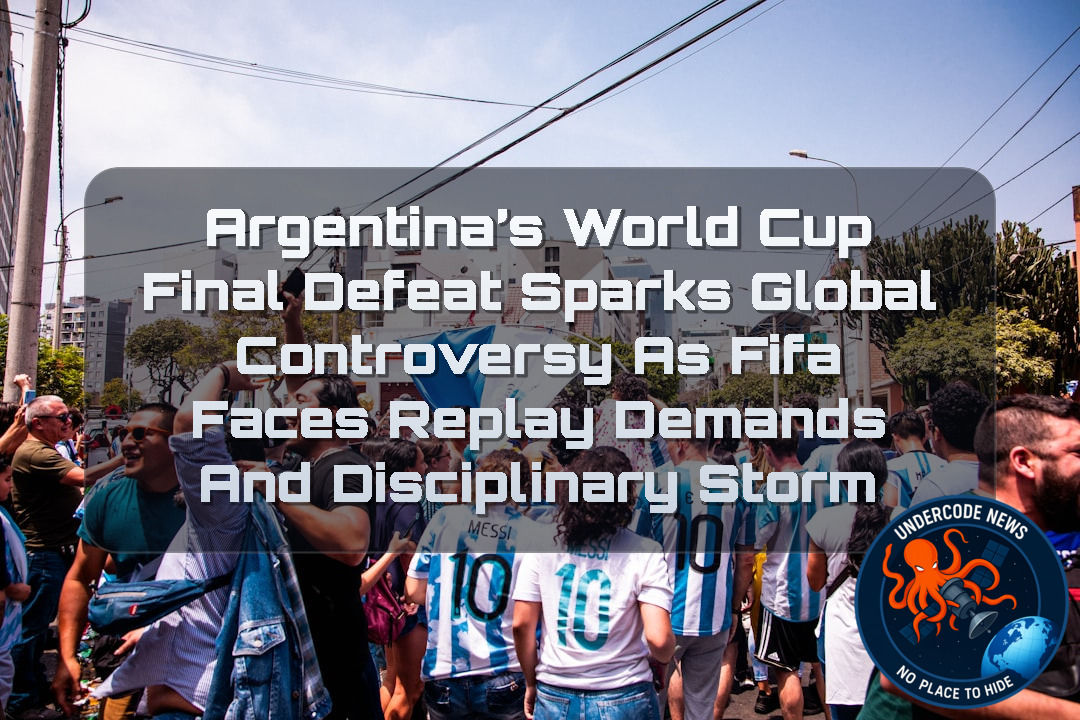
While some fans demanded a replay, many Argentinians responded differently. Instead of focusing only on disappointment, supporters gathered across the country to celebrate the national team’s incredible journey to the final.
Large crowds filled streets and public areas, recognizing the team’s effort despite falling short of another world championship.
The reaction demonstrated an important reality of football culture. Losing a final hurts, but reaching the final itself represents an extraordinary achievement.
For many supporters, Argentina’s campaign remains a source of national pride regardless of the final result.
FIFA Investigation Targets Post-Match Incidents, Not Refereeing
The Real Disciplinary Battle Begins After the Final Whistle
While the replay petition focuses on referee decisions, FIFA’s actual investigation involves events that occurred after the match ended.
The governing body has opened disciplinary proceedings regarding clashes between Argentina and Spain players during the post-match scenes.
The investigation reportedly includes several incidents involving Argentine players and staff members.
One major focus involves midfielder Leandro Paredes. Footage appears to show an altercation involving Spanish defender Eric Garcia and midfielder Gavi during Spain’s celebrations. Paredes was shown a red card after the final whistle.
FIFA is also reviewing other alleged incidents involving Nahuel Molina and possible involvement from Argentina assistant coach Roberto Ayala.
Trophy Ceremony Behavior Adds More Pressure
FIFA Reviews Actions During Spain’s Celebration
The investigation also includes moments from the trophy ceremony.
Some Argentina players were criticized after appearing to turn away while Spain lifted the World Cup trophy. Such actions created further debate about sportsmanship and respect between rival teams.
Football victories and defeats often create intense emotions, but FIFA expects players and officials to maintain professional standards during official ceremonies.
Argentina coach Lionel Scaloni attempted to reduce tensions after the match, saying:
“We are gracious in victory, and we must be so in defeat as well.”
His comments reflected an effort to move the discussion away from conflict and toward respect.
The Bigger Debate: Technology, Referees, and Football Trust
Why Controversial Finals Create Global Arguments
The controversy surrounding the 2026 final highlights a larger issue affecting modern football.
Technology such as VAR was introduced to reduce mistakes, but it has not eliminated debate. Instead, it has changed the nature of arguments.
Fans now analyze every frame, every angle, and every decision within minutes. Social media has transformed supporters into instant investigators, creating powerful online movements.
This creates both advantages and challenges.
Greater transparency can improve football. However, emotional reactions and incomplete information can also create accusations that are difficult to verify.
The challenge for football authorities is finding the balance between respecting fan concerns and protecting the integrity of official competition results.
What Undercode Say:
An Analytical Look at Football Controversies in the Digital Era
The Argentina-Spain World Cup final controversy shows how modern sports are no longer controlled only by stadium officials and governing organizations.
The internet has changed the relationship between fans and football authorities.
A single video clip can reach millions of people within minutes.
A single controversial decision can become a worldwide debate.
The petition demanding a replay represents a new era of digital sports activism.
Fans now have platforms capable of creating international pressure.
However, popularity does not always equal evidence.
A petition with hundreds of thousands or millions of signatures can demonstrate public frustration, but it cannot replace official investigations.
Sports organizations must operate through rules, evidence, and established procedures.
The referee controversy also highlights the limitations of technology.
VAR can review incidents, but it cannot remove human interpretation from football.
Many decisions remain based on judgment.
The question is not whether referees make mistakes. They always will.
The bigger question is whether football institutions have enough transparency to maintain public trust.
Modern supporters expect explanations.
They want to understand why decisions are made.
They want accountability from officials, players, and organizations.
FIFA’s disciplinary investigation shows that football authorities are willing to examine misconduct after matches.
However, investigations must remain separate from emotional demands for changing results.
Replay decisions cannot be based on social pressure alone.
If every controversial final created a replay, football history would become impossible to maintain.
The future of football will likely involve stronger referee communication systems.
Supporters may eventually receive clearer explanations during matches.
Artificial intelligence could assist officials by analyzing situations faster.
Commands such as:
sudo systemctl status football-analysis-ai
could represent future automated monitoring systems managing match data.
Advanced analysis platforms could use:
grep "controversial_decision" match_events.log
to identify patterns in referee decisions.
Teams could also analyze performance data using:
python3 analyze_match.py --team Argentina --competition WorldCup
The technology will continue improving.
But football will always contain uncertainty.
Emotion, mistakes, and unexpected moments are part of what makes the sport powerful.
The real challenge is ensuring that controversy leads to improvement rather than destroying trust.
✅ FIFA regulations generally require exceptional circumstances for a match replay, not simply controversial refereeing decisions.
✅ A Change.org petition does not have official authority to overturn a World Cup result.
✅ FIFA’s investigation is focused on post-match incidents and player behavior, not a confirmed referee corruption finding.
Prediction
(+1) Future Football Governance Will Become More Transparent
FIFA and other football organizations are likely to introduce stronger referee communication systems.
More detailed explanations of controversial decisions may become standard after major matches.
Artificial intelligence and advanced analytics could support referees without replacing human judgment.
Fans will continue using online platforms to demand accountability from football authorities.
Replay requests after major finals will likely continue, but official rule changes will remain difficult.
Extremely emotional reactions may continue creating misinformation before investigations are completed.
Social media pressure may increase conflicts between supporters and governing bodies.
Deep Analysis: Football Data Investigation and Linux-Based Monitoring Concepts
Using Technical Thinking to Understand Match Controversies
Modern football generates massive amounts of digital information.
Analysts can study match events, player actions, referee decisions, and disciplinary incidents through structured data.
Example commands:
ls -la /football/match-data/
Review available match information.
cat final_events.log | grep referee
Search referee-related events.
awk '/VAR|FOUL|CARD/' match_report.txt
Extract important decisions.
python3 football_analysis.py --input final_match.json
Run automated statistical analysis.
journalctl -u sports-data-service
Monitor data processing systems.
grep "disciplinary" fifa_report.txt
Find investigation-related information.
Technology can help identify patterns, but it cannot fully measure emotions, pressure, or the human side of football.
The future of football will depend on combining human judgment with smarter systems, creating a sport that remains competitive, fair, and trusted by supporters around the world.
▶️ Related Video (76% Match):
🕵️📝Let’s dive deep and fact‑check.
🎓 Live Courses & Certifications:
Join Undercode Academy for Verified Certifications
🚀 Request a Custom Project:
Secure, high-velocity infrastructure and disruptive technological engineering. Contact our engineering team for high-tier development and proprietary systems:
[email protected]
💎 Smart Architecture | 🛡️ Secure by Design | ⭐ Trusted by Thousands
References:
Reported By: www.euronews.com
Extra Source Hub (Possible Sources for article):
https://www.github.com
Wikipedia
OpenAi & Undercode AI
Image Source:
Unsplash
Undercode AI DI v2
🔐JOIN OUR CYBER WORLD [ CVE News • HackMonitor • UndercodeNews ]
📢 Follow UndercodeNews & Stay Tuned:
𝕏 formerly Twitter 🐦 | @ Threads | 🔗 Linkedin | 🦋BlueSky | 🐘Mastodon | 📺Youtube


