
Listen to this Post
 Introduction: A River Under Pressure, A Nuclear Plant on Alert
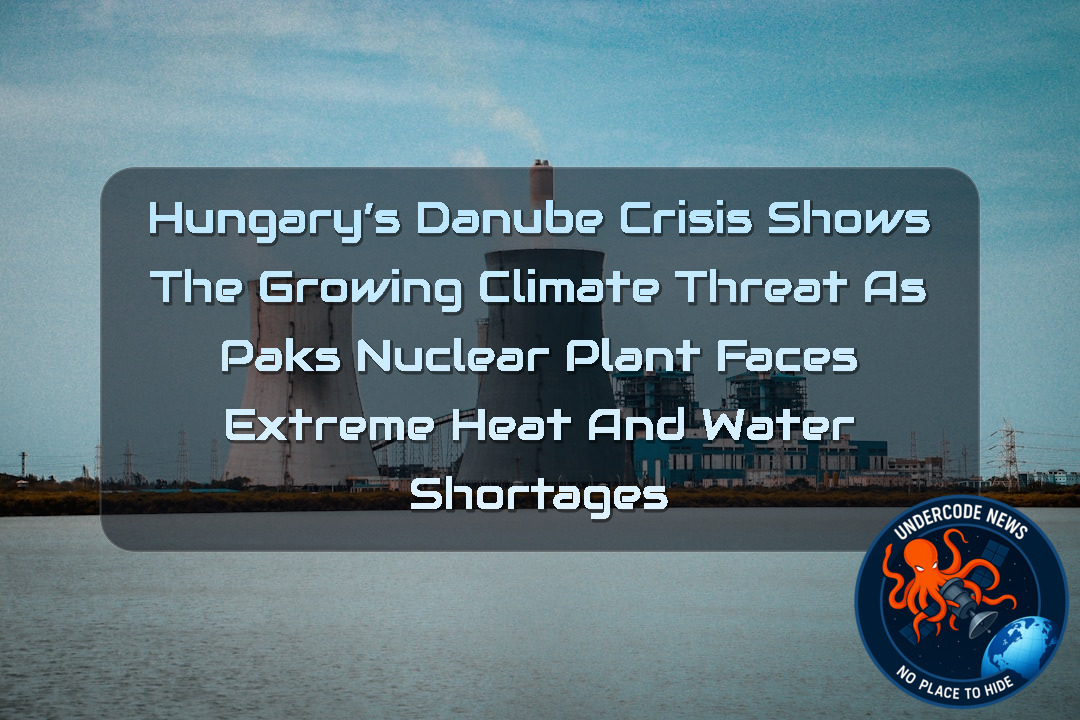
Europe’s climate challenges are becoming increasingly visible as extreme weather events begin affecting critical infrastructure. Hungary’s Danube River, one of Europe’s most important waterways, has reached dangerously low levels after months of intense heatwaves, forcing authorities to temporarily shut down part of the country’s only nuclear power facility.
The situation surrounding the Paks Nuclear Power Plant highlights a growing global concern: modern energy systems depend heavily on environmental stability. As temperatures rise and water resources become increasingly unpredictable, even highly protected industrial facilities are being forced to adapt to conditions once considered rare.
Hungarian officials now say the immediate crisis is improving, with Danube water levels slowly recovering after falling below the critical threshold. However, the incident has raised deeper questions about climate resilience, energy security, and whether existing infrastructure is prepared for a future of more frequent extreme weather events.
Danube River Reaches Critical Low Levels After Record Heatwaves
Hungary’s only nuclear power station, the Paks Nuclear Power Plant, was forced to reduce operations after the Danube River dropped to historically low levels. The plant depends on river water for cooling, making water availability essential for safe and stable operation.
The crisis developed after repeated heatwaves affected large parts of Europe beginning in May. Persistent high temperatures accelerated evaporation, reduced rainfall, and pushed sections of the Danube to record lows.
The river’s declining water level became a direct challenge for energy production because nuclear reactors require reliable cooling systems. Although the plant was not facing a nuclear safety emergency, operators had to take precautionary measures by shutting down some turbines.
Hungary’s Prime Minister Says Recovery Is Underway
Hungarian Prime Minister Péter Magyar said conditions at the Paks facility have started improving as the Danube slowly rises.
In a statement shared on X, Magyar explained that the river level had climbed approximately nine centimetres above its lowest point recorded on Sunday. He also noted that rainfall was expected in Austria’s Danube catchment areas, which could provide additional support for water levels downstream.
“The good news is that we are now nine centimetres above the Danube’s Sunday low,” Magyar said while also encouraging citizens to voluntarily reduce electricity consumption during extreme heat.
The government’s response reflects the delicate balance between maintaining energy supply and managing environmental limitations during a period of record-breaking temperatures.
Paks Nuclear Plant Faces Temporary Operational Limits
The Paks Nuclear Power Plant relies on the Danube as its primary cooling source, meaning changes in river conditions directly influence its operations.
After water levels fell below the critical point, several units were temporarily shut down. Officials later confirmed that the remaining turbine could continue operating as the river began recovering.
However, returning the facility to normal capacity requires more than a short-term improvement. Authorities must ensure that water levels remain consistently above the necessary threshold before restarting units that were taken offline.
This cautious approach reflects nuclear industry safety standards, where operators prioritize long-term stability rather than immediately restoring maximum production.
Danube Begins Slow Recovery After Reaching Record Low
Water monitoring data showed gradual improvement throughout the week.
On Tuesday morning, officials reported that the Danube had already risen several centimetres compared with previous readings. By Wednesday morning, the level had increased further, reaching approximately -134 centimetres, followed by another rise to around -131 centimetres on Thursday morning.
At Budapest, the river was measured significantly higher than its previous low point, offering some relief to authorities.
However, experts warn that a few centimetres of improvement does not eliminate the broader problem. A river system affected by prolonged drought and extreme temperatures can quickly return to dangerous conditions if rainfall remains insufficient.
Budapest Breaks Temperature Records During River Crisis
While the Danube struggled with low water levels, Hungary experienced another alarming climate milestone: record-breaking temperatures.
Budapest recorded an unprecedented 41.1°C temperature in Újpest, surpassing previous records. The extreme heat placed additional pressure on electricity demand as residents increased air conditioning and cooling usage.
The combination of rising temperatures and reduced river flow created a difficult situation for Hungary’s energy system. The same weather conditions that increased electricity demand also weakened the cooling capacity of a major power source.
This creates a new type of climate challenge: extreme heat simultaneously increases energy consumption while threatening energy production.
Climate Change and Europe’s Infrastructure Vulnerability
The Paks incident represents a broader pattern occurring across Europe.
Many energy facilities, transportation systems, and industrial operations were designed based on historical climate conditions. However, increasingly frequent heatwaves, droughts, and changing rainfall patterns are challenging those assumptions.
Rivers that once provided reliable cooling and transportation routes are becoming more unpredictable. Nuclear plants, factories, agriculture systems, and cities must now prepare for environmental conditions that were previously considered exceptional.
The Danube crisis is not only a Hungarian issue. It is a warning about the vulnerability of critical infrastructure throughout Europe.
Deep Analysis: Climate Commands the Future of Energy Security
Command 1: Water Is Becoming a Strategic Resource
The Paks shutdown demonstrates that water is no longer only an environmental concern. It is becoming a strategic factor in national energy security.
Countries with river-dependent power infrastructure may increasingly face operational challenges as droughts become more common.
Command 2: Nuclear Energy Still Depends on Nature
Although nuclear power is often viewed as a stable and weather-independent energy source, facilities still depend on natural resources.
Cooling systems require access to sufficient water, meaning climate conditions can directly affect nuclear reliability.
Command 3: Extreme Heat Creates Double Pressure
Heatwaves create a dangerous cycle. People consume more electricity to cool homes and businesses, while power plants may struggle because environmental conditions limit their operation.
This creates simultaneous pressure on supply and demand.
Command 4: Europe Needs Climate-Ready Infrastructure
The future of energy planning must include climate adaptation strategies.
Power stations may require alternative cooling technologies, improved water management systems, and stronger emergency planning.
Command 5: Historical Weather Data Is No Longer Enough
Infrastructure built decades ago was designed using climate patterns from previous generations.
However, record temperatures and unusual droughts show that historical averages may no longer represent future conditions.
Command 6: Rivers Are Becoming Economic Indicators
The condition of major rivers like the Danube increasingly reflects broader climate trends.
Low water levels can affect energy production, shipping, agriculture, and industrial activity simultaneously.
Command 7: Energy Independence Requires Environmental Planning
Countries often focus on fuel supplies when discussing energy security.
However, the Paks situation shows that environmental conditions can be equally important.
Command 8: Renewable Energy Growth May Accelerate
Events like this may increase pressure for more diversified energy systems.
Solar and wind power can reduce dependence on water-based cooling, although they also require new approaches to grid management.
Command 9: Nuclear Plants Must Adapt
Existing nuclear facilities may need upgraded cooling systems, alternative water sources, or redesigned operational strategies to handle future climate conditions.
Command 10: The Danube Crisis Is a Global Warning
The Hungarian experience is part of a larger global trend.
From Europe to North America and Asia, climate-driven infrastructure challenges are becoming more frequent and more expensive.
What Undercode Say:
A Warning Sign for Modern Civilization
The Paks nuclear situation is a reminder that climate change is no longer only about melting glaciers or rising seas. It is already affecting electricity production, industrial operations, and national infrastructure.
Energy Systems Are Entering a New Era
For decades, energy planning focused mainly on fuel availability and technology. The future will require equal attention to environmental conditions.
Water Security Equals Energy Security
The Danube crisis proves that access to water can directly influence whether a country can maintain stable electricity production.
Extreme Weather Will Test Infrastructure
Governments worldwide must rethink how critical systems are designed. Infrastructure built for the climate of the past may struggle in the climate of the future.
The Nuclear Debate Is Changing
Nuclear power remains an important low-carbon energy source, but climate adaptation must become part of nuclear planning.
Europe’s Climate Challenge Is Accelerating
Record-breaking temperatures and drought conditions suggest that Europe may face more frequent disruptions unless adaptation efforts increase.
✅ Confirmed: The Paks Nuclear Power Plant temporarily reduced operations because low Danube water levels affected cooling conditions.
✅ Confirmed: Hungary experienced record-breaking temperatures, including a measurement of 41.1°C in Budapest’s Újpest district.
✅ Confirmed: The Danube water level began recovering after reaching critical lows, but full operational normalization requires sustained improvement.
Prediction
(+1) Energy Infrastructure Will Become More Climate Adaptive
Governments and energy companies are likely to invest more heavily in advanced cooling systems, alternative water management solutions, and climate-resistant infrastructure.
(+1) Renewable Energy Expansion Will Gain More Support
Events like the Paks situation may encourage countries to accelerate renewable energy development to reduce dependence on vulnerable resources.
(-1) Extreme Weather Disruptions Will Increase
If global temperatures continue rising, more power plants, transportation networks, and industrial facilities may face climate-related operational challenges.
(-1) Water Conflicts Could Become More Common
As rivers become less predictable, competition between energy production, agriculture, industry, and public consumption may intensify.
(+1) Climate Monitoring Will Become Central to National Security
Countries will increasingly treat weather forecasting, water management, and environmental resilience as essential parts of protecting critical infrastructure.
▶️ Related Video (72% Match):
🕵️📝Let’s dive deep and fact‑check.
🎓 Live Courses & Certifications:
Join Undercode Academy for Verified Certifications
🚀 Request a Custom Project:
Secure, high-velocity infrastructure and disruptive technological engineering. Contact our engineering team for high-tier development and proprietary systems:
[email protected]
💎 Smart Architecture | 🛡️ Secure by Design | ⭐ Trusted by Thousands
References:
Reported By: www.euronews.com
Extra Source Hub (Possible Sources for article):
https://www.linkedin.com
Wikipedia
OpenAi & Undercode AI
Image Source:
Unsplash
Undercode AI DI v2
🔐JOIN OUR CYBER WORLD [ CVE News • HackMonitor • UndercodeNews ]
📢 Follow UndercodeNews & Stay Tuned:
𝕏 formerly Twitter 🐦 | @ Threads | 🔗 Linkedin | 🦋BlueSky | 🐘Mastodon | 📺Youtube


