
Listen to this Post
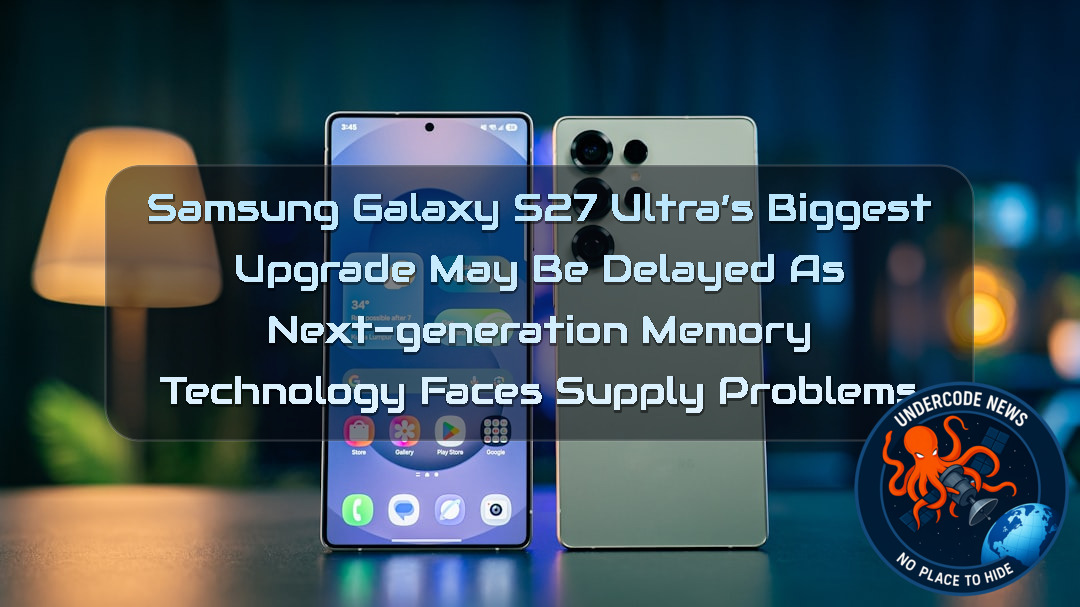 Introduction: The Future Flagship That May Have to Wait
Samsung’s upcoming Galaxy S27 Ultra is expected to become one of the company’s most advanced smartphones ever, bringing improvements in performance, battery life, photography, and artificial intelligence features. However, one of its most anticipated hardware upgrades may not arrive as planned.
Early reports suggested that Samsung could introduce LPDDR6 RAM and UFS 5.0 storage with the Galaxy S27 Ultra, creating a major leap over the LPDDR5X memory and UFS 4.1 storage currently used in the Galaxy S26 Ultra. These technologies promise faster speeds, better efficiency, and improved performance for demanding tasks such as AI processing, gaming, and professional mobile workflows.
However, according to recent industry claims, limited availability of next-generation memory chips could force Samsung to delay this upgrade. Instead of becoming the first widely available smartphone with LPDDR6 and UFS 5.0, the Galaxy S27 Ultra may continue using existing-generation technologies while Samsung focuses on other improvements.
Galaxy S27 Ultra’s Memory Upgrade Faces Unexpected Challenges
Samsung’s Ambitious Hardware Plan
Samsung has traditionally used its Ultra-series smartphones as a showcase for the latest mobile technologies. The Galaxy S Ultra lineup represents the company’s vision of what a premium Android phone should offer, combining powerful processors, advanced camera systems, large displays, and cutting-edge connectivity.
Earlier reports indicated that Samsung was considering equipping the Galaxy S27 Ultra with LPDDR6 RAM and UFS 5.0 storage. Such an upgrade would represent one of the biggest internal hardware jumps in recent Galaxy history.
LPDDR6 memory is expected to provide higher bandwidth while reducing power consumption compared with LPDDR5X. Meanwhile, UFS 5.0 storage could deliver significantly faster data transfer speeds, improving app loading times, file handling, AI operations, and overall system responsiveness.
For a device positioned as Samsung’s ultimate flagship, these technologies would have been a natural fit.
Limited Chip Supply Could Change Samsung’s Strategy
Next-Generation Components Remain Difficult to Produce
According to a report from industry tipster Lanzuk, the current situation surrounding LPDDR6 and UFS 5.0 adoption is reportedly “not good.” The claim suggests that only a small number of smartphone manufacturers may use these technologies next year, and even then, they could be reserved for limited-edition flagship devices.
The challenge is not necessarily Samsung’s ability to obtain the technology. Samsung is one of the world’s largest semiconductor companies and has strong relationships across the memory industry.
The bigger issue is production volume.
A limited supply of advanced memory chips may be enough for smaller smartphone launches, but Samsung’s Galaxy S Ultra models sell in significantly larger quantities. Producing millions of units with rare components could create manufacturing difficulties and increase costs.
Why Samsung May Choose Reliability Over Technology Leadership
Mass Production Requires More Than Early Adoption
Being the first company to introduce a new technology does not always guarantee success. Smartphone manufacturers must balance innovation with availability, pricing, and production stability.
If Samsung used LPDDR6 and UFS 5.0 exclusively in the Galaxy S27 Ultra, it could face several problems:
Higher manufacturing costs
Limited device availability
Increased retail pricing
Supply chain delays
Difficulty maintaining global inventory
For a flagship device sold worldwide, consistent production is often more important than introducing a technology a few months earlier.
Samsung may therefore decide that LPDDR5X and UFS 4.x technologies remain sufficient for another generation.
Galaxy S27 Ultra Could Still Deliver Major Improvements
Battery Technology May Become the Real Upgrade
Although memory upgrades may be delayed, the Galaxy S27 Ultra is still expected to receive meaningful improvements.
One of the most exciting rumored changes is a larger battery capacity using silicon-carbon battery technology.
Silicon-carbon batteries have gained attention across the smartphone industry because they can store more energy in a similar physical size compared with traditional lithium-ion batteries.
This could allow Samsung to improve battery life without making the phone significantly thicker or heavier.
For many users, longer battery endurance may provide a more noticeable daily improvement than faster storage speeds.
Snapdragon Power and Camera Improvements Remain Expected
Performance Could Reach New Levels Without LPDDR6
The Galaxy S27 Ultra is also rumored to feature the Snapdragon 8 Elite Gen 6 Pro for Galaxy chipset.
Although flagship mobile processors continue becoming more expensive, Samsung appears determined to maintain a premium performance advantage. The custom Galaxy version of Snapdragon chips has historically offered optimized performance and efficiency compared with standard variants.
The phone is also expected to introduce upgraded camera hardware on both the front and rear sides.
Samsung’s Ultra models have always focused heavily on photography, especially long-range zoom capabilities. Future improvements could include better image processing, improved low-light photography, and enhanced AI-powered camera features.
Samsung’s Ultra Strategy: Evolution Instead of Revolution
The Smartphone Industry Is Entering a More Mature Era
The Galaxy S27 Ultra situation highlights a larger trend in the smartphone industry.
A few years ago, every flagship generation introduced obvious hardware breakthroughs. Today, improvements are becoming more incremental. Manufacturers are increasingly focusing on software intelligence, battery efficiency, camera processing, and ecosystem integration.
A phone does not necessarily need the newest memory technology to deliver a premium experience.
For most users, faster AI features, longer battery life, improved cameras, and better software support may matter more than benchmark improvements.
Deep Analysis: How Samsung’s Hardware Decisions Could Shape the Future Smartphone Market
Memory Technology Is Becoming a Strategic Battlefield
The race for faster smartphone memory is becoming increasingly important as artificial intelligence moves directly onto mobile devices.
Modern smartphones are no longer only communication tools. They are becoming AI-powered computers capable of generating content, processing images, translating languages, and running advanced applications locally.
Higher-speed memory helps these tasks operate more efficiently.
However, semiconductor production remains one of the most complicated industries in the world. Even companies with enormous resources cannot instantly manufacture unlimited quantities of new technologies.
Samsung Faces a Difficult Balance Between Innovation and Reality
Samsung has a unique position because it is both a smartphone manufacturer and a semiconductor producer.
The company develops many of the memory technologies used across the industry, but internal availability does not automatically guarantee unlimited supply.
Samsung must manage production capacity between selling memory chips to other companies and using them inside its own products.
A shortage could force Samsung to prioritize profitability and reliability over technological bragging rights.
The Galaxy S27 Ultra May Focus More on User Experience
If LPDDR6 and UFS 5.0 do not arrive, Samsung will likely shift attention toward improvements that consumers can immediately notice.
Battery upgrades, camera improvements, display technology, AI features, and software optimization could become the main selling points.
This strategy matches the current direction of the smartphone market, where companies are trying to make devices smarter rather than simply faster.
The Importance of Silicon-Carbon Battery Technology
Battery innovation may become one of the biggest smartphone trends of the next decade.
Traditional lithium-ion batteries have reached practical limitations. Manufacturers are searching for ways to increase capacity without increasing device size.
Silicon-carbon technology offers a possible solution.
If Samsung successfully implements this technology in the Galaxy S27 Ultra, it could deliver a more meaningful upgrade than faster storage because battery life affects every user, every day.
AI Could Reduce the Importance of Traditional Hardware Battles
Artificial intelligence is changing how smartphones are evaluated.
Previously, consumers compared phones based mainly on processor speed, RAM capacity, and storage benchmarks.
Now, AI performance is becoming equally important.
A smartphone with optimized AI hardware and software could outperform another device with technically superior components but weaker integration.
Samsung’s future competition may depend less on raw specifications and more on how effectively it combines hardware, cloud services, and artificial intelligence.
Samsung’s Competitors Could Benefit From Early Adoption
If Samsung delays LPDDR6 and UFS 5.0, smaller competitors may have an opportunity to market themselves as technology leaders.
Companies producing limited flagship models could adopt these components earlier because they do not need the same production volume as Samsung.
However, early adoption also carries risks, including higher prices and limited availability.
The Galaxy S27 Ultra Could Still Become a Premium Benchmark
Even without next-generation memory, the Galaxy S27 Ultra is expected to remain one of the strongest Android smartphones available.
Samsung’s advantage comes from combining multiple technologies rather than relying on a single specification.
A powerful Snapdragon processor, improved cameras, advanced battery technology, premium design, and long-term software support could still make it a top-tier flagship.
What Undercode Say:
Samsung’s Hardware Race Is Changing
The possible delay of LPDDR6 and UFS 5.0 shows that smartphone innovation is entering a new phase. The biggest improvements may no longer come from simply adding faster components.
Supply Chains Are Now As Important As Engineering
Modern technology depends heavily on semiconductor availability. Even the biggest companies cannot escape manufacturing limitations.
Battery Life Could Become the Next Major Battlefield
Consumers often notice battery improvements more than small performance increases. Silicon-carbon technology could become Samsung’s strongest selling point.
AI Will Define Future Flagships
The next generation of premium smartphones will likely compete through AI capabilities, not only processor speeds and memory benchmarks.
Samsung May Be Choosing Long-Term Stability
Skipping early adoption could allow Samsung to avoid shortages, price increases, and manufacturing problems.
Flagship Phones Are Becoming More Balanced
Future premium devices may focus on improving the entire experience instead of chasing individual specifications.
✅ Galaxy S27 Ultra LPDDR6 and UFS 5.0 rumors exist:
Reports have suggested Samsung was considering next-generation memory technologies for future Ultra models, but official confirmation has not been provided.
❌ Samsung has not officially confirmed a delay:
The possibility of skipping LPDDR6 and UFS 5.0 is based on industry claims and leaks, not an official Samsung announcement.
✅ Silicon-carbon batteries and advanced Snapdragon chips are realistic expectations:
Both technologies are already being developed across the smartphone industry and align with Samsung’s previous flagship strategies.
Prediction
(+1) Galaxy S27 Ultra could still become Samsung’s strongest Ultra phone:
Even without LPDDR6 and UFS 5.0, major improvements in battery technology, AI features, cameras, and processing power could make it a significant upgrade.
(+1) Silicon-carbon batteries may become Samsung’s biggest innovation:
Longer battery life could provide a more noticeable improvement for everyday users than faster internal components.
(-1) Samsung may lose some early technology leadership:
If competitors launch devices with LPDDR6 and UFS 5.0 first, Samsung could temporarily lose its reputation as the fastest adopter of mobile hardware innovations.
(-1) Flagship prices could continue increasing:
Advanced processors, AI hardware, and new battery technologies may push premium smartphone prices higher in future generations.
▶️ Related Video (76% Match):
🕵️📝Let’s dive deep and fact‑check.
🎓 Live Courses & Certifications:
Join Undercode Academy for Verified Certifications
🚀 Request a Custom Project:
Secure, high-velocity infrastructure and disruptive technological engineering. Contact our engineering team for high-tier development and proprietary systems:
[email protected]
💎 Smart Architecture | 🛡️ Secure by Design | ⭐ Trusted by Thousands
References:
Reported By: www.sammobile.com
Extra Source Hub (Possible Sources for article):
https://www.pinterest.com
Wikipedia
OpenAi & Undercode AI
Image Source:
Unsplash
Undercode AI DI v2
🔐JOIN OUR CYBER WORLD [ CVE News • HackMonitor • UndercodeNews ]
📢 Follow UndercodeNews & Stay Tuned:
𝕏 formerly Twitter 🐦 | @ Threads | 🔗 Linkedin | 🦋BlueSky | 🐘Mastodon | 📺Youtube


