
Listen to this Post
A Rapidly Growing Safety Problem
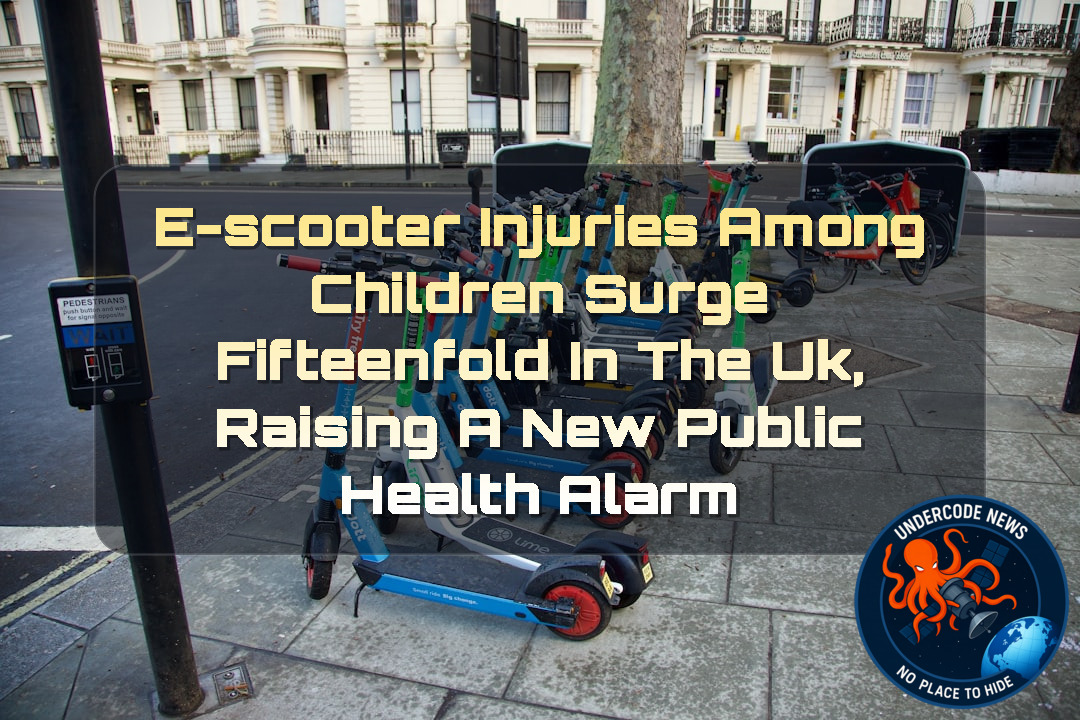
Electric scooters were once seen as a convenient, inexpensive way to move around crowded cities. For many young people, however, they have also become a gateway to serious injuries. A new study from three major UK children’s trauma centres shows just how quickly that risk is growing, with 477 children treated for e-scooter-related injuries between 2019 and 2024.
The researchers found that the number of injured children increased from fewer than 10 cases in 2019 to almost 150 cases in 2024. That represents an increase of more than fifteen times in just five years.
The figures are more than a statistic. Behind every emergency department visit is a child who may have suffered a broken bone, facial trauma, a head injury, surgery, or a potentially life-changing accident.
The Study Behind the Numbers
Researchers from the emergency departments of Sheffield Children’s Hospital, Royal Manchester Children’s Hospital, and Alder Hey Children’s NHS Foundation Trust analysed cases recorded between January 2019 and December 2024.
Across the three hospitals, 477 children required treatment after incidents involving electric scooters.
The research, published on 11 August, describes the rapid increase as an emerging public health challenge and argues that stronger safety communication and clearer regulation are needed.
Injuries Rose From Single Digits to Nearly 150 Cases
The most striking finding is the speed of the increase.
In 2019, fewer than 10 children across the participating hospitals were treated for e-scooter injuries. By 2024, the annual figure had climbed to nearly 150.
That change cannot easily be dismissed as a temporary fluctuation. It reflects the wider expansion of e-scooters into everyday transportation and recreational use.
As more scooters enter communities, more children are encountering them, riding them, sharing them, or being exposed to them as pedestrians.
Most Injured Children Were the Riders
The overwhelming majority of injuries involved the person riding the scooter.
Approximately 95% of injured children were riders, while around 5% were pedestrians involved in incidents with e-scooters.
This distinction matters because it suggests that safety measures aimed at riders could prevent a substantial proportion of the injuries recorded in the study.
Falls Were the Biggest Threat
The most common mechanism of injury was surprisingly simple: falling from the scooter.
Falls accounted for approximately 75% of incidents.
Vehicle collisions were responsible for nearly 11.5% of cases, while approximately 5% involved pedestrians being struck by an e-scooter.
A fall may sound less serious than a collision with a car, but at speed, an unprotected rider can hit the pavement with considerable force.
Head and Facial Injuries Stand Out
The location of the injuries makes the findings even more concerning.
Around one in four children suffered a head injury, while almost one in five experienced facial injuries.
These injuries can have consequences far beyond the initial emergency department visit. Head trauma can require neurological monitoring and imaging, while facial injuries can involve fractures, dental damage, scarring, or reconstructive treatment.
Helmet Use Was Extremely Low
Perhaps one of the clearest warning signs was helmet use.
Less than 2% of riders were reported to have been wearing a helmet when the incident occurred.
That figure raises an important question: if head injuries make up such a large proportion of cases, why are so few young riders using basic protective equipment?
Helmet use alone cannot eliminate e-scooter injuries. It cannot prevent every fracture, collision, or road accident. But the extremely low adoption rate indicates a major opportunity for safety campaigns and parental education.
Hospitals Faced a Significant Treatment Burden
The injuries were serious enough to generate substantial demand for hospital resources.
Approximately 64.5% of the children required some form of imaging, including X-rays, CT scans, or ultrasound examinations.
Around 13.5% were admitted to hospital, while approximately 7% required surgery.
These numbers show that the problem extends beyond minor cuts and bruises. A meaningful proportion of incidents resulted in injuries requiring advanced medical assessment or intervention.
The Typical Patient Was Around 12 Years Old
The average age of the injured children was approximately 12 years.
Nearly two-thirds were boys.
This age profile is important because children in early adolescence are still developing their understanding of traffic risks, speed, braking distances, road positioning, and the consequences of sudden decisions.
An e-scooter can appear simple to operate. Understanding how to operate one safely in a complex traffic environment is much harder.
Private E-Scooters Dominate the Cases
The study found that approximately 80% of incidents involved private e-scooters.
That creates a significant regulatory challenge.
In the UK, rental e-scooters operate under a different framework, with riders generally required to be at least 16 and to hold an appropriate driving licence. Private e-scooters, meanwhile, can be used on private land without the same minimum-age framework.
The distinction becomes particularly important when children are using privately owned scooters in neighbourhoods, driveways, parks, streets, or other environments where supervision may vary.
Disadvantaged Communities Were Disproportionately Represented
Another striking finding was socioeconomic.
Approximately 74% of the injured children lived in areas classified among the greatest levels of social and economic disadvantage.
That does not necessarily mean poverty directly causes e-scooter injuries. However, it suggests that access to transportation, recreational alternatives, road environments, enforcement, education, and local infrastructure may all influence risk.
Public health interventions therefore need to consider the environment in which children are actually using these vehicles.
Children Are Still Learning How to Navigate Roads
Researchers argue that children and teenagers are often novice road users and may be more willing to take risks.
That combination can become dangerous when paired with a fast electric vehicle.
Young riders may underestimate stopping distances, travel too quickly around corners, fail to anticipate vehicles emerging from side streets, or assume that drivers have seen them.
Unlike bicycles, many e-scooters also have a relatively small visual profile, potentially making them harder for other road users to notice.
Education Could Make a Difference
The researchers recommend targeted public safety campaigns aimed specifically at e-scooter riders.
Existing bicycle safety programmes could provide a useful model.
The central message should not simply be “wear a helmet.” Effective education should cover speed control, road positioning, visibility, braking, traffic awareness, protective equipment, passenger restrictions, and the dangers of riding under inappropriate conditions.
Children need practical information rather than generic warnings.
Retailers Also Have a Role
The researchers argue that retailers should have greater responsibility for communicating the law and safety risks to customers.
A person purchasing an e-scooter may understand its technical specifications without understanding the legal restrictions surrounding its use.
Clear information at the point of sale could help parents and young riders understand where scooters can legally be operated, who can use them, and what safety equipment should be considered.
Regulation Is Becoming a European Issue
The UK study arrives at a time when cities across Europe are reconsidering their approach to e-scooters.
The debate is no longer simply about whether electric scooters are convenient.
Governments are increasingly asking whether current regulations adequately protect pedestrians, children, drivers, and riders.
The answers differ significantly between cities, but the direction of travel is clear: policymakers are looking more closely at speed, parking, licensing, operator responsibility, and public safety.
Paris Tightens Its Approach
Paris has been among the European cities to introduce increasingly restrictive measures surrounding shared electric mobility.
The broader European debate demonstrates how quickly enthusiasm for e-scooters can turn into questions about public-space management and injury prevention.
Cities must balance the environmental and transportation benefits of micromobility against the risks created when vehicles are used without adequate safeguards.
Germany Considers Greater Operator Responsibility
Germany has also been examining stronger accountability for rental companies.
A proposal reported in July would make rental operators such as Lime and Bolt directly liable for certain accidents involving their vehicles.
Such measures represent a broader shift in thinking.
Instead of treating every incident as solely the responsibility of an individual rider, regulators are increasingly examining whether companies that deploy thousands of vehicles in public spaces should share responsibility for preventing predictable risks.
Madrid Has Already Taken a Harder Line
Madrid withdrew licences from e-scooter operators in 2024 amid concerns involving riding and parking controls.
The decision illustrates the difficult relationship between micromobility companies and city governments.
When operators fail to control how vehicles are used or where they are left, municipalities can face complaints from pedestrians, residents, disability advocates, motorists, and emergency services.
Prague Removes Shared E-Scooters
Prague took an even stronger step by removing shared e-scooters from its streets in January 2026.
The decision highlights how differently European cities are approaching the same technology.
Some governments view e-scooters as part of a cleaner transportation future. Others increasingly see uncontrolled scooter use as a public-space and safety problem.
Brussels Is Preparing for Further Restrictions
Brussels is also preparing to remove shared e-scooters, with the change planned for January 2027.
Taken together, these decisions demonstrate that Europe is entering a more mature phase of the e-scooter debate.
The question is no longer whether the technology will exist. The question is how societies should control it.
The Real Problem Is Not the Scooter Alone
It would be easy to blame e-scooters themselves.
The reality is more complicated.
A scooter is a transportation device. The danger emerges from the interaction between the machine, rider behaviour, road design, traffic, speed, visibility, protective equipment, enforcement, and regulation.
A badly designed road can make a scooter more dangerous. An inexperienced rider can increase the risk further. Excessive speed can magnify the consequences of a mistake.
Safety therefore requires more than a single rule.
Speed Limiters Could Reduce the Severity of Falls
The researchers specifically mentioned technological measures such as speed limiters.
Reducing maximum speed does not eliminate crashes, but it can reduce kinetic energy and provide riders with more time to react.
For young or inexperienced riders, the difference between a low-speed fall and a high-speed impact can be substantial.
Manufacturers and policymakers should therefore examine whether speed settings can be adapted to different environments and rider categories.
Helmet Policies Could Address a Major Vulnerability
The extremely low helmet-use rate deserves particular attention.
Because approximately one quarter of the injured children suffered head injuries, increasing helmet use could become an important component of a wider safety strategy.
However, policymakers should avoid presenting helmets as a complete solution.
A helmet cannot prevent a crash. It cannot stop a vehicle collision. It cannot prevent a broken arm or leg.
The most effective approach combines protective equipment with safer speeds, rider education, enforcement, and appropriate infrastructure.
Parents Are Part of the Safety System
Parents and guardians also have an important role.
A child may be physically capable of standing on an e-scooter without being developmentally prepared to understand traffic risk.
Before allowing a child to ride, adults should consider age, maturity, traffic exposure, riding environment, visibility, protective equipment, and local laws.
The decision should not be based solely on whether the child can control the handlebars.
A Public Health Problem Requires Public Health Thinking
The
Public health problems are rarely solved through one intervention.
They require data collection, education, infrastructure, legislation, enforcement, clinical awareness, and continuous evaluation.
The same principle applies here.
Hospitals can treat injured children, but emergency departments are the final link in a chain that should ideally prevent those injuries from happening.
What Undercode Say:
The Numbers Are the Warning
The fifteenfold increase is the most important signal in the study.
It shows that e-scooter injuries among children are not an isolated phenomenon.
The growth happened alongside the wider adoption of electric mobility.
That means policymakers should not wait for injury numbers to become even larger before responding.
Children Represent a Special Risk Group
A twelve-year-old is not simply a smaller adult.
Children have less experience interpreting traffic behaviour.
They may also make decisions based on immediate excitement rather than long-term consequences.
That makes speed, supervision, and education particularly important.
Falls Deserve More Attention
Vehicle collisions attract headlines because they are dramatic.
But the study shows that ordinary falls are responsible for the majority of injuries.
That changes the prevention strategy.
Safety efforts must focus on balance, braking, speed, road surfaces, cornering, and rider behaviour.
Head Injuries Cannot Be Ignored
The high percentage of head injuries should immediately attract attention from health authorities.
The combination of high-speed movement and almost nonexistent helmet use creates an obvious vulnerability.
Even if helmets are not mandatory everywhere, public campaigns should make their protective value much clearer.
Private Scooters Complicate Enforcement
Rental scooters can theoretically be controlled through software, accounts, geofencing, age verification, and operator policies.
Private scooters are different.
Once a scooter is purchased, regulators have fewer direct mechanisms to control its use.
That is why retailer responsibility and parental education become more important.
Technology Can Become Part of the Solution
Modern scooters already contain electronics capable of controlling speed and monitoring vehicle behaviour.
Policymakers could explore safer default speed modes.
Manufacturers could also incorporate better lighting, braking systems, stability controls, and visibility features.
The goal should be to design risk reduction into the machine itself.
Regulation Should Be Evidence-Based
A blanket ban is not automatically the best answer.
Nor is unrestricted access.
The most effective regulation should be based on injury data, road conditions, age groups, vehicle performance, and local transportation needs.
Cities should measure what works rather than simply copying another city’s policy.
Retailers Should Not Sell Without Explaining
A customer purchasing an e-scooter should understand the legal environment surrounding its use.
Safety information should be visible before purchase, not buried inside an instruction manual.
Age restrictions, road-use rules, helmet recommendations, speed information, and passenger restrictions should be clearly communicated.
Infrastructure Matters
Dedicated cycling infrastructure can potentially reduce interactions between scooters and motor vehicles.
Where riders are forced to choose between busy roads and crowded pedestrian areas, unsafe behaviour becomes more likely.
Urban planning therefore belongs in the safety conversation.
Emergency Departments Are an Early Warning System
Hospitals see the consequences of transportation policy in real time.
Their data can reveal emerging dangers before those dangers appear in broader national statistics.
Healthcare professionals should therefore be included in regulatory discussions.
The Socioeconomic Finding Needs More Research
The finding that 74% of injured children came from the most disadvantaged areas deserves deeper investigation.
Researchers should examine whether transportation access, neighbourhood design, scooter ownership, road quality, supervision, or other factors explain the disparity.
Without that research, policymakers risk treating correlation as causation.
Education Must Be Practical
Telling teenagers to “be careful” is unlikely to be enough.
Effective programmes should teach concrete behaviours.
Young riders need to understand braking distance, blind spots, road positioning, visibility, speed management, and collision avoidance.
Schools Could Help
Schools already deliver road safety education.
E-scooters could become part of those programmes where local use is widespread.
A short, practical lesson may reach thousands of children before they begin riding regularly.
Digital Campaigns Could Reach Teenagers
Traditional government safety campaigns may not reach young riders effectively.
Short videos, social media campaigns, interactive simulations, and school-based digital resources could communicate safety messages in a language teenagers actually use.
Rental Operators Have Different Responsibilities
Shared scooter companies can potentially implement technological restrictions.
They can use speed zones, geofencing, account controls, parking restrictions, and vehicle monitoring.
That makes their responsibilities different from those of private owners.
The European Response Is Fragmented
Paris, Madrid, Prague, Brussels, and other cities are taking different approaches.
This creates a natural opportunity for comparative research.
Policymakers should examine injury rates before and after major regulatory changes.
Bans Can Have Unintended Consequences
Removing scooters may reduce scooter-related injuries.
But it could also push some users toward cars or other transportation methods.
That means policymakers should measure the total transportation impact rather than focusing on one vehicle category.
Safety Should Be the Common Ground
The debate does not need to become a battle between scooter supporters and scooter opponents.
Both sides can agree that children should not be unnecessarily injured.
The question is which combination of measures produces the greatest safety improvement.
The Fifteenfold Increase Changes the Conversation
A small number of injuries can be treated as an isolated issue.
A fifteenfold increase demands strategic attention.
If the trend continues, hospitals could face a considerably larger burden.
Prevention Is Cheaper Than Treatment
Every avoided emergency department visit represents more than a medical saving.
It means a child avoids pain, missed school, parental disruption, imaging, surgery, rehabilitation, and potentially long-term consequences.
Policymakers Have an Opportunity
The UK now has valuable evidence from three major children’s hospitals.
That evidence can support targeted intervention before the problem becomes even larger.
Waiting for another five years of rising numbers would be difficult to justify.
The Most Important Question Is What Happens Next
The study describes the problem clearly.
The next stage should be testing solutions.
Helmet campaigns, speed controls, education, infrastructure changes, and retailer obligations should all be evaluated.
The Future of E-Scooters Is Not Necessarily Negative
Electric scooters can still play a role in urban transportation.
They can provide short-distance mobility and potentially reduce reliance on cars.
But convenience should not come at the cost of predictable injuries among children.
Safer Micromobility Is Possible
The technology can evolve.
The regulations can evolve.
Public behaviour can evolve.
The objective should be to make safer choices easier than dangerous ones.
Hospitals Should Not Be the Final Safety Barrier
Emergency departments should treat injuries, not compensate for preventable regulatory failures.
Prevention must happen before the crash.
Parents Need Better Information
Parents cannot make informed decisions if regulations are confusing.
Clear government guidance and retailer warnings could close part of that information gap.
Children Need Clear Boundaries
Young riders need simple rules that are easy to understand and enforce.
Complex legal frameworks are unlikely to be remembered during a fast-moving road situation.
Cities Need Better Data
Authorities should track e-scooter injuries consistently.
Without comparable data, policymakers cannot reliably determine whether a regulation is working.
Manufacturers Need to Participate
Safety should not be treated solely as a government responsibility.
Manufacturers can improve braking, lighting, stability, speed management, and rider warnings.
Retailers Need to Participate
Retailers are the point where many families first encounter the product.
That makes them a natural place for safety education.
Schools Need to Participate
Schools can deliver preventative education before risky behaviour becomes established.
Healthcare Professionals Need to Participate
Doctors and trauma specialists see the consequences directly.
Their experience should influence safety campaigns and regulation.
Europe Is Becoming a Natural Laboratory
Different cities are adopting different policies.
That gives researchers an opportunity to compare outcomes.
The Next Few Years Will Be Crucial
If injuries continue increasing, governments may face pressure for stronger restrictions.
If effective interventions are introduced now, the trend could potentially be reversed.
The Core Message Is Simple
E-scooters are not automatically dangerous.
But children riding them without sufficient experience, protection, regulation, or infrastructure face risks that should no longer be ignored.
This Is Preventable
The most encouraging part of the study is that many risk factors can be changed.
Speed can be controlled.
Education can improve.
Helmet use can increase.
Infrastructure can change.
Regulation can become clearer.
Action Should Come Before Another Surge
The current numbers provide an opportunity to act while the problem is still manageable.
The longer authorities wait, the more children may become part of the statistics.
Deep Analysis
Monitoring Scooter-Related Incidents
Healthcare organisations and researchers can maintain structured datasets to identify trends in injury mechanisms, age groups, locations, and severity.
grep -i "e-scooter" emergency_department_records.log
Measuring Injury Patterns
A simple command-line workflow can help researchers identify frequently occurring injury categories in appropriately anonymised datasets.
awk -F',' '{print $4}' injuries.csv | sort | uniq -c | sort -nr
Identifying High-Risk Locations
Authorities can combine anonymised incident records with geographic analysis to identify areas where repeated injuries occur.
cut -d',' -f2,3 injuries.csv | sort | uniq -c | sort -nr
Tracking Changes Over Time
Annual incident counts can reveal whether new safety measures are producing measurable improvements.
awk -F',' '{print $1}' injuries.csv | sort | uniq -c
Comparing Pre- and Post-Regulation Data
A useful research model would compare injury rates before and after interventions such as speed restrictions, helmet campaigns, or infrastructure changes.
diff <(sort injuries_before.csv) <(sort injuries_after.csv)
Looking for Emerging Risk Factors
Researchers should not only count injuries. They should identify how crashes happen.
grep -Ei "fall|collision|vehicle|pedestrian|head|face" injuries.csv
Building a Prevention Dashboard
A robust public health dashboard could track age, sex, injury type, hospital admission, surgery, helmet use, scooter ownership, location, and incident mechanism.
column -s, -t injuries.csv | less -S
Protecting Sensitive Data
Any clinical dataset used for analysis must be appropriately anonymised and protected.
chmod 600 injuries.csv
The command itself is simple, but the principle is important: injury research should improve public safety without exposing individual patients.
✅ 477 Children Treated
The study reported 477 children treated for e-scooter-related injuries across three UK children’s trauma centres between 2019 and 2024.
✅ Injury Numbers Increased Dramatically
The research reported growth from fewer than 10 cases in 2019 to nearly 150 in 2024, representing an increase of more than fifteenfold.
✅ Most Incidents Involved Private Scooters
Approximately 80% of incidents involved private e-scooters, while less than 2% of riders were reported to have been wearing helmets.
Prediction
(+1) Safety Regulation Will Tighten
European governments and cities are likely to continue strengthening e-scooter regulations as injury data accumulates and public pressure increases.
(+1) Technology Will Become Part of Enforcement
Speed limiters, geofencing, age verification, digital licences, and automated parking controls are likely to become more common in shared e-scooter systems.
(+1) Child-Focused Safety Campaigns Will Expand
The age profile identified in the UK study makes children and teenagers an obvious target for future road-safety programmes.
(-1) Unregulated Private Use Will Remain Difficult to Control
Private scooters will probably remain the biggest regulatory challenge because governments have fewer direct technical controls once a vehicle has been purchased.
(+1) Injury Surveillance Will Become More Important
As e-scooter use expands, hospitals and public health authorities are likely to collect more detailed data to determine which interventions actually reduce serious injuries.
The Bigger Warning
The
Electric scooters are becoming part of modern urban transportation, but their rapid adoption has outpaced the development of consistent safety rules in many places.
For children, the risks are particularly concerning. A 12-year-old navigating traffic on a fast electric vehicle is operating in an environment where a momentary mistake can produce a serious head, facial, or orthopaedic injury.
The answer does not necessarily have to be banning the technology.
It may instead require something more difficult and more effective: better engineering, clearer laws, stronger education, responsible retailers, safer infrastructure, appropriate supervision, and meaningful enforcement.
The most important statistic in this study is not simply that 477 children were injured.
It is that the number rose so dramatically in such a short period.
That means the problem is still moving.
And if policymakers want the next generation of statistics to tell a different story, prevention has to begin before the next child falls.
▶️ Related Video (78% Match):
🕵️📝Let’s dive deep and fact‑check.
🎓 Live Courses & Certifications:
Join Undercode Academy for Verified Certifications
🚀 Request a Custom Project:
Secure, high-velocity infrastructure and disruptive technological engineering. Contact our engineering team for high-tier development and proprietary systems:
[email protected]
💎 Smart Architecture | 🛡️ Secure by Design | ⭐ Trusted by Thousands
References:
Reported By: www.euronews.com
Extra Source Hub (Possible Sources for article):
https://www.linkedin.com
Wikipedia
OpenAi & Undercode AI
Image Source:
Unsplash
Undercode AI DI v2
🔐JOIN OUR CYBER WORLD [ CVE News • HackMonitor • UndercodeNews ]
📢 Follow UndercodeNews & Stay Tuned:
𝕏 formerly Twitter 🐦 | @ Threads | 🔗 Linkedin | 🦋BlueSky | 🐘Mastodon | 📺Youtube


