
Listen to this Post
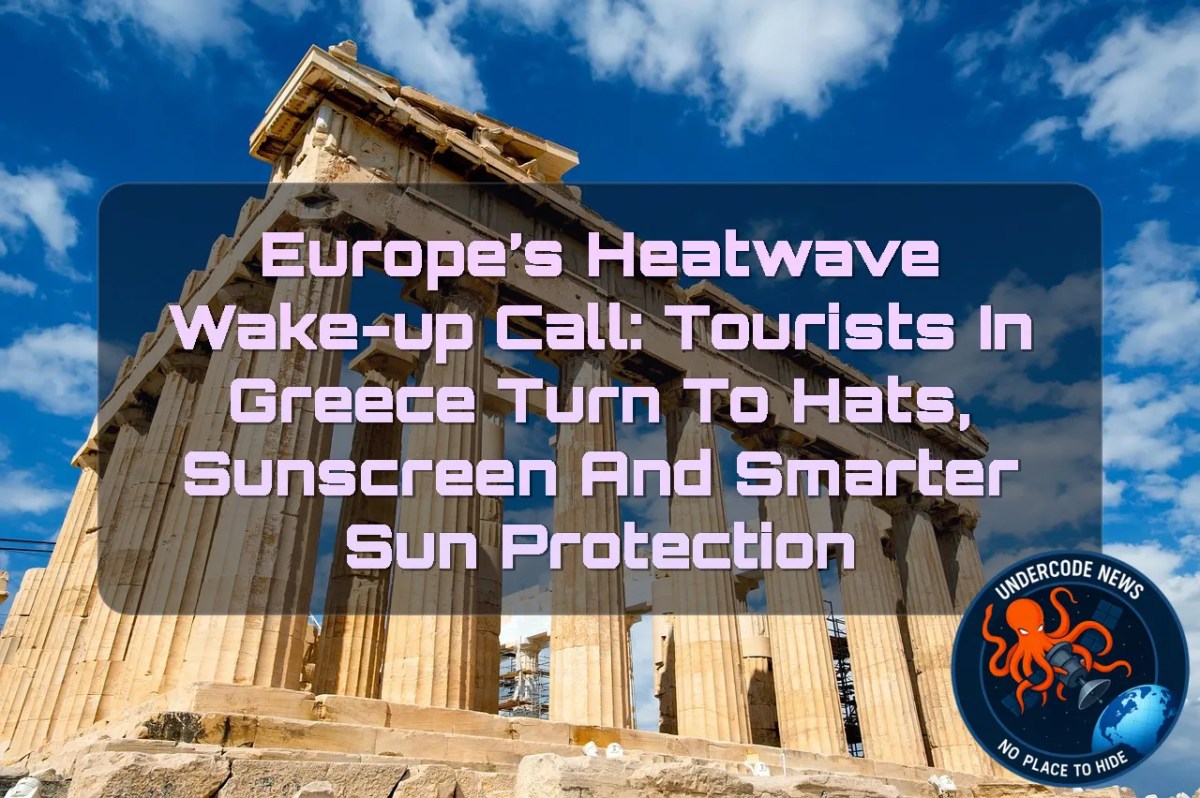 Introduction: A Summer Holiday Under a Hotter, More Dangerous Sun
For millions of people, Greece represents the perfect summer escape. Ancient temples rise above Athens, islands glitter under clear blue skies, and the Mediterranean sun has long been part of the country’s irresistible appeal. But in a Europe increasingly shaped by intense heatwaves and destructive wildfires, the sun is no longer simply part of the holiday experience. It has become a serious health concern that tourists cannot afford to ignore.
This summer, however, a visible change appears to be taking place on the streets of Athens. More visitors are arriving prepared. Hats, sunglasses, sunscreen, reusable water bottles and even ultraviolet-protective umbrellas are becoming increasingly common around major tourist sites.
The growing awareness reflects a broader reality. Extreme heat is changing how people travel, how cities prepare for visitors and how individuals protect themselves outdoors. Greece continues to attract enormous numbers of tourists despite rising temperatures, but visitors appear to be learning an important lesson: enjoying the sun does not mean exposing yourself to it without protection.
A Changing Sight Around Athens
In the heart of Athens, tourists continue to gather around some of the world’s most famous landmarks, particularly the Acropolis. Yet the appearance of these crowds is changing.
Instead of walking for hours under direct sunlight with little protection, more visitors are wearing wide-brimmed hats, caps and sunglasses. Some carry umbrellas designed to provide additional protection from ultraviolet radiation. Others stop regularly for water and apply sunscreen before continuing their sightseeing.
One tourist visiting from Peru explained that sun protection had become an essential part of her travel routine. She carried both a hat and an umbrella offering ultraviolet protection, creating what she described as comprehensive protection against the sun.
The message is simple but increasingly important. Tourism has not stopped because of the heat. Instead, tourists are adapting.
Heatwaves Have Changed the Conversation
Europe has experienced repeated periods of extreme heat, while countries across the continent have also faced severe wildfires. Greece has been among the destinations where the consequences of a hotter climate have become impossible to ignore.
High temperatures can turn a normal sightseeing trip into a physically demanding experience. Walking through historic areas, climbing hills, standing in queues and spending long periods outdoors can increase the risk of dehydration, heat exhaustion and other heat-related problems.
At the same time, excessive exposure to ultraviolet radiation can damage the skin. Public awareness of the relationship between prolonged sun exposure, premature skin ageing and skin cancer has helped change the behaviour of many travellers.
The result is a gradual shift from reacting to heat after feeling unwell to preparing before going outside.
Hats Are Becoming a Basic Travel Essential
A hat may appear to be a simple fashion accessory, but under intense summer conditions, it can serve a practical purpose.
Protecting the head, face and neck from direct sunlight can help reduce exposure during long periods outdoors. Combined with sunscreen, sunglasses, appropriate clothing and access to water, a hat becomes part of a wider strategy for reducing the risks associated with extreme heat and ultraviolet radiation.
This is particularly important for tourists visiting major outdoor attractions. Historic sites do not always provide extensive shade, and visitors may spend several hours walking between monuments during the hottest part of the day.
The growing popularity of hats among tourists suggests that public health messages may finally be reaching people before a dangerous situation develops.
Red Cross Volunteers See a Positive Change
Red Cross volunteers working in Athens have also noticed the difference.
During heat-stress prevention campaigns, volunteers distribute practical supplies to visitors, including water, sunscreen and protective items. In previous years, there was a greater need to provide hats to people who had arrived unprepared.
According to Red Cross volunteer Eirini Bourovili, that need appears to be decreasing.
Visitors are increasingly arriving with their own protection already in place. They are using hats, sunscreen and sunglasses more frequently, and this suggests that awareness about ultraviolet radiation and the consequences of excessive exposure is improving.
The change may seem small, but it is significant. Prevention is always more effective than waiting for someone to experience heat stress or severe sunburn before taking action.
Better Information Is Changing Tourist Behaviour
Modern travellers have access to more information than ever before. Weather alerts, heat warnings, travel advice, public health campaigns and news coverage of extreme weather can all influence how people prepare for a trip.
Tourists now understand that a beautiful sunny day can also carry hidden risks.
The strongest sun is not always experienced as immediate pain. Ultraviolet exposure can cause damage even when a person feels comfortable, particularly during long periods outdoors. This makes preparation essential.
Visitors are increasingly packing sunscreen alongside passports and travel documents. Hats have become as important as comfortable shoes. Sunglasses are no longer only a style choice, but another layer of protection.
The tourism experience is evolving because the climate itself is changing.
The Acropolis Remains Crowded Despite the Heat
One of the most striking aspects of the situation is that extreme heat has not destroyed Greece’s appeal as a global tourism destination.
Athens remains a powerful attraction for travellers who want to experience its ancient history, museums, architecture and culture. The Acropolis continues to draw enormous crowds even during periods of intense summer heat.
This creates a difficult challenge for tourism authorities and public health organisations. They cannot assume visitors will simply stay away when temperatures become dangerous.
Instead, cities must find ways to help people travel more safely.
That may include better access to drinking water, additional shaded areas, emergency response teams, heat alerts, adjusted opening hours and clearer information about the risks of spending extended periods outdoors.
Greece’s Tourism Success Comes With New Responsibilities
Last summer was reported as the third hottest in Greece’s history, yet tourism continued to grow.
The country welcomed approximately 38 million tourists, setting a new record. The figure demonstrates the extraordinary strength of Greece’s tourism industry, but it also highlights the pressure placed on cities, infrastructure and emergency services.
More tourists mean more people exposed to extreme temperatures at beaches, archaeological sites, transportation hubs and city centres.
The challenge for Greece is therefore not simply attracting visitors. The challenge is protecting them.
A successful tourism strategy in a hotter world must include climate adaptation.
Travel Is Not Ending, It Is Adapting
There is an important lesson in the behaviour of tourists in Athens.
People are not abandoning popular destinations because of heatwaves. Instead, they are changing how they travel.
Morning sightseeing is becoming more attractive than walking through a city at midday. Air-conditioned museums may provide valuable breaks. Water bottles are becoming essential equipment. Lightweight protective clothing is becoming more common.
Travel itself is adapting to environmental conditions.
This may eventually reshape the global tourism calendar. Destinations traditionally associated with peak summer travel could see growing interest during spring and autumn, when temperatures may be more comfortable.
At the same time, the hottest summer months could require entirely new approaches to crowd management and public safety.
Sun Protection Is About More Than Comfort
The importance of this shift should not be underestimated.
A sunburn can be painful, but excessive sun exposure can create longer-term consequences. Repeated ultraviolet exposure contributes to skin damage and can increase the risk of serious health problems.
Extreme heat can also affect the entire body.
Dehydration can develop quickly. Heat exhaustion can leave people weak, dizzy and confused. In severe circumstances, heat-related illness can become a medical emergency.
For tourists far from home, language barriers and unfamiliarity with local healthcare systems can make these situations even more difficult.
This is why basic preparation matters.
A hat is simple. Drinking water is simple. Seeking shade is simple. Applying sunscreen is simple.
But together, these actions can significantly improve a person’s ability to cope with difficult environmental conditions.
Wildfires Add Another Layer of Risk
Heatwaves are not the only concern facing Greece and other European destinations.
High temperatures and dry conditions can contribute to dangerous wildfire conditions. Wildfires can disrupt transportation, force evacuations, threaten communities and affect air quality.
For tourists, this means travel preparation must go beyond checking whether it will rain.
Visitors increasingly need to monitor heat warnings, wildfire alerts and local emergency instructions. A destination that appears safe in the morning can face rapidly changing conditions later in the day.
Climate-related risks are becoming part of modern travel planning.
A New Culture of Climate-Aware Tourism
The growing use of hats and other protective measures may represent something larger than a temporary response to one hot summer.
It may signal the development of climate-aware tourism.
Travellers are beginning to recognise that preparation must match the environment they are entering. Someone travelling to Athens in extreme summer heat needs a different strategy from someone visiting during a mild spring week.
The same principle applies across Europe.
As temperatures become more unpredictable and heatwaves more intense, tourists will need to consider health and safety as part of their travel experience rather than as an afterthought.
The holiday mindset is changing from, “I will deal with the weather when I arrive,” to, “I need to prepare for the conditions before I leave home.”
Tourism Authorities Must Also Adapt
The responsibility cannot rest entirely on individual tourists.
Tourism authorities, local governments, attraction operators and travel companies also have a role to play.
Clear warnings should be available in multiple languages. Drinking water should be accessible. Visitors should know where to find shade and medical assistance. Outdoor attractions may need to reconsider operating procedures during periods of extreme heat.
Technology could also play a greater role.
Mobile alerts, digital signs, real-time temperature monitoring and crowd management systems could help authorities respond more quickly when conditions become dangerous.
The future of tourism may depend partly on how effectively destinations adapt to environmental pressure.
What Undercode Say:
The Hat Has Become a Symbol of a Much Bigger Climate Problem
The growing number of tourists wearing hats in Athens may look like a small cultural change, but it represents a much larger transformation.
Europe’s extreme weather is changing everyday behaviour.
Tourists are learning that preparation is no longer optional.
A holiday destination can remain beautiful while becoming physically more dangerous during extreme heat.
The tourism industry must therefore separate attraction from safety.
A record number of visitors does not automatically mean a destination is fully prepared for climate-related pressure.
The 38 million tourist figure demonstrates
But it also raises an important question.
Can infrastructure scale as quickly as visitor numbers and environmental risks?
More tourists mean greater demand for water.
More tourists mean additional pressure on transport.
More tourists mean larger crowds at outdoor attractions.
And during a heatwave, large crowds can quickly become a public safety challenge.
The change in visitor behaviour is encouraging.
However, individual awareness cannot replace institutional preparation.
A tourist may bring sunscreen.
But that tourist cannot create additional shaded infrastructure.
A visitor may carry water.
But cities must ensure that safe drinking water remains accessible.
A traveller can wear a hat.
But emergency authorities must prepare for heat-related incidents.
This is where climate adaptation becomes a technology and infrastructure issue.
Smart tourism systems could combine weather data, crowd density and emergency information.
Digital applications could recommend safer visiting hours.
Real-time alerts could warn tourists when ultraviolet levels or temperatures reach dangerous thresholds.
Historical sites could use sensors to monitor environmental conditions.
Artificial intelligence could potentially help predict crowd behaviour during heatwaves.
The future tourist experience may therefore become increasingly data-driven.
At the same time, privacy and surveillance concerns must not be ignored.
A smart city should protect visitors without unnecessarily tracking them.
The cybersecurity dimension is also important.
As tourism infrastructure becomes more connected, airports, hotels, transportation systems and emergency platforms become increasingly attractive targets for cyberattacks.
A heatwave combined with a cyberattack against critical infrastructure could create a much more serious emergency.
Imagine digital transportation systems failing during a mass evacuation.
Imagine emergency alerts being disrupted.
Imagine ransomware affecting hotel networks while thousands of tourists are attempting to relocate because of a wildfire.
Climate resilience and cybersecurity resilience are becoming connected.
Governments should not treat them as separate problems.
A resilient tourism ecosystem requires physical preparation and digital protection.
The simple image of a tourist wearing a hat therefore tells a larger story.
People are adapting.
Cities must adapt faster.
Technology can help.
But technology must also be secured.
The next generation of tourism will not simply compete over beaches, hotels and historical landmarks.
It will compete over safety, resilience and the ability to manage increasingly unpredictable conditions.
The destinations that prepare now may have a significant advantage in the future.
Those that ignore the warning signs may eventually discover that popularity alone is not enough.
Verified Tourism and Heat Context
✅ The article’s core observation that tourists are increasingly using hats, sunscreen, sunglasses and other protective measures is consistent with the information provided from Athens and Red Cross heat-stress prevention efforts.
✅ The original report states that Greece experienced an exceptionally hot summer and still attracted approximately 38 million tourists, showing that extreme heat did not prevent the country from setting a tourism record.
❌ The broader future scenarios involving AI-driven tourism management, cyberattacks during climate emergencies and fully integrated smart systems should be treated as analysis and projection, not as confirmed events described in the original report.
Prediction
(+1) Climate-Smart Tourism Will Become a Competitive Advantage
Popular tourist destinations are likely to invest more heavily in shade, drinking water access, heat alerts and climate-aware visitor management.
Travellers will increasingly choose sightseeing hours based on temperature, ultraviolet exposure and real-time weather conditions.
Wearable technology, mobile alerts and smarter tourism applications could make heat-risk information more accessible to international visitors.
Destinations that fail to adapt may face greater pressure from heat-related emergencies, infrastructure disruption and negative experiences during extreme weather.
Deep Anlysis
Monitoring Heat and Environmental Risk With Practical Commands
Climate awareness increasingly depends on access to accurate environmental information. Governments, tourism operators and even technically minded travellers can use public data feeds, APIs and system tools to monitor conditions.
A simple Linux workflow can begin by checking network connectivity before retrieving weather or alert information:
ping -c 4 example-weather-service.com
Administrators can inspect system time to ensure monitoring systems are correctly synchronised:
timedatectl status
A basic request to retrieve publicly available weather data can be performed with curl:
curl -I https://example.com/weather-alerts
To monitor a local log file for heat-alert events in real time:
tail -f /var/log/heat-alerts.log
A search for recent warning messages can be performed with:
grep -i "warning|heat|wildfire" /var/log/heat-alerts.log
To schedule a recurring monitoring script using cron:
crontab -e
An example scheduled task could run every 30 minutes:
/30 /usr/local/bin/check_environment.sh
Security should also be considered when building climate-monitoring systems. Network services should be reviewed regularly:
ss -tulpn
System logs can help administrators identify unexpected failures:
journalctl -p err -b
Software should be updated through the appropriate package management process:
sudo apt update && sudo apt upgrade
The larger lesson is clear. Extreme heat is no longer only a weather issue. It is becoming a public health, infrastructure, tourism and technology challenge.
From a tourist placing a hat on their head at the Acropolis to a city deploying real-time heat alerts, adaptation is happening at every level.
Greece’s continuing tourism success shows that travellers are still willing to visit even during difficult environmental conditions.
But the future will demand more than enthusiasm for travel.
It will require preparation.
It will require resilient infrastructure.
It will require reliable information.
And increasingly, it will require secure technology capable of helping millions of people navigate a hotter and more unpredictable world.
The hat may be small, but the message behind it is enormous: Europe is adapting to a changing climate, and the future of travel may depend on how quickly everyone else does the same.
▶️ Related Video (78% Match):
🕵️📝Let’s dive deep and fact‑check.
🎓 Live Courses & Certifications:
Join Undercode Academy for Verified Certifications
🚀 Request a Custom Project:
Secure, high-velocity infrastructure and disruptive technological engineering. Contact our engineering team for high-tier development and proprietary systems:
[email protected]
💎 Smart Architecture | 🛡️ Secure by Design | ⭐ Trusted by Thousands
References:
Reported By: www.euronews.com
Extra Source Hub (Possible Sources for article):
https://www.pinterest.com
Wikipedia
OpenAi & Undercode AI
Image Source:
Unsplash
Undercode AI DI v2
🔐JOIN OUR CYBER WORLD [ CVE News • HackMonitor • UndercodeNews ]
📢 Follow UndercodeNews & Stay Tuned:
𝕏 formerly Twitter 🐦 | @ Threads | 🔗 Linkedin | 🦋BlueSky | 🐘Mastodon | 📺Youtube


