
Listen to this Post
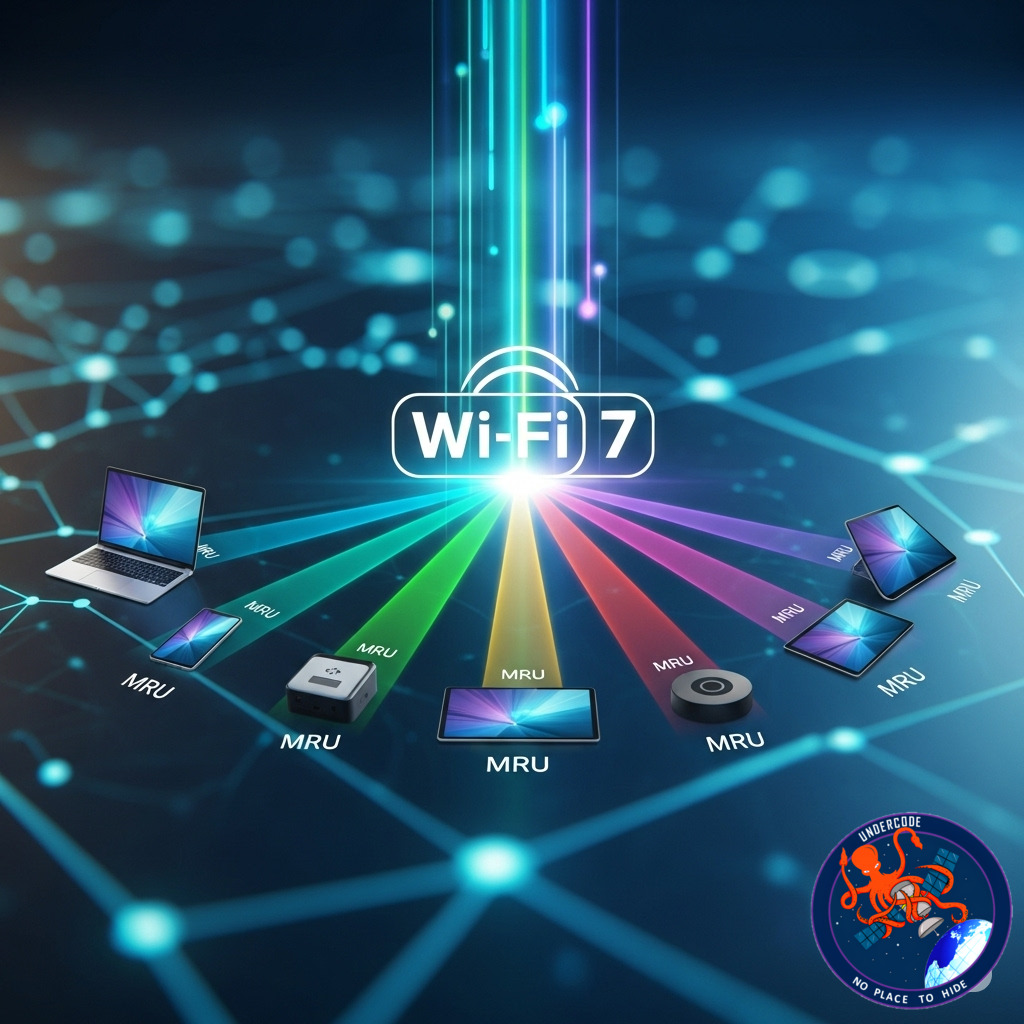
Unlocking the Future of Wireless Speed and Reliability
In an era where wireless devices are exploding in number and density, delivering fast, reliable Wi-Fi remains a critical challenge. Wi-Fi 7 promises to shatter previous limits by boosting speed, efficiency, and stability even in the most congested environments. At the heart of this leap is a breakthrough technology called Multiple Resource Unit (MRU). Building on the foundation of Wi-Fi 6’s Orthogonal Frequency Division Multiple Access (OFDMA), MRU enables more intelligent and flexible use of the wireless spectrum. This article dives deep into how MRU works, why it matters, and how it’s already making waves in real-world testing.
A New Era of Wireless Efficiency with MRU
Wi-Fi 7’s MRU feature refines the way data travels wirelessly by dynamically adapting to interference and optimizing resource allocation across the spectrum. While Wi-Fi 6 introduced OFDMA, which divides the frequency spectrum into subchannels to serve multiple devices simultaneously, MRU takes it several steps further. Imagine a busy highway: OFDMA opened multiple lanes for smoother traffic flow. MRU acts like an intelligent traffic system that detects congested lanes and redirects cars into less crowded express routes, ensuring everyone moves faster and without collision.
This innovation is achieved by “puncturing” or selectively excluding portions of the spectrum that experience interference, allowing Wi-Fi 7 to transmit data only on clean, interference-free subchannels. It aggregates multiple Resource Units (RUs)—basic frequency blocks—into larger or more flexible groups, matching bandwidth allocation precisely to each device’s needs. MRU configurations vary from small to very large aggregations, enabling greater bandwidth efficiency. For example, while Wi-Fi 6 might utilize 88% of a 20 MHz channel in a two-client scenario, Wi-Fi 7 with MRU can boost this utilization close to 98%, squeezing far more value from the same spectral space.
Real-World Testing Confirms Latency and Efficiency Gains
Testing MRU’s impact involved Cisco’s latest Wi-Fi 7 access points and controllers in a simulated congested environment with mixed Wi-Fi 7 and older Wi-Fi 5 devices. Researchers streamed continuous high-volume traffic to create interference, while also sending low-latency real-time streams for applications like voice and video calls. The results were compelling: latency dropped significantly compared to both traditional Wi-Fi and Wi-Fi 6 OFDMA. Using a 320 MHz channel, Wi-Fi 7’s MRU achieved roughly 55% lower latency on downlink and 48% on uplink, proving it can handle high-density traffic with far less delay.
What Undercode Say: The Game-Changing Role of MRU in Wireless Networks
MRU represents more than just an incremental upgrade; it’s a fundamental shift in how wireless networks handle spectrum and user demand. By allowing flexible aggregation of subcarriers and adaptive interference avoidance, MRU elevates Wi-Fi 7 to deliver ultra-low latency, higher throughput, and more stable connections in environments where thousands of devices compete for airtime. This makes it ideal for complex venues like stadiums, airports, and smart factories filled with IoT sensors.
From a technical perspective, MRU’s strength lies in punctured RUs and their configurable sizes. The ability to tailor resource allocation finely for each device’s needs optimizes spectral efficiency and reduces wasted bandwidth. The gains in latency and throughput, especially at wider bandwidths like 320 MHz, position Wi-Fi 7 as a critical technology for supporting emerging applications that demand real-time responsiveness, such as augmented reality, virtual reality, and cloud gaming.
Furthermore, MRU’s ability to coexist and complement 5G indoor coverage addresses one of the major challenges of modern wireless deployments—ensuring seamless and consistent connectivity inside buildings where 5G signals struggle to penetrate. Cisco’s implementation of MRU in their Wi-Fi 7 access points and wireless controllers provides network administrators with centralized visibility and control, facilitating faster troubleshooting and enhanced security.
However, widespread adoption of MRU requires updating infrastructure to Wi-Fi 7 compatible devices and controllers, which can be costly for enterprises. Additionally, the actual performance gains in everyday scenarios will depend on factors like channel width availability, device compatibility, and interference levels. Despite these challenges, MRU’s architectural innovations mark a critical step forward in wireless evolution.
For consumers and businesses alike, MRU promises a smoother, faster, and more reliable wireless experience, enabling seamless connectivity for everything from streaming 4K video to powering smart IoT ecosystems. This technology not only pushes Wi-Fi closer to the theoretical maximum speeds but also ensures it remains robust under real-world pressures—something earlier Wi-Fi generations struggled with.
🔍 Fact Checker Results
✅ MRU builds on Wi-Fi 6’s OFDMA technology for improved spectrum efficiency.
✅ Real-world tests show up to 55% latency reduction with MRU-enabled Wi-Fi 7.
✅ Cisco’s Wi-Fi 7 devices fully support MRU functionality starting from IOS XE 17.15.2.
📊 Prediction: Wi-Fi 7 MRU Will Revolutionize High-Density Wireless Networks
Looking ahead, MRU is set to become a cornerstone of next-generation wireless infrastructure, especially in urban and enterprise settings where device density and demand for high bandwidth are ever-increasing. As 5G and Wi-Fi 7 coexist, MRU’s ability to optimize spectrum usage and reduce interference will be critical in maintaining seamless user experiences. Industries relying on real-time applications—telemedicine, immersive AR/VR, and cloud gaming—will benefit immensely, gaining low latency and high reliability. We expect Wi-Fi 7 equipped with MRU to be the preferred standard for new deployments, driving vendors and enterprises to upgrade hardware rapidly. This will accelerate the shift towards fully integrated, multi-technology wireless ecosystems that can intelligently adapt to congestion and interference, delivering faster, more reliable connections worldwide.
🕵️📝✔️Let’s dive deep and fact‑check.
References:
Reported By: blogs.cisco.com
Extra Source Hub:
https://www.instagram.com
Wikipedia
OpenAi & Undercode AI
Image Source:
Unsplash
Undercode AI DI v2
🔐JOIN OUR CYBER WORLD [ CVE News • HackMonitor • UndercodeNews ]
📢 Follow UndercodeNews & Stay Tuned:
𝕏 formerly Twitter 🐦 | @ Threads | 🔗 Linkedin | 🦋BlueSky | 🐘Mastodon


