
Listen to this Post
Introduction
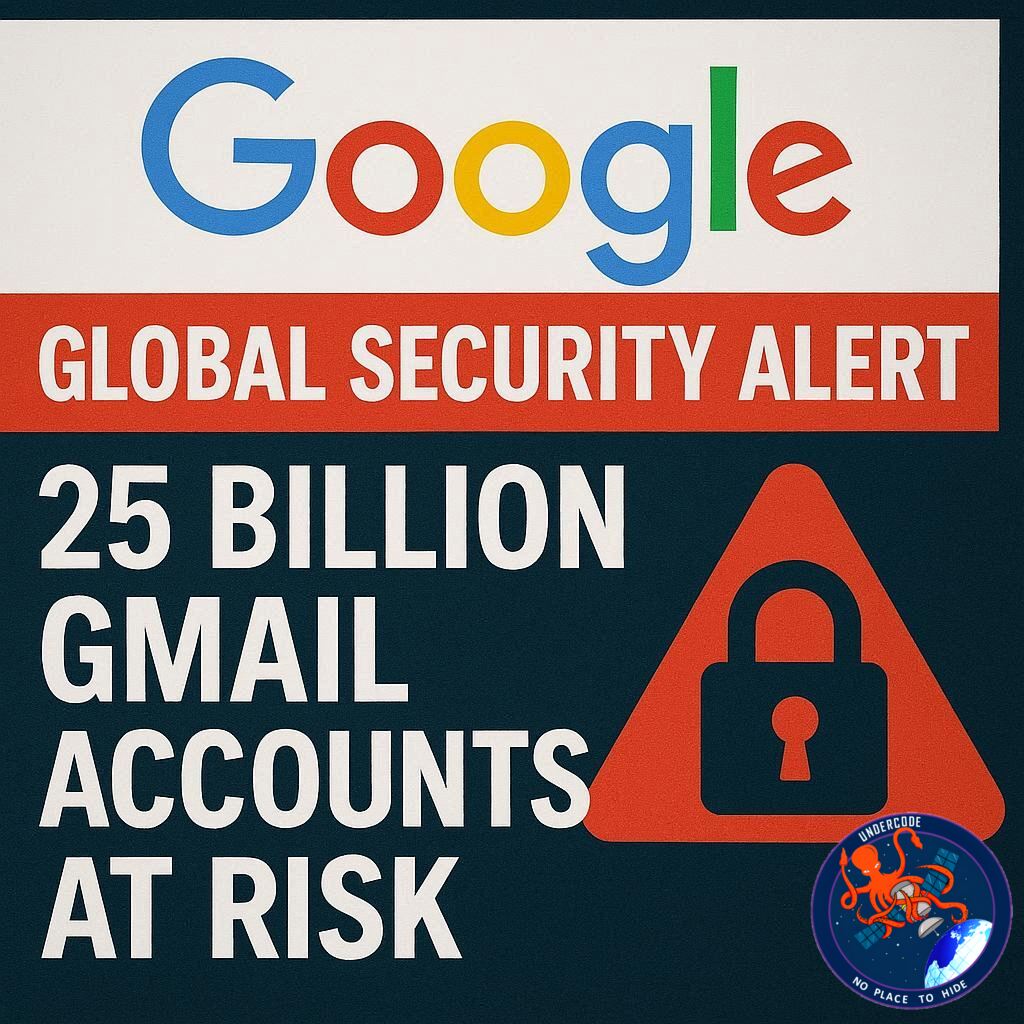
Google has sounded the alarm over a massive security breach that could affect its 2.5 billion Gmail users worldwide. The tech giant confirmed that hackers exploited advanced phishing methods and other vulnerabilities, putting millions of accounts at potential risk. This incident is now being described as one of the most widespread security threats in recent years. With the increasing sophistication of cybercriminals, the attack has highlighted both the strengths and limits of Google’s defenses.
the Original Report
Google recently issued a security alert after Trend Micro’s investigation into a major breach revealed that Gmail accounts were being heavily targeted. The company began notifying users on August 8, emphasizing that much of the compromised data involved “publicly available business information.”
The attack was carried out primarily through phishing scams, where hackers sent deceptive emails designed to steal login credentials. Victims were tricked into visiting fake Google sign-in pages or providing their two-factor authentication (2FA) codes, effectively handing over complete access to their accounts.
According to reports, hackers used a multi-layered strategy. They created emails that closely resembled legitimate communications from Google, embedded links to fraudulent login portals, and lured unsuspecting users into entering sensitive information.
Google also confirmed a separate breach involving its Salesforce database, reportedly linked to the hacking group ShinyHunters, infamous for targeting large companies such as AT\&T and Microsoft.
In response, Google issued a list of urgent security recommendations:
- Use unique, strong passwords for Gmail and avoid repeating them across other services.
- Enable Two-Factor Authentication (2FA) to add a vital extra step for account protection.
- Stay vigilant against suspicious emails, checking sender addresses and links before sharing any personal information.
- Review account activity regularly to detect unauthorized access early.
The company is urging users to take these preventive measures seriously, warning that the threat remains active as hackers adapt their methods.
What Undercode Say:
The Gmail breach underscores a troubling trend: cybercriminals are no longer relying on crude tactics but instead deploying social engineering techniques that exploit human psychology. Unlike brute-force attacks, phishing succeeds by manipulating trust, making even security-conscious users vulnerable.
One critical point is that 2FA, while necessary, is not foolproof. In this case, attackers specifically designed phishing traps to capture both the password and the temporary 2FA code. This reveals the urgent need for phishing-resistant authentication methods, such as hardware security keys (e.g., YubiKeys) or passkeys, which are gradually being rolled out by Google and other tech firms.
The involvement of ShinyHunters is significant. This group is known not only for breaching corporate databases but also for selling stolen data on dark web markets. The fact that Gmail and Salesforce were both targeted indicates a coordinated attempt to exploit data at both individual and enterprise levels, which could amplify the scope of identity theft, financial fraud, and corporate espionage.
Google’s advice on password hygiene, while important, is only part of the solution. The real challenge lies in educating users. Many phishing victims are not careless; they are deceived by increasingly sophisticated messages that mimic official communications. Training users to pause and verify before clicking links is crucial, but long-term, technology must take more responsibility by automating threat detection.
This breach also highlights the growing convergence between consumer and enterprise threats. A compromised Gmail account is not just a personal issue—it can serve as a backdoor into corporate systems, especially for employees using Gmail for work. This creates a chain reaction where a single weak point in personal security can endanger entire organizations.
Furthermore, the Salesforce angle raises another red flag. If third-party platforms connected to Google accounts are breached, users may face indirect risks beyond Gmail itself. In an era where cloud platforms are deeply interconnected, supply chain vulnerabilities are becoming the soft underbelly of cybersecurity.
Ultimately, this incident reinforces the idea that no system is completely secure, but resilience comes from layered defense: user vigilance, stronger authentication, and systemic security improvements by providers. Google’s large-scale warning is not just a reaction—it is a recognition that the threat landscape is rapidly evolving, and users must evolve with it.
🔍 Fact Checker Results
✅ Confirmed: Google issued the Gmail security alert on August 8.
✅ Confirmed: Hackers used phishing methods to capture login credentials and 2FA codes.
❌ Misconception: The breach did not directly expose all 2.5 billion accounts but placed millions at potential risk.
📊 Prediction
Cyberattacks on Gmail will intensify, with phishing-resistant authentication becoming the new standard within the next three years. Groups like ShinyHunters will continue targeting both individuals and corporations, blurring the lines between personal and enterprise data breaches. Google is likely to accelerate the global rollout of passkeys and hardware-based authentication to mitigate the weaknesses exposed in this incident.
Recommendation: Strengthen account protection beyond 2FA.
Next step: Adopt passkeys or hardware security keys for Gmail access.
🕵️📝✔️Let’s dive deep and fact‑check.
References:
Reported By: timesofindia.indiatimes.com
Extra Source Hub:
https://www.linkedin.com
Wikipedia
OpenAi & Undercode AI
Image Source:
Unsplash
Undercode AI DI v2
🔐JOIN OUR CYBER WORLD [ CVE News • HackMonitor • UndercodeNews ]
📢 Follow UndercodeNews & Stay Tuned:
𝕏 formerly Twitter 🐦 | @ Threads | 🔗 Linkedin | 🦋BlueSky | 🐘Mastodon


