
Listen to this Post
Introduction
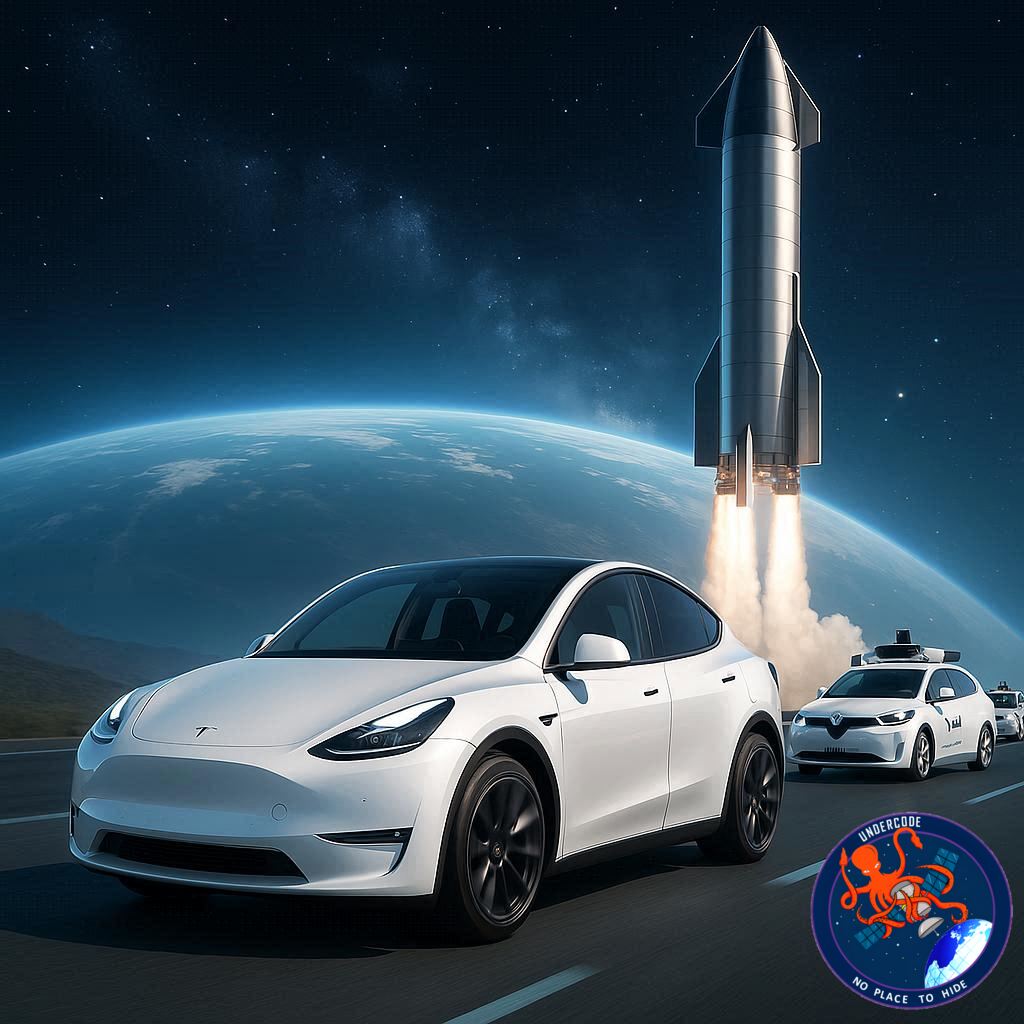
The world of electric vehicles and space exploration is moving faster than ever. Tesla has unveiled its upgraded Model Y Performance straight from Giga Berlin, SpaceX is gearing up for a historic Starship catch, and Waymo has confirmed a massive expansion of its autonomous ride-hailing fleet. At the same time, Tesla continues to push the boundaries of autonomy with the launch of Full Self-Driving in Australia. These updates reveal not just company milestones but also a larger narrative: the battle for dominance in clean energy, AI-driven mobility, and interplanetary exploration.
the Original
Tesla has officially launched the new Model Y Performance, produced at Gigafactory Berlin and now available in Europe and the Middle East. Deliveries are expected within the next two months. The vehicle offers 0–60 mph in 3.3 seconds, a top speed of 155 mph, and an estimated range of 308 miles. Design refinements include aerodynamic fascias, a carbon fiber spoiler, adaptive suspension, and high-performance brakes. Inside, Tesla has added sportier seats with heating, ventilation, power tilt, and thigh support, along with rear heated seats and expanded ambient lighting. A new 16-inch QHD screen dominates the dashboard, supported by eight exterior cameras and a next-gen forward-facing unit.
Meanwhile, Elon Musk confirmed that SpaceX is preparing for the first-ever Starship catch attempt, likely around Flight 13 to 15 depending on the success of V3 launches. Starship’s recent Flight 10 was a success, marking progress toward future crewed missions.
Waymo, Tesla’s biggest rival in autonomous mobility, has massively expanded its driverless fleet. New CPUC data shows 1,429 Waymos in California, with 875 based in San Francisco. This rapid expansion highlights the company’s aggressive push to dominate the robotaxi market.
Tesla also launched Full Self-Driving in Australia for \$10,100, marking the first rollout in a right-hand-drive market. Features include Traffic Light and Stop Sign Control alongside Tesla’s existing Autopilot features. The rollout begins with select Model 3 and Model Y owners using Hardware 4, with a staged expansion planned.
What Undercode Say:
Tesla’s Model Y Performance represents more than just a car upgrade—it is a strategic move to cement Tesla’s dominance in Europe, where competition from German automakers is fierce. By manufacturing directly at Giga Berlin, Tesla cuts costs, improves delivery speed, and strengthens its European foothold. The performance boost from 3.5 to 3.3 seconds in acceleration might seem small, but in the performance EV market, these details matter to enthusiasts who crave speed and precision engineering.
The interior refinements also signal Tesla’s pivot toward luxury comfort, moving beyond minimalism to offer features that rival premium European brands like BMW and Mercedes-Benz. The carbon fiber accents, sport seats, and adaptive suspension put the Model Y Performance in direct competition with established performance SUVs.
On the technology side, Tesla’s expansion of Full Self-Driving to Australia shows the company’s intent to dominate not just in North America and China but in every major auto market. By making FSD available in right-hand-drive countries, Tesla expands its global software revenue stream. The inclusion of a 30-day free trial also reflects Musk’s clever strategy: let people experience autonomy, and they’re more likely to pay the \$10,100 premium.
Waymo’s expansion in San Francisco underscores the battle for robotaxi supremacy. Tesla relies on camera-only vision, while Waymo leans on LiDAR, a clash of philosophies in AI-driven transport. Waymo’s fleet growth from 300 to over 1,400 in less than two years demonstrates serious scaling power. However, Tesla’s strength lies in its vast data pool from millions of vehicles already on the road. This makes Tesla’s software-first approach more scalable in the long run, while Waymo continues burning cash to expand hardware-dependent fleets.
SpaceX, on the other hand, is writing a different chapter of human history. The planned Starship catch maneuver isn’t just a test—it’s a game-changer for reusability in spaceflight. Successfully catching the world’s largest rocket could slash launch costs and accelerate humanity’s journey to Mars. Musk’s vision to attempt the catch between Flight 13 and 15 shows cautious optimism but also the urgency to make Starship reliable before human missions. If achieved, this milestone will not only silence critics but also position SpaceX as an untouchable force in aerospace.
The larger narrative here is clear: Tesla and SpaceX are disrupting traditional industries simultaneously, while Waymo represents Big Tech’s bet on AI mobility. The race isn’t just about cars or rockets—it’s about shaping the future of transportation, both on Earth and beyond.
✅ Fact Checker Results
Tesla Model Y Performance specs and launch details: Confirmed by Tesla’s official announcement.
Waymo’s fleet numbers: Verified with CPUC data.
SpaceX Starship catch timeline: Based on Elon Musk’s direct statements on X.
🔮 Prediction
Tesla will continue to dominate the European EV performance market with the new Model Y, while FSD expansion into Australia paves the way for global adoption. Waymo will expand aggressively in U.S. cities but face scalability challenges compared to Tesla’s software-led approach. SpaceX’s Starship catch attempt, likely in 2026, will mark a turning point in reusable rocketry—potentially making space travel as routine as commercial aviation within the next decade.
🕵️📝✔️Let’s dive deep and fact‑check.
References:
Reported By: www.teslarati.com
Extra Source Hub:
https://stackoverflow.com
Wikipedia
OpenAi & Undercode AI
Image Source:
Unsplash
Undercode AI DI v2
🔐JOIN OUR CYBER WORLD [ CVE News • HackMonitor • UndercodeNews ]
📢 Follow UndercodeNews & Stay Tuned:
𝕏 formerly Twitter 🐦 | @ Threads | 🔗 Linkedin | 🦋BlueSky | 🐘Mastodon


