
Listen to this Post
Introduction
In the fast-evolving world of artificial intelligence, change is the only constant. Microsoft has officially deprecated several Phi-3 and Phi-3.5 models from GitHub Models, urging developers to migrate to the more powerful Phi-4 series. This strategic move ensures that users benefit from improved performance, scalability, and future-proof AI capabilities. For developers, startups, and enterprises relying on these models, understanding the transition is crucial to staying competitive in the AI space.
the Original
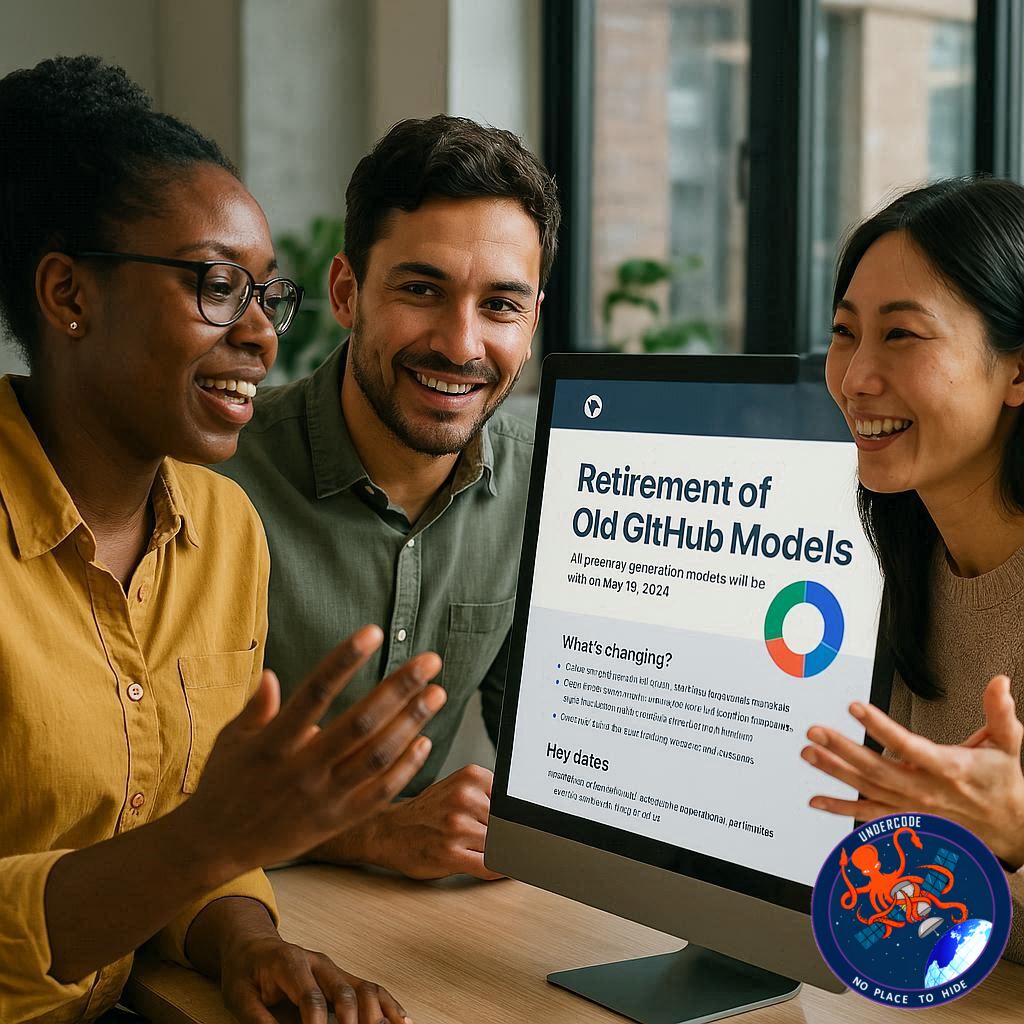
Microsoft has announced the retirement of specific AI models in GitHub Models, primarily from the Phi-3 and Phi-3.5 series. Users are strongly encouraged to migrate to the Phi-4 family, which offers significant enhancements in efficiency and performance.
Phi-3-medium-4k-instruct → Transition to Phi-4
Phi-3-medium-128k-instruct → Transition to Phi-4
Phi-3-mini-128k-instruct → Transition to Phi-4-mini-instruct
Phi-3-mini-4k-instruct → Transition to Phi-4-mini-instruct
Phi-3-small-128k-instruct → Transition to Phi-4-mini-instruct
Phi-3-small-8k-instruct → Transition to Phi-4-mini-instruct
Phi-3.5-mini-instruct → Transition to Phi-4-mini-instruct
Phi-3.5-MoE-instruct → Transition to Phi-4-mini-instruct
Phi-3.5-vision-instruct → Transition to Phi-4-mini-instruct
Microsoft highlights that this transition will deliver more accurate outputs, faster processing, and broader support for complex tasks. Users are encouraged to explore documentation and participate in community discussions to ease the migration process.
What Undercode Say:
The deprecation of these models is not just a routine update—it reflects a strategic shift in Microsoft’s AI roadmap. By phasing out Phi-3 and Phi-3.5, Microsoft ensures that developers move toward standardized, high-performing models under the Phi-4 family.
From a developer’s perspective, this change means:
Higher Efficiency: Phi-4 and Phi-4-mini-instruct models are optimized for lower latency and higher throughput, making them ideal for production-grade applications.
Scalability: With longer context handling and improved token management, Phi-4 models are better suited for enterprise-scale deployments.
Better Alignment: Microsoft is aligning its models to be more future-ready, ensuring compatibility with evolving AI infrastructure.
On a business level, the migration has deeper implications:
Reduced Fragmentation: Instead of supporting multiple outdated models, Microsoft streamlines its ecosystem, cutting maintenance overheads.
Competitive Edge: Phi-4 models can handle more complex workflows, enabling businesses to leverage state-of-the-art AI applications.
Security & Reliability: Updated models are more resistant to hallucinations, vulnerabilities, and outdated training data.
For developers reluctant to switch, the cost of sticking with older models could be high. Deprecated models may soon become unsupported, leading to compatibility issues, reduced security, and lack of updates.
This also signals Microsoft’s intent to consolidate AI offerings in a way that mirrors industry trends. Tech giants are focusing on fewer but stronger models, ensuring a smoother developer experience and reducing confusion.
Furthermore, the inclusion of vision-based and MoE (Mixture of Experts) models in the migration list suggests Microsoft is unifying both general-purpose AI and specialized AI applications into the Phi-4 ecosystem.
Ultimately, this move can be seen as a future-proofing strategy. Microsoft is betting on Phi-4 as the foundation of its next-generation AI ecosystem, and early adopters will benefit from cutting-edge performance while avoiding the risks of being stuck with deprecated tools.
✅ Fact Checker Results
Microsoft has officially deprecated Phi-3 and Phi-3.5 models.
Transition paths to Phi-4 and Phi-4-mini-instruct are confirmed.
The announcement is publicly documented by Microsoft on GitHub.
🔮 Prediction
Looking ahead, it’s likely that Microsoft will continue consolidating its AI portfolio, focusing heavily on Phi-4 and its successors. We may soon see Phi-5 or advanced hybrid models integrating multimodal capabilities, extended memory, and enterprise-ready features. For developers, early adoption of Phi-4 ensures not just stability but also a strategic advantage in harnessing the next wave of AI innovation.
🕵️📝✔️Let’s dive deep and fact‑check.
References:
Reported By: github.blog
Extra Source Hub:
https://www.instagram.com
Wikipedia
OpenAi & Undercode AI
Image Source:
Unsplash
Undercode AI DI v2
🔐JOIN OUR CYBER WORLD [ CVE News • HackMonitor • UndercodeNews ]
📢 Follow UndercodeNews & Stay Tuned:
𝕏 formerly Twitter 🐦 | @ Threads | 🔗 Linkedin | 🦋BlueSky | 🐘Mastodon


