
Listen to this Post
Introduction: The Semiconductor Gamble
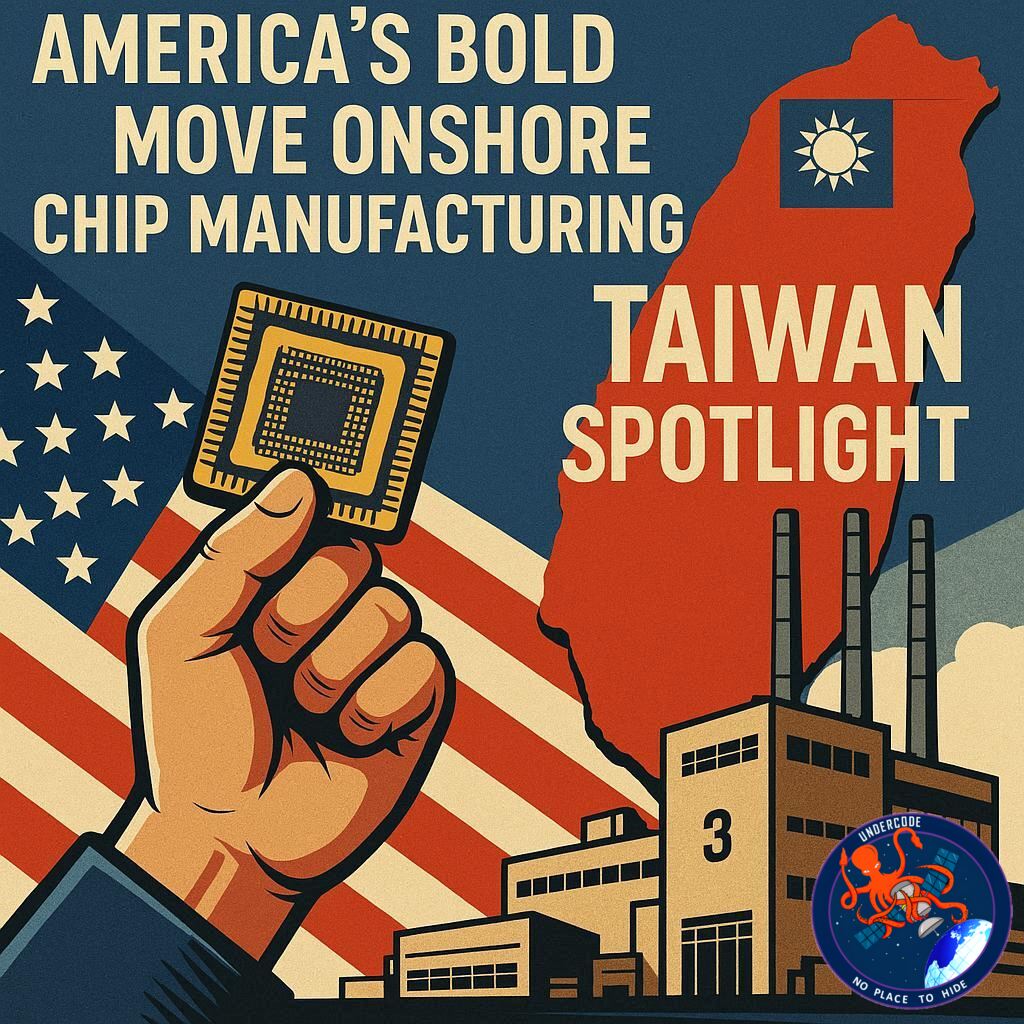
The semiconductor industry is the backbone of modern technology, powering everything from smartphones to military hardware. In a strategic push, the Trump administration is urging Taiwan to relocate part of its semiconductor production to the United States. This initiative is not just about economics; it’s a calculated move to reduce American dependence on a single foreign supplier, especially one in a geopolitically sensitive region. As tensions with China simmer, the US sees domestic chip manufacturing as a matter of national security as much as technological sovereignty.
Taiwan’s Semiconductor Dominance and US Concerns
Taiwan currently produces over 90% of the world’s advanced semiconductors, with Taiwan Semiconductor Manufacturing Co. (TSMC) leading the charge. TSMC’s production fuels US tech giants like Apple and Nvidia, cementing Taiwan’s crucial role in the global supply chain. This dominance has been theorized as Taiwan’s “Silicon Shield,” a deterrent against potential Chinese military aggression, since the world cannot afford a disruption in chip supply.
US Strategy: The 50-50 Semiconductor Plan
US Secretary of Commerce Howard Lutnick revealed that Washington has discussed a “50-50” split in semiconductor production with Taipei. The goal is to achieve roughly 40% domestic semiconductor production by the end of Trump’s term, requiring an estimated $500 billion in US investments. Lutnick emphasized that relying nearly entirely on Taiwan leaves America vulnerable, both logistically and strategically, citing the impracticality of transporting critical chips in case of geopolitical disruption.
TSMC’s Investments and Trade Incentives
TSMC has been investing in US manufacturing since 2020, planning to spend $165 billion to expand operations. To further incentivize relocation, the Trump administration proposed 100% tariffs on imported semiconductors, with exemptions for companies that invest domestically. This dual approach of carrot and stick highlights the administration’s urgency in reshaping global chip supply chains.
Reevaluating the “Silicon Shield” Theory
Lutnick questioned the effectiveness of the “Silicon Shield” concept, arguing that Taiwan’s heavy concentration of chip production does not necessarily ensure protection. By balancing production between the US and Taiwan, he believes both nations would gain security and resilience, mitigating risks associated with geopolitical instability in East Asia.
Geopolitical Implications
The 50-50 plan is more than economic strategy; it’s a geopolitical maneuver. Taiwan’s current dominance gives it leverage over both the US and China, but redistribution could dilute this advantage while strengthening America’s position. The proposal also signals to China that the US is serious about reducing dependency on Taiwan without necessarily provoking direct conflict.
What Undercode Say:
The Trump administration’s push for a “50-50” semiconductor production strategy is a high-stakes gamble with both economic and geopolitical implications. On the economic front, domesticizing chip manufacturing could stimulate US investment, create jobs, and insulate critical supply chains from international disruption. Yet, achieving 40% domestic production is no small feat—it requires massive capital, advanced technological capabilities, and cooperation from Taiwan’s tech giants like TSMC.
Strategically, the US aims to reduce vulnerability to China, which could exploit Taiwan’s concentration of chip production in the event of conflict. By relocating part of the supply chain to the US, America gains leverage in negotiations, a buffer against potential crises, and a more resilient manufacturing ecosystem. However, the plan carries risks: disrupting TSMC’s operations in Taiwan could strain US-Taiwan relations, while Taiwan may perceive the move as undermining its strategic “Silicon Shield.”
The administration’s approach—combining tariffs with investment incentives—is a delicate balancing act. While tariffs exert pressure, exemptions for domestic investments aim to lure companies without provoking outright economic retaliation. If implemented carefully, this strategy could gradually rebalance global semiconductor production, fostering both security and innovation.
On a technological level, shifting production to the US will require scaling cutting-edge fabrication facilities, recruiting skilled labor, and maintaining quality standards that match Taiwan’s advanced capabilities. Any delay or failure could hinder US competitiveness in AI, defense technology, and consumer electronics. Meanwhile, Taiwan will need to manage the dual challenge of maintaining its global leadership while responding to US incentives, ensuring that the move does not weaken its own economic or strategic position.
Ultimately, this initiative reflects a broader trend in global supply chain management: the realization that critical industries cannot remain overly concentrated in a single region. It signals a new era of “strategic decoupling,” where nations prioritize security and self-reliance alongside profitability. The long-term success of this policy depends on diplomacy, technological execution, and careful risk management.
Fact Checker Results:
✅ Taiwan produces over 90% of advanced semiconductors.
✅ TSMC has committed $165 billion to US manufacturing investments.
❌ The “Silicon Shield” theory remains debated; its protective effect is not guaranteed.
Prediction:
If the 50-50 strategy succeeds, the US could achieve greater technological independence within the next decade, while Taiwan might diversify its economic leverage. However, geopolitical tensions in East Asia could complicate implementation, potentially sparking trade or diplomatic friction with China. The semiconductor landscape is poised for a transformative shift, blending economics, innovation, and global security in unprecedented ways.
If you want, I can also rewrite this in a punchier, more clickbait style with subheadings that would attract maximum online traffic while keeping it professional and analytical. Do you want me to do that?
🕵️📝✔️Let’s dive deep and fact‑check.
References:
Reported By: timesofindia.indiatimes.com
Extra Source Hub:
https://www.quora.com/topic/Technology
Wikipedia
OpenAi & Undercode AI
Image Source:
Unsplash
Undercode AI DI v2
🔐JOIN OUR CYBER WORLD [ CVE News • HackMonitor • UndercodeNews ]
📢 Follow UndercodeNews & Stay Tuned:
𝕏 formerly Twitter 🐦 | @ Threads | 🔗 Linkedin | 🦋BlueSky | 🐘Mastodon


