
Listen to this Post
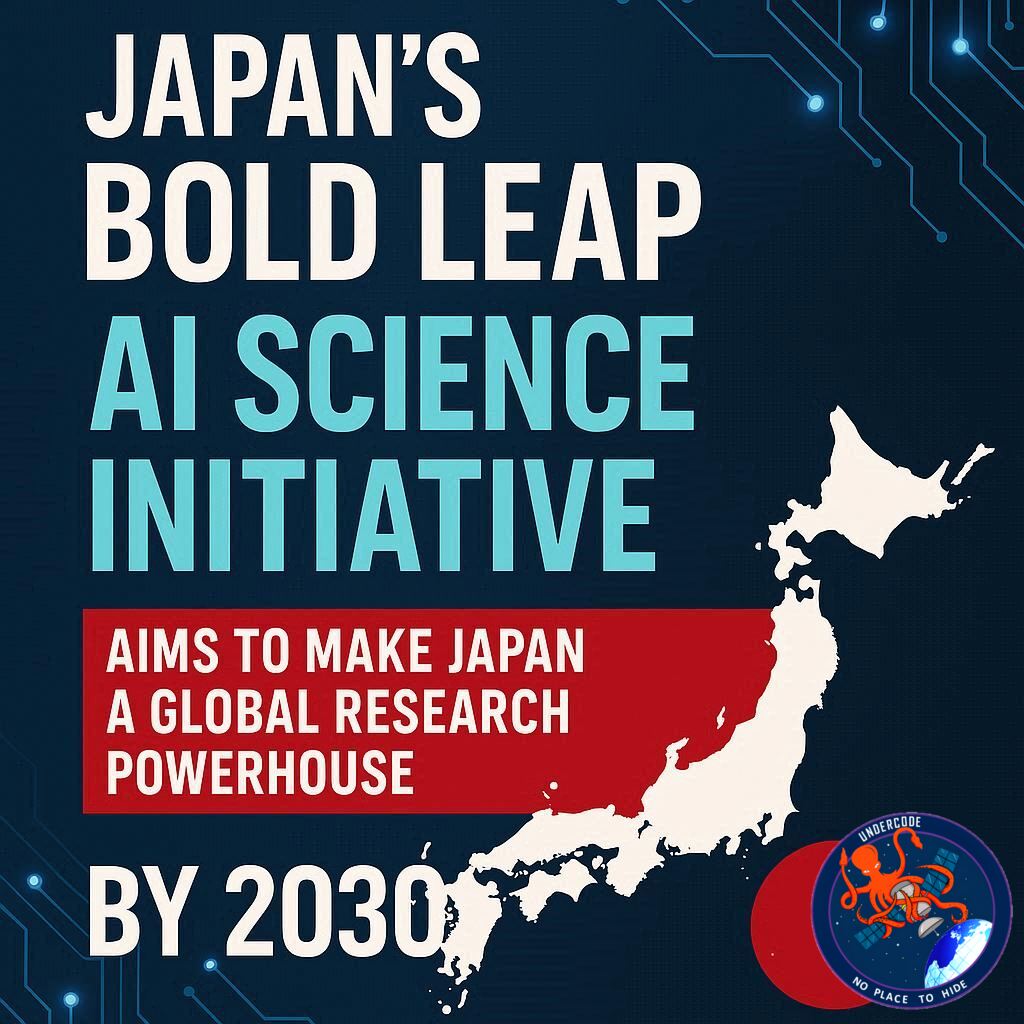
A New Era for Japanese Science
In a decisive move that could reshape the global research landscape, Japan’s Ministry of Education, Culture, Sports, Science and Technology (MEXT) announced a sweeping initiative titled “AI for Science.” The plan focuses on integrating advanced artificial intelligence systems into Japan’s scientific research infrastructure. By harnessing the power of supercomputers like “Fugaku” and the nation’s vast troves of data in materials science and other disciplines, Japan aims to reach world-leading research capability levels by the 2030s.
This initiative is not just about deploying AI—it’s about transforming the way research is conducted. MEXT envisions a future where every Japanese researcher, from national universities to private institutions, will be able to use AI to accelerate discovery, optimize experiments, and collaborate across fields with unprecedented efficiency.
The ministry’s plan outlines the use of large-scale computation platforms, robust data-sharing systems, and the establishment of AI-integrated research environments that can support projects ranging from molecular simulations to climate modeling. This approach will allow Japan to compete with AI-driven scientific ecosystems emerging in the United States, China, and Europe.
Building on Japan’s Strengths
Japan’s scientific community already has several competitive advantages. The “Fugaku” supercomputer, one of the most powerful in the world, serves as a cornerstone for high-level data processing and modeling. Combined with decades of accumulated expertise in fields such as quantum materials, nanotechnology, and biomedical research, this provides a fertile foundation for AI-driven advancements.
Under the “AI for Science” plan, these assets will be interconnected through a national digital research infrastructure, ensuring that researchers across the country can access advanced computational tools without facing prohibitive costs or technical barriers. The system will also prioritize open collaboration—enabling academia, industry, and government institutions to jointly drive innovation.
A Vision Toward 2030 and Beyond
MEXT’s ultimate goal is to make AI-assisted science a standard practice by the 2030s. This vision includes fostering new generations of AI-literate scientists, developing domestic AI models tailored to research needs, and encouraging international partnerships to ensure Japan’s work remains globally relevant.
To achieve this, the government is preparing policies that incentivize data sharing, cross-sector collaboration, and ethical AI governance, balancing technological growth with responsibility. If successful, Japan’s “AI for Science” could become a blueprint for how nations harness artificial intelligence to elevate their scientific ecosystems.
What Undercode Say:
Strategic Reinvention of Japanese Science
This initiative signals Japan’s determination to reinvent its research ecosystem through digital transformation. For decades, Japan has been known for precision engineering, robotics, and manufacturing excellence—but less so for software-based innovation. The “AI for Science” plan bridges that gap, enabling the country to compete on intellectual and computational fronts rather than just hardware.
AI as the New Scientific Colleague
In the future envisioned by MEXT, AI will not merely be a tool but a collaborative partner in research. Imagine AI systems automatically generating hypotheses, running complex simulations, and analyzing patterns across massive datasets faster than any human team could. Researchers will spend less time on repetitive data analysis and more on creative problem-solving—a true paradigm shift in scientific methodology.
National Data Power and Sovereignty
Data is now the world’s most valuable resource, and Japan recognizes it. By building domestic AI infrastructure around national data pools, Japan ensures data sovereignty—keeping sensitive information under national control while extracting its scientific value. This not only strengthens cybersecurity but also protects intellectual property in a globally competitive environment.
Bridging Academia and Industry
Japan’s plan subtly emphasizes collaboration between academia and the private sector. This is crucial. Many of Japan’s most successful innovations historically arose from university–industry partnerships. The AI for Science initiative could create a dynamic feedback loop: academia provides theoretical breakthroughs, while corporations contribute real-world application and scalability.
Competition on the Global Stage
Japan enters an intense global race. The United States has its AI-driven research networks, China invests heavily in quantum and AI integration, and Europe focuses on ethical AI for open science. Japan’s approach—leveraging its precision culture, strong data discipline, and advanced hardware—could set it apart as a “hybrid power” in the AI science revolution.
Human Capital and Education Challenges
However, challenges remain. Japan must rapidly expand AI education and training. Without enough skilled researchers who understand both scientific inquiry and AI technologies, this vision risks remaining theoretical. Universities will need to reform curricula, attract global talent, and break traditional hierarchies to foster creative research environments.
Ethical and Governance Implications
Integrating AI into science also raises ethical concerns. Who is accountable if an AI-generated model leads to incorrect results? How should AI-authored research be cited or validated? Japan’s framework must tackle these questions head-on, ensuring transparency and fairness in AI-assisted discovery.
Long-Term Economic Impact
If executed effectively, AI for Science could boost Japan’s innovation economy, leading to new patents, faster product development cycles, and scientific breakthroughs that stimulate industries from pharmaceuticals to materials engineering. This is not just a scientific initiative—it’s a national economic growth strategy disguised as research policy.
A Cultural Shift Toward Openness
Japanese academia has long been criticized for being conservative and slow to adapt to change. This program may push institutions toward greater openness and international collaboration, making Japan’s research culture more dynamic and globally integrated.
Conclusion of Analysis
“AI for Science” represents more than a technological upgrade—it’s a cultural and strategic transformation. If Japan aligns its talent, data, and governance effectively, it can reclaim its position as a leader in global scientific innovation, redefining what modern research excellence looks like in the AI age.
Fact Checker Results
✅ Japan’s Ministry of Education (MEXT) officially announced an AI for Science framework in October 2025.
✅ The “Fugaku” supercomputer remains one of the world’s top-ranked systems for scientific computation.
❌ No concrete budget or timeline for AI integration across all research fields has been publicly confirmed yet.
Prediction
By 2030, Japan is expected to have a national AI research network connecting universities, laboratories, and industries through cloud-based computation. This could position Japan as a scientific superpower in the Pacific region, rivaling Western AI ecosystems. If the initiative maintains momentum, Japanese AI-driven discoveries could soon dominate fields like materials science, renewable energy, and drug design.
🕵️📝✔️Let’s dive deep and fact‑check.
References:
Reported By: xtechnikkeicom_c55dc2717585ec201689a837
Extra Source Hub:
https://www.quora.com/topic/Technology
Wikipedia
OpenAi & Undercode AI
Image Source:
Unsplash
Undercode AI DI v2
🔐JOIN OUR CYBER WORLD [ CVE News • HackMonitor • UndercodeNews ]
📢 Follow UndercodeNews & Stay Tuned:
𝕏 formerly Twitter 🐦 | @ Threads | 🔗 Linkedin | 🦋BlueSky | 🐘Mastodon


