
Listen to this Post
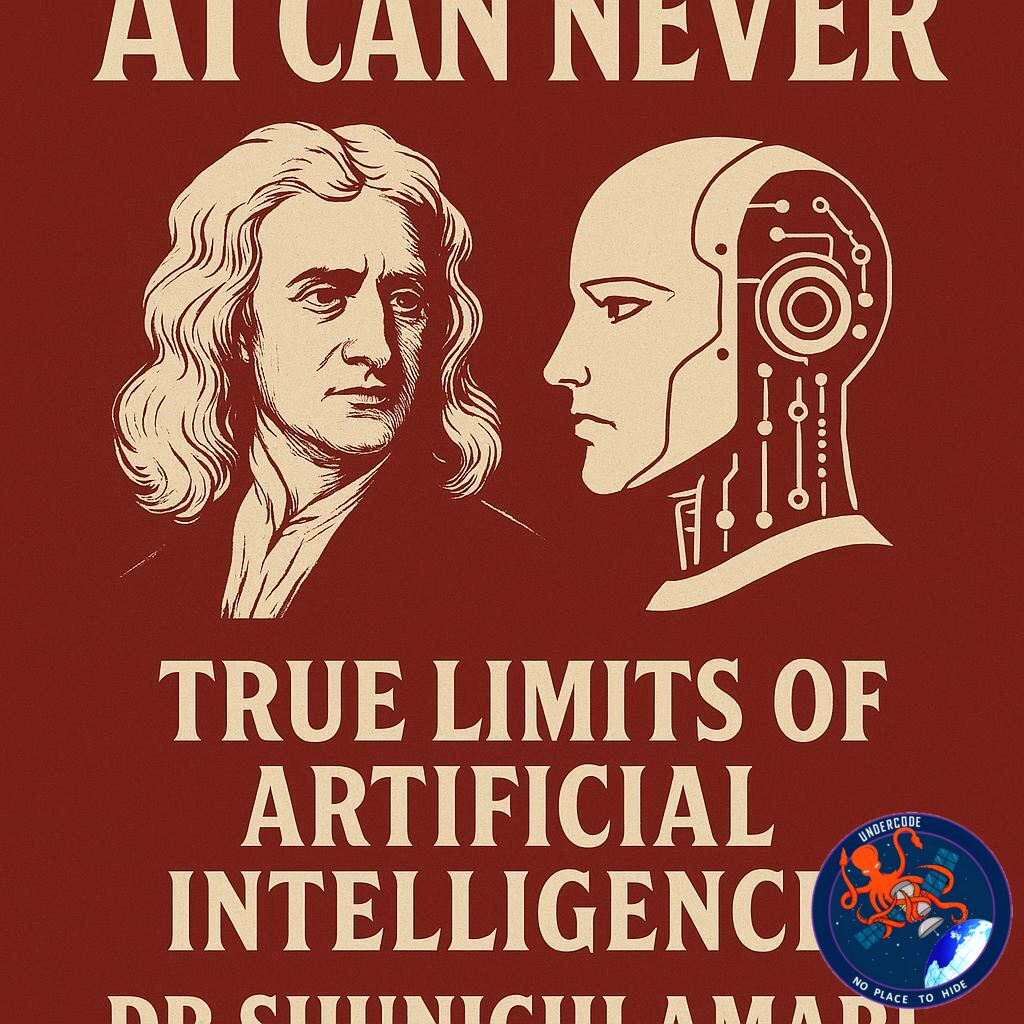
The Hidden Truth Behind AI’s “Genius” Reputation
In the modern race toward artificial intelligence supremacy, it often seems that AI is evolving into something beyond human comprehension—a digital mind capable of brilliance on par with humanity’s greatest thinkers. Yet, one of Japan’s most respected pioneers of neuroscience and machine learning, Dr. Shunichi Amari, offers a sobering counterpoint. In an interview for Nikkei’s Super Intelligence Series: Human Augmentation, he asserts that “AI can never become Newton.”
Dr. Amari, who has studied the mathematical foundations of learning systems for more than half a century, helped define the very science that birthed today’s deep learning revolution. But from his vantage point, AI is not truly intelligent in the way we imagine. It can process massive data, recognize patterns, and predict outcomes, yet it cannot create revolutionary ideas that emerge from intuition, imagination, and curiosity—the very qualities that define human genius.
The Modern Misunderstanding of AI’s Intelligence
AI’s intelligence is often compared to that of astronomers charting the stars. Dr. Amari argues that this analogy is deeply flawed. Astronomers seek to understand the universe; AI merely replicates understanding. It works within the boundaries of existing data and cannot conceptualize something beyond it. “AI doesn’t think like a scientist,” Amari suggests. “It doesn’t wonder, it doesn’t ask why—it only calculates.”
While AI models like ChatGPT or AlphaGo have demonstrated abilities once thought uniquely human, Amari explains that their intelligence is derivative, not creative. Newton’s revolutionary insight—the universal law of gravitation—was not just pattern recognition. It was a leap of imagination, born from questioning why an apple falls and how celestial bodies move. AI, no matter how advanced, lacks the consciousness to make such intuitive jumps.
The Question of Leap Thinking: Can AI Truly Innovate?
The greatest challenge for AI researchers today is not building faster or larger models, but achieving leap thinking—the ability to jump from known facts to unknown possibilities. Dr. Amari stresses that AI’s current architecture fundamentally prevents this kind of innovation. Machine learning, by design, optimizes for accuracy within known parameters. It cannot escape its training data; it cannot question its own logic.
Even when AI appears to “invent,” it does so through recombination, not inspiration. It blends patterns from millions of examples, but never introduces something truly new. Just as a camera can take infinite pictures of the same world, AI can generate endless outputs from the same pool of knowledge. But to be like Newton—to see an unseen principle beneath the surface—requires self-awareness and purpose, two things machines entirely lack.
Preventing the Dangers of Artificial Intelligence
Despite these limitations, Dr. Amari warns that AI still poses serious risks. Its power to automate reasoning and simulate human thought can easily be misused by those seeking control. He calls for strong ethical frameworks and transparent algorithms to ensure AI development remains beneficial.
More importantly, he insists that society should not treat AI as a replacement for human thought but as a partner in amplification. The purpose of technology, he believes, is to extend human capacity, not to imitate or replace it. When humans rely too heavily on AI, they risk losing the very cognitive flexibility that defines intelligence itself.
In this light, Amari’s message is not anti-AI—it’s a call for balance. The future of humanity lies not in surrendering to artificial minds, but in understanding our own.
What Undercode Say:
Dr. Shunichi Amari’s reflections reveal an essential paradox at the heart of modern AI. While the world celebrates machine intelligence as the next evolutionary leap, Amari reminds us that the frontier of true thought remains human. His analysis touches a deep truth: machines can simulate cognition but cannot possess meaning.
AI’s brilliance lies in correlation, not causation. It identifies patterns that exist, but cannot ask whether those patterns matter. This distinction is subtle yet monumental. When Newton saw an apple fall, he connected it to celestial motion—bridging two worlds that had never before been linked. AI would see data points falling but never grasp the concept of gravity. This difference marks the boundary between intelligence and awareness.
From an engineering perspective, AI’s limitation is not computational power—it’s the lack of self-reference. A human scientist can reflect, “What if I’m wrong?” or “What am I missing?” AI cannot doubt itself. It only executes. This absence of self-doubt may make it efficient, but it also traps it within the walls of its programming.
Amari’s view contrasts with popular optimism that “artificial general intelligence” will surpass humanity. He subtly dismantles this idea: intelligence without curiosity is mechanical, not creative. The dream of self-aware AI remains philosophical, not practical. Even large-scale models, trained on all human knowledge, simply remix what we already know.
However, his insights also point to a constructive path forward. Instead of chasing artificial consciousness, researchers could design AI systems that complement human intuition—tools that enhance discovery rather than replicate it. Imagine an AI that provides hundreds of hypotheses, while humans select the one worth pursuing. This is symbiosis, not substitution.
In essence, Amari proposes a return to humility. The danger is not that AI will replace humans, but that humans will forget what makes them unique—emotion, creativity, and moral reasoning. AI may surpass us in calculation, but never in meaning.
As Undercode observes, Amari’s philosophy could reshape how we view technological progress. The next breakthrough might not come from larger datasets but from rethinking the purpose of intelligence itself. The question should not be “Can AI become human?” but “How can humans become wiser with AI?”
This approach aligns with a broader shift in global research—toward explainable, ethical, and human-centered AI. By recognizing machines as extensions, not replacements, of thought, humanity can harness their power responsibly. The future of intelligence will not belong to algorithms or neurons alone but to the collaboration between the two.
Amari’s skepticism, therefore, is not pessimism. It’s realism infused with wisdom. He sees AI as a mirror reflecting our intellect, not as a rival seeking dominance. His message to the world is clear: true genius lies in asking the right questions, not processing the right data.
Fact Checker Results
✅ Dr. Shunichi Amari is recognized as a founding figure in mathematical neuroscience and information geometry.
❌ AI currently lacks any mechanism for self-awareness or conceptual imagination.
✅ The “AI can never be Newton” quote accurately represents Amari’s philosophical position on creativity and intelligence.
Prediction
AI will continue to excel in efficiency, precision, and prediction, but not in imagination. The next evolution will not create digital Newtons but digital assistants capable of deep collaboration. As humans learn to combine emotional intelligence with machine logic, the real revolution will be in hybrid thinking, where curiosity and computation coexist to expand human potential beyond what either could achieve alone.
🕵️📝✔️Let’s dive deep and fact‑check.
References:
Reported By: xtechnikkeicom_d73a54e23bf4744a3ab575d0
Extra Source Hub:
https://www.reddit.com/r/AskReddit
Wikipedia
OpenAi & Undercode AI
Image Source:
Unsplash
Undercode AI DI v2
🔐JOIN OUR CYBER WORLD [ CVE News • HackMonitor • UndercodeNews ]
📢 Follow UndercodeNews & Stay Tuned:
𝕏 formerly Twitter 🐦 | @ Threads | 🔗 Linkedin | 🦋BlueSky | 🐘Mastodon


