
Listen to this Post
Introduction
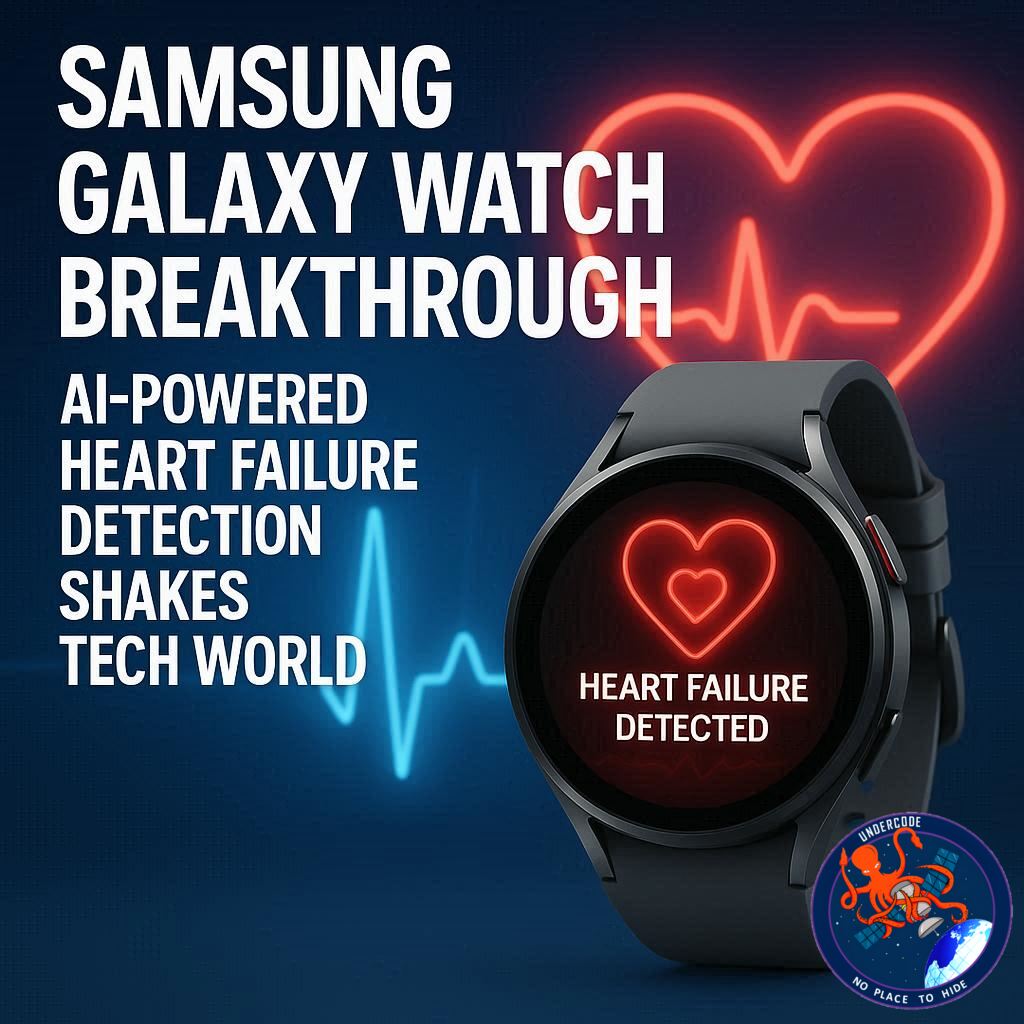
Samsung has always been at the forefront of innovation, pushing the boundaries of what smart devices can achieve. Beyond just style and connectivity, the company has transformed its Galaxy Watches into advanced health companions. Now, with a revolutionary update, Samsung is introducing a potentially life-saving feature powered by AI. This advancement could reshape how millions monitor their heart health and prevent heart failure before it’s too late.
Full the News
Samsung has confirmed the development of a cutting-edge health feature for its Galaxy Watch lineup. Over the years, these watches have already offered powerful monitoring tools such as stress tracking, ECG, blood pressure measurement, antioxidant index, vascular load, AFib detection, and even body composition analysis. The new upgrade takes things a step further by targeting a critical condition: Left Ventricular Systolic Dysfunction (LVSD).
LVSD occurs when the heart’s left ventricle weakens, limiting its ability to pump blood effectively. Known medically as heart failure with reduced ejection fraction (HFrEF), this condition is responsible for over half of global heart failure cases.
Samsung, in collaboration with Medical AI, has developed an algorithm capable of detecting LVSD using data captured from the Galaxy Watch’s ECG. To ensure accuracy, this AI system has been validated against traditional 12-lead ECG methods, the gold standard in cardiology.
The feature will be delivered through the AiTiA LVSD-1L app by Medical AI, which has already gained approval from South Korea’s Ministry of Food and Drug Safety (MFDS). This indicates regulatory confidence in the feature’s medical potential. While Samsung has not yet confirmed whether every Galaxy Watch with ECG functionality will receive this feature, experts believe it could soon be integrated into the Samsung Health Monitor app.
Beyond saving lives through early detection, Samsung argues that this technology could significantly reduce global healthcare costs. Detecting LVSD early means patients can adapt their lifestyle, start treatments, and avoid costly hospitalizations. The feature isn’t just about health—it’s also about financial sustainability in healthcare systems worldwide.
As of now, this tool is particularly exciting for asymptomatic users—those who show no obvious signs of illness but may have hidden risks. With Galaxy Watch, heart health could move from reactive to preventive care.
Samsung’s decision is part of a larger vision: turning wearable devices into real medical assistants powered by artificial intelligence.
What Undercode Say:
From an analytical standpoint, this development highlights the fusion of consumer tech and medical innovation. Samsung isn’t just competing with Apple and Fitbit for fitness tracking anymore; it’s redefining how wearable devices can transform into personalized health diagnostics tools.
By targeting LVSD detection, Samsung addresses one of the deadliest yet often undiagnosed conditions worldwide. Millions of people don’t know they’re at risk until it’s too late. Embedding an AI-driven algorithm into a smartwatch creates a 24/7 health monitoring ecosystem, something hospitals cannot provide on a daily basis.
The impact of this feature is twofold:
- For Consumers – Individuals gain unprecedented access to medical-grade insights without costly hospital visits. This could shift power into the hands of patients, encouraging healthier lifestyles.
- For Healthcare Systems – Early detection drastically lowers the economic burden. With heart failure ranking among the top drivers of healthcare expenses globally, preventive tech could save billions annually.
From a market perspective, Samsung is also building brand loyalty. Consumers who trust their Galaxy Watch to safeguard their lives are unlikely to switch to another brand. The AI-driven ecosystem, paired with existing Samsung Health features, makes the Galaxy Watch an all-in-one health powerhouse.
Moreover, regulatory approval in South Korea suggests a path toward global medical certifications, which could eventually make Samsung devices recognized as Class II medical tools in regions like the US and EU. This would mark a turning point where smartwatches evolve from lifestyle gadgets into regulated health devices.
Competitively, Apple’s push into heart monitoring with AFib detection set a benchmark, but Samsung’s LVSD detection could leapfrog Apple’s offerings by addressing a broader and deadlier condition. This isn’t just about catching irregular heartbeats—it’s about predicting life-threatening heart failure before symptoms even appear.
Yet, challenges remain. Samsung must navigate privacy concerns surrounding medical data, ensure AI accuracy across diverse populations, and guarantee user trust. False positives or missed detections could spark backlash. That said, the combination of AI, ECG, and real-time data monitoring represents the most advanced step yet in wearable healthcare.
For the average consumer, this technology could mean the difference between living with undiagnosed heart disease or catching it early enough to change their future. Samsung is not just selling a smartwatch—it’s offering peace of mind.
✅ Fact Checker Results
Samsung has officially confirmed the LVSD detection feature.
Approval has already been granted by South Korea’s MFDS.
The algorithm has been clinically validated against 12-lead ECG standards.
🔮 Prediction
In the coming years, Samsung’s Galaxy Watch could become the gold standard in AI-powered heart health monitoring. With expanded approvals and integration into Samsung Health Monitor, this feature may be adopted globally. Expect rival brands like Apple to accelerate their own AI-driven medical features, but Samsung’s early move positions it as a pioneer in preventive heart health technology.
🕵️📝✔️Let’s dive deep and fact‑check.
References:
Reported By: www.sammobile.com
Extra Source Hub:
https://www.twitter.com
Wikipedia
OpenAi & Undercode AI
Image Source:
Unsplash
Undercode AI DI v2
🔐JOIN OUR CYBER WORLD [ CVE News • HackMonitor • UndercodeNews ]
📢 Follow UndercodeNews & Stay Tuned:
𝕏 formerly Twitter 🐦 | @ Threads | 🔗 Linkedin | 🦋BlueSky | 🐘Mastodon


