
Listen to this Post
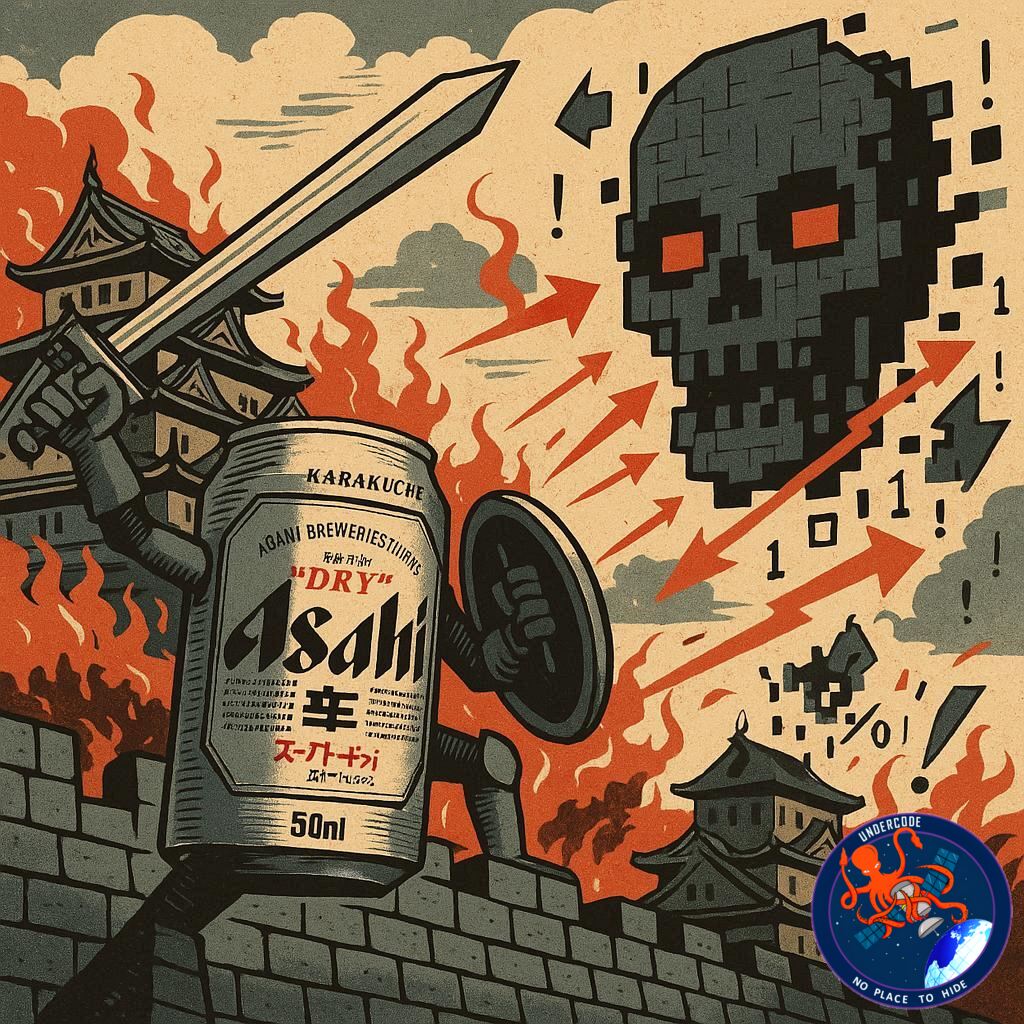
Brewing Crisis: The Cyberattack That Shook Japan’s Beer Giant
In late September, Japan’s brewing powerhouse Asahi Group was hit by a crippling ransomware attack that forced it to halt production and shipments across the country. The disruption struck the heart of Japan’s beloved beer industry, raising immediate fears of shortages of its flagship brew, “Super Dry.” The outage, which began on September 29, brought operations to a standstill and disrupted everything from order processing to shipping and customer service.
After several tense days, Asahi confirmed that six of its Japanese breweries have now restarted operations, offering a glimmer of hope for beer lovers and retailers alike. However, the company remains far from a full recovery. A spokesperson told Bloomberg that parts of the system remain offline and that many processes, including order management, are still being handled manually to maintain a stable supply chain.
The company has not yet disclosed the exact scale of the cyber breach but confirmed that most of its 30 domestic plants were affected at the peak of the attack. Analysts have warned that the financial consequences could be severe if the disruption persists, especially given Asahi’s dominant market position and reliance on continuous production cycles.
Major retail chains such as Seven & i Holdings, Lawson, and FamilyMart have already begun warning customers of potential shortages of Asahi’s Super Dry beer — Japan’s top-selling alcoholic beverage. These warnings have fueled public anxiety, with beer shelves already thinning in some regions.
The attack has spotlighted a growing global issue — the vulnerability of critical industries to cybercrime. From energy suppliers to food manufacturers, ransomware attacks are increasingly targeting high-value industries, forcing companies to reexamine their cybersecurity measures. For Asahi, the incident serves as both a wake-up call and a test of resilience.
Even as some facilities resume partial operations, the company faces a long road to full digital recovery. Investigators are still probing the source of the attack and evaluating the financial damage, but experts say such incidents can take months — or even years — to completely resolve. The cyber assault on Asahi underscores how deeply integrated technology has become in modern manufacturing, and how devastating its disruption can be.
What Undercode Say:
The Asahi cyberattack reveals far more than a temporary production hiccup — it’s a symptom of a much deeper vulnerability in Japan’s industrial backbone. What happened here is not just a story about beer; it’s about how digital dependency has outpaced digital defense.
When a century-old brand like Asahi, which prides itself on precision and reliability, is brought to its knees by malicious code, it exposes how fragile modern operations truly are. The fact that Asahi had to switch to manual order processing — something unheard of in today’s automated logistics systems — shows how ill-prepared even leading corporations can be against cyber threats.
Cybersecurity experts often describe ransomware attacks as “digital hostage crises.” In this case, Asahi’s production systems, customer databases, and communication lines were likely all compromised or encrypted, forcing the company into a reactive mode. Every hour offline translates into thousands of lost shipments and mounting costs — not to mention the reputational damage that comes when loyal customers find empty shelves.
From a market perspective, Asahi’s situation could ripple far beyond its own brand. Retailers depend heavily on consistent supply, especially in Japan’s competitive beverage industry. When flagship products disappear, competitors like Kirin or Sapporo stand to benefit. In essence, Asahi’s cyber vulnerability could temporarily reshape Japan’s beer market hierarchy.
This attack also sends a signal to the wider manufacturing sector: cybersecurity is now as critical as quality control. Many industrial systems still rely on outdated network architectures and unsecured software, making them easy prey for hackers. The Asahi incident might finally push Japanese corporations to modernize their digital infrastructure — not out of innovation, but necessity.
Economically, the ransomware attack’s cost will likely go beyond immediate losses. Disruptions in supply chain continuity can hurt stock performance, erode investor confidence, and invite regulatory scrutiny. Given Asahi’s international presence — spanning Australia, Europe, and Southeast Asia — the implications may even stretch across continents.
There’s also a psychological element here. Consumers tend to associate cyber incidents with data breaches, but when their favorite beer becomes scarce, it personalizes the issue in a new way. Suddenly, cybersecurity isn’t just an IT problem — it’s a lifestyle disruption. That emotional dimension is what makes incidents like this so impactful.
Moreover, the cyberattack highlights the blurred line between operational technology (OT) and information technology (IT). Breweries run on automated systems — temperature control, fermentation timing, and packaging are all digitally managed. A cyberattack that halts these systems doesn’t just pause work — it can ruin entire batches of beer. That means real, tangible losses, not just digital inconvenience.
Asahi’s response, however, deserves recognition. Restarting six breweries within days shows resilience and a strong crisis management protocol. But the manual workaround, while admirable, is not sustainable. The company will need to implement deeper cybersecurity reforms — from system redundancy to real-time threat monitoring — to ensure long-term stability.
From a strategic viewpoint, this could mark the beginning of a new era in Japan’s industrial policy. If national champions like Asahi can be targeted, no company is immune. Expect to see more government involvement in cybersecurity frameworks, possibly even mandates for private sector defense coordination.
In short, Asahi’s struggle represents the collision between tradition and technology. A brewer rooted in craftsmanship now finds itself fighting digital warfare. How it recovers — and how quickly — will determine not only its market position but also the direction of cybersecurity reform across Japan’s industrial landscape.
Fact Checker Results:
✅ Six breweries have officially resumed partial operations.
⚠️ Ransomware cause confirmed; financial impact still under review.
❌ Full recovery has not been achieved — several systems remain offline.
Prediction: 🍺
Asahi will likely regain full operational capacity within two to three months, but not without visible financial scars. Expect a temporary beer shortage that boosts competitor sales. Over the long term, this incident will push Japanese manufacturers to overhaul cybersecurity — making digital defense as integral as quality brewing.
🕵️📝✔️Let’s dive deep and fact‑check.
References:
Reported By: timesofindia.indiatimes.com
Extra Source Hub:
https://www.github.com
Wikipedia
OpenAi & Undercode AI
Image Source:
Unsplash
Undercode AI DI v2
🔐JOIN OUR CYBER WORLD [ CVE News • HackMonitor • UndercodeNews ]
📢 Follow UndercodeNews & Stay Tuned:
𝕏 formerly Twitter 🐦 | @ Threads | 🔗 Linkedin | 🦋BlueSky | 🐘Mastodon


