
Listen to this Post
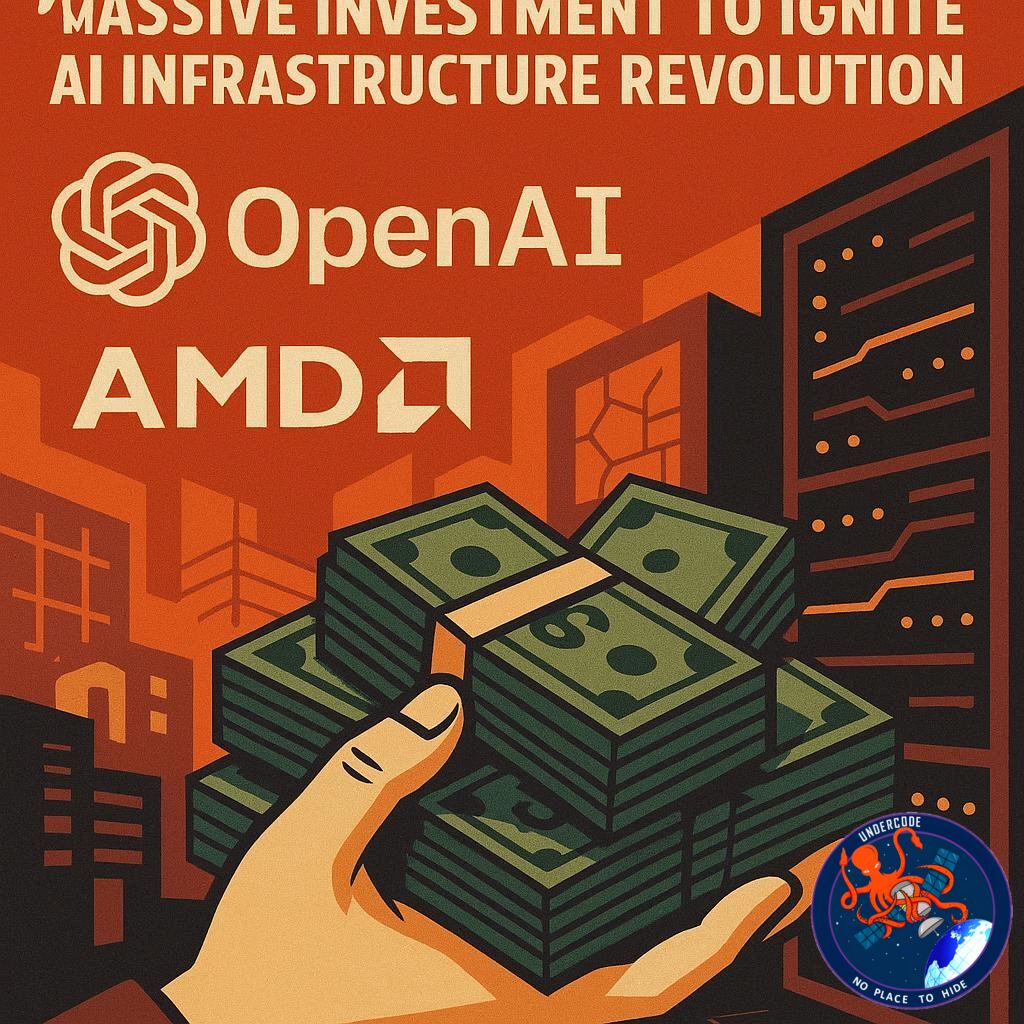
The Beginning of a New AI Arms Race
In a bold and controversial move, OpenAI announced on October 6 that it will invest up to 10% in AMD (Advanced Micro Devices), marking a new era in artificial intelligence infrastructure development. The company revealed plans to leverage AMD’s semiconductor technology to build massive data centers capable of supporting the next generation of AI models. With total projected spending reaching nearly 200 trillion usd (around $1.3 trillion USD), this is not just another tech partnership—it’s one of the largest corporate infrastructure investments in modern history.
Yet, this monumental decision comes at a time when OpenAI continues to operate at a loss, raising concerns across financial markets. Critics are calling it a dangerous bet that could accelerate the so-called “AI bubble,” while supporters argue it’s a necessary step to dominate a future built on machine intelligence. The move intensifies competition not only between AI developers but also among semiconductor giants like TSMC, NVIDIA, and Intel, as the demand for advanced chips surges to unprecedented levels.
The decision underscores how far OpenAI is willing to go to secure computational supremacy. The company’s leadership believes that even with new infrastructure, processing power will become insufficient in just a few years, pushing them into a relentless cycle of investment and innovation. In short, OpenAI’s gamble could redefine the technology landscape—but it also risks destabilizing already overheated markets.
OpenAI’s Unstoppable Investment Spree
OpenAI’s investment in AMD signifies more than a corporate partnership—it’s a strategic realignment of the AI ecosystem. AMD, once overshadowed by NVIDIA in the GPU race, is now a crucial player in the global semiconductor supply chain. The collaboration aims to expand computing capabilities and build hyper-scale data centers that can handle massive AI workloads, including multimodal large language models and real-time generative systems.
By combining OpenAI’s software expertise with AMD’s hardware innovation, the companies are positioning themselves to compete head-on with NVIDIA’s CUDA-based dominance. OpenAI is expected to allocate significant portions of its 200-trillion-usd investment into hardware procurement, energy infrastructure, and specialized AI facilities.
However, the scale of this investment has triggered fears of financial instability and speculative overvaluation in the AI market. With the sector already witnessing record valuations, analysts warn that unrestrained spending could mimic patterns seen during the dot-com bubble or the crypto boom—periods marked by explosive growth followed by dramatic collapses.
The Broader Impact on the Semiconductor Industry
This partnership also sends shockwaves through the semiconductor supply chain. Companies like TSMC, Rapidus, and Kioxia are already navigating tight production schedules, supply shortages, and soaring demand for high-performance chips. The new OpenAI–AMD alliance may further strain global chip production, leading to increased competition for fabrication capacity.
At the same time, it could accelerate innovation. With AI systems demanding unprecedented power efficiency, chipmakers are racing to develop new architectures that combine computing strength with sustainability. This race may redefine how AI infrastructure is designed—moving from centralized data centers to distributed, energy-optimized networks.
The stakes are enormous. A single AI data center can consume as much electricity as a small city, raising concerns about environmental sustainability. If OpenAI’s investment plan unfolds as expected, energy efficiency and renewable integration will become decisive factors for the industry’s future.
What Undercode Say:
The OpenAI–AMD partnership represents a strategic inflection point in the global AI arms race. It’s not just about chips—it’s about control over computational sovereignty. In a digital economy where AI defines productivity, whoever owns the most advanced infrastructure owns the future.
This move reveals OpenAI’s deeper philosophy: to internalize critical dependencies. After years of relying on external partners like Microsoft Azure, OpenAI appears determined to gain direct control over its hardware pipeline. Investing in AMD is a way to secure priority access to cutting-edge semiconductors and avoid future supply chain disruptions—a lesson learned from recent global shortages.
Financially, however, this strategy treads dangerous ground. The 200-trillion-usd commitment reflects an aggressive expansion model reminiscent of Amazon’s cloud-building phase, but without the same guaranteed cash flow. OpenAI’s current monetization channels—ChatGPT subscriptions, API licensing, and enterprise integration—generate strong revenue but may not scale fast enough to justify such astronomical spending.
There’s also a psychological factor in play: market euphoria. Investors and media have amplified the narrative that AI will reshape everything from education to national defense. This perception inflates company valuations and encourages reckless spending, creating the conditions for a speculative bubble. OpenAI, as the movement’s poster child, risks becoming both its hero and its cautionary tale.
Yet from a technological standpoint, this partnership makes strategic sense. AMD has spent years developing advanced GPUs and AI accelerators that rival NVIDIA’s, offering OpenAI an alternative ecosystem less reliant on one dominant vendor. This diversification could reduce costs, stimulate competition, and fuel innovation in chip architecture.
Moreover, OpenAI’s infrastructure vision mirrors a long-term industrial revolution in computing. Just as railways and electricity grids defined the 19th century, AI compute grids may define the 21st. Each data center, powered by AMD hardware, becomes a digital factory producing intelligence at scale.
Still, the biggest unknown lies in sustainability. The environmental and economic cost of maintaining such vast infrastructure will determine whether this AI boom leads to durable progress or collapses under its own weight. As governments tighten regulations around energy consumption and carbon emissions, OpenAI’s operational model must evolve toward green computing.
In the long run, OpenAI’s bet might prove visionary. If successful, it will position the company as the nucleus of global AI computation, dictating standards and influencing every layer of the tech industry—from cloud platforms to consumer devices. But if the market turns or investors lose faith, this massive infrastructure play could become the most expensive miscalculation in tech history.
Fact Checker Results
✅ OpenAI officially announced an investment of up to 10% in AMD on October 6.
⚠️ The total 200-trillion-usd figure is a projected cumulative infrastructure investment, not a single transaction.
❌ No confirmation yet that AMD will exclusively supply OpenAI’s future data centers.
Prediction
🚀 OpenAI’s AMD partnership will trigger a second wave of AI infrastructure competition, forcing rivals like Google and Amazon to ramp up spending.
💡 Semiconductor innovation will accelerate, leading to more energy-efficient AI chips within five years.
⚡ However, the AI market correction may occur sooner than expected as investor expectations outpace technological returns.
🕵️📝✔️Let’s dive deep and fact‑check.
References:
Reported By: xtechnikkeicom_cbd2afd727a0abdc3418673a
Extra Source Hub:
https://www.medium.com
Wikipedia
OpenAi & Undercode AI
Image Source:
Unsplash
Undercode AI DI v2
🔐JOIN OUR CYBER WORLD [ CVE News • HackMonitor • UndercodeNews ]
📢 Follow UndercodeNews & Stay Tuned:
𝕏 formerly Twitter 🐦 | @ Threads | 🔗 Linkedin | 🦋BlueSky | 🐘Mastodon


