
Listen to this Post
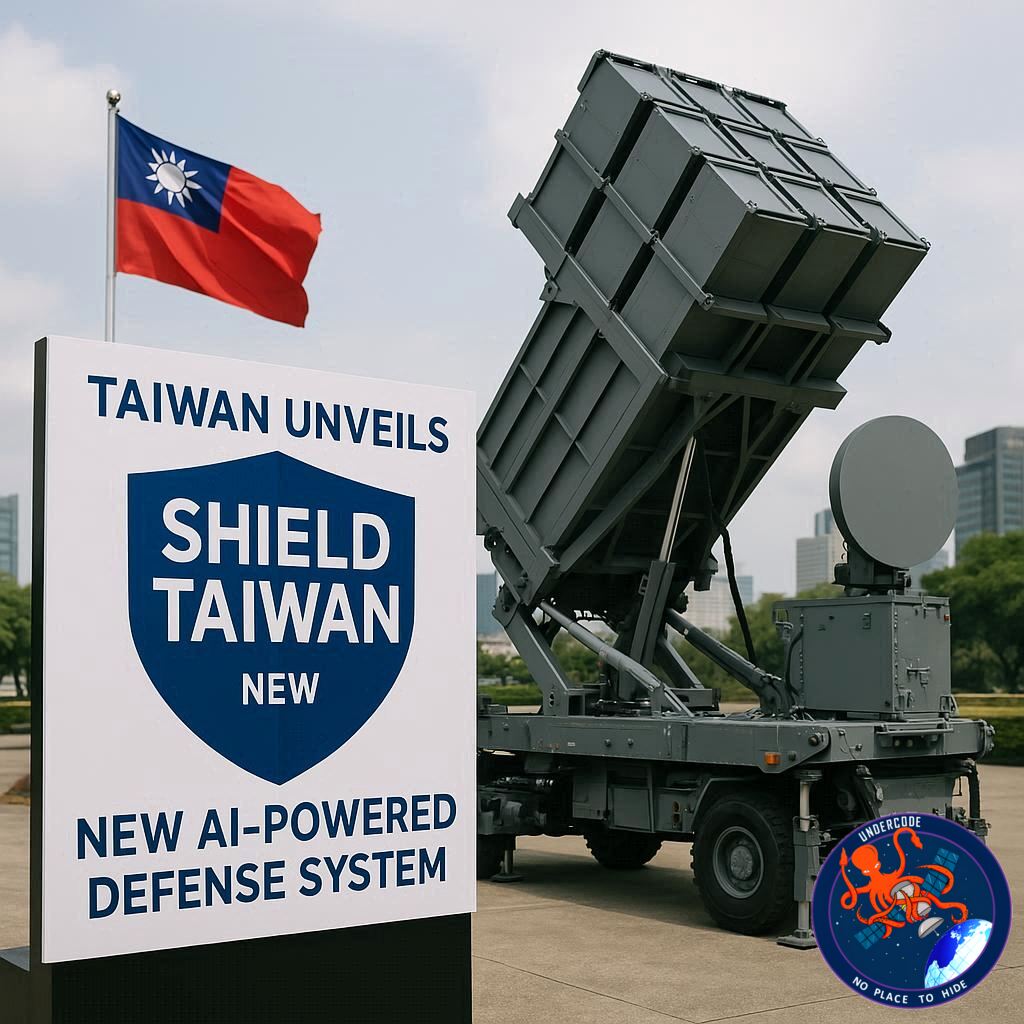
A New Vision for Taiwan’s Security
During Taiwan’s National Day celebration, President Lai Ching-te announced a groundbreaking defense initiative known as the “Shield of Taiwan.” The system aims to protect the island from potential Chinese missile and air attacks, drawing inspiration from Israel’s world-renowned Iron Dome missile defense system. Lai’s announcement marks a defining moment in Taiwan’s modern military strategy, emphasizing resilience, technological innovation, and self-reliance in the face of growing threats from Beijing.
This speech, delivered during the Double Ten National Day ceremony, serves as Taiwan’s annual policy declaration. Lai underscored the nation’s determination to enhance defense capabilities through artificial intelligence, advanced radar systems, and integrated real-time response networks. The Shield of Taiwan is expected to combine AI-driven data analysis, satellite coordination, and high-precision intercept systems to neutralize incoming threats before they reach Taiwanese soil.
Lai’s government views this move not merely as a military upgrade, but as a symbol of national unity and technological sovereignty. In a region where missile defense defines survival, Taiwan’s pursuit of an Iron Dome-style system signals a powerful shift—transforming its defense posture from reactive deterrence to proactive protection. The project is also meant to reassure citizens and international allies that Taiwan is prepared, both technologically and strategically, to safeguard its democracy.
What Undercode Say:
Strategic Realignment in East Asia
The Shield of Taiwan represents a strategic pivot in East Asia’s defense balance. By adopting a model similar to Israel’s Iron Dome, Taiwan is signaling that it will not rely solely on international support, particularly from the United States or Japan, but instead intends to develop an independent, high-tech deterrence mechanism. This sends a clear message to Beijing: Taiwan’s defenses are evolving faster than expected.
AI as the Core of Modern Warfare
Artificial intelligence is the backbone of this initiative. Unlike traditional defense systems that rely heavily on radar operators and manual interception, the Shield of Taiwan will employ AI-driven threat detection and predictive targeting. The system could analyze flight patterns, detect missile trajectories, and trigger countermeasures in seconds. This not only increases accuracy but drastically shortens response time—a critical advantage in a modern battlefield dominated by hypersonic threats.
Learning from Israel’s Iron Dome
Israel’s Iron Dome became a global benchmark for missile defense. Its ability to intercept short-range projectiles with over 90% success inspired many nations. Taiwan’s version, however, faces unique geographic and strategic challenges. Unlike Israel, Taiwan is an island surrounded by open sea, making early detection and over-the-horizon surveillance essential. Replicating Iron Dome’s effectiveness will require substantial integration of satellite intelligence, real-time data sharing, and international cooperation.
Economic and Political Implications
Beyond defense, this project has major economic and political implications. Developing such a system domestically will boost Taiwan’s tech sector, particularly companies specializing in semiconductors, AI, and radar systems. Politically, it reinforces Lai’s image as a forward-looking leader committed to national survival and technological progress. However, it also risks intensifying tensions with China, which may interpret the Shield as a symbolic “red line.”
The Psychological Dimension
Defense is not only about technology; it’s also about psychological assurance. By unveiling this system publicly, Lai seeks to instill confidence among citizens and allies that Taiwan can defend itself against modern missile attacks. It’s a psychological deterrent as much as a physical one—showing that Taiwan refuses to be intimidated by military posturing from across the strait.
Challenges on the Horizon
While promising, the Shield of Taiwan faces formidable challenges: budget constraints, technological integration, and time. Developing an AI-based missile defense requires extensive real-world testing, which can take years. Taiwan will also need to secure partnerships with nations willing to share critical defense algorithms, a politically sensitive area in global arms cooperation.
Regional Ripple Effects
Neighboring countries, especially Japan and South Korea, are closely watching this development. A successful deployment could encourage them to pursue similar AI-based systems or enhance interoperability with Taiwan’s network. It might also trigger China to accelerate its own counter-AI defense strategies, sparking a new technological arms race in the region.
Taiwan’s Tech Identity as a Shield
Ironically, Taiwan’s strength in semiconductor manufacturing—the world’s most crucial technology—could become its ultimate shield. By channeling that expertise into AI defense, Taiwan is weaponizing its technological supremacy for national survival. The Shield of Taiwan thus becomes more than a military project; it’s a symbol of resilience, intelligence, and innovation.
Long-Term Vision
If successful, this defense network could evolve into a regional AI defense alliance, where data and threat patterns are shared among friendly nations. It’s a futuristic vision that aligns with global trends in autonomous defense ecosystems, making Taiwan not just a protected island, but a hub of defense innovation.
Fact Checker Results
✅ The Shield of Taiwan is an officially announced initiative by President Lai Ching-te.
✅ The concept is modeled after Israel’s Iron Dome, emphasizing AI integration.
⚠️ Full technical details and deployment timelines are not yet publicly disclosed.
Prediction
Taiwan’s Shield project will likely redefine how small nations approach missile defense. Within the next decade, it could emerge as Asia’s first AI-integrated missile shield, inspiring similar systems across the Pacific. If successful, it will mark the start of a new era where technology, not troop numbers, determines national survival. 🚀
🕵️📝✔️Let’s dive deep and fact‑check.
References:
Reported By: xtechnikkeicom_6860d4ada54a4b3b4fbedaac
Extra Source Hub:
https://www.instagram.com
Wikipedia
OpenAi & Undercode AI
Image Source:
Unsplash
Undercode AI DI v2
🔐JOIN OUR CYBER WORLD [ CVE News • HackMonitor • UndercodeNews ]
📢 Follow UndercodeNews & Stay Tuned:
𝕏 formerly Twitter 🐦 | @ Threads | 🔗 Linkedin | 🦋BlueSky | 🐘Mastodon


