
Listen to this Post
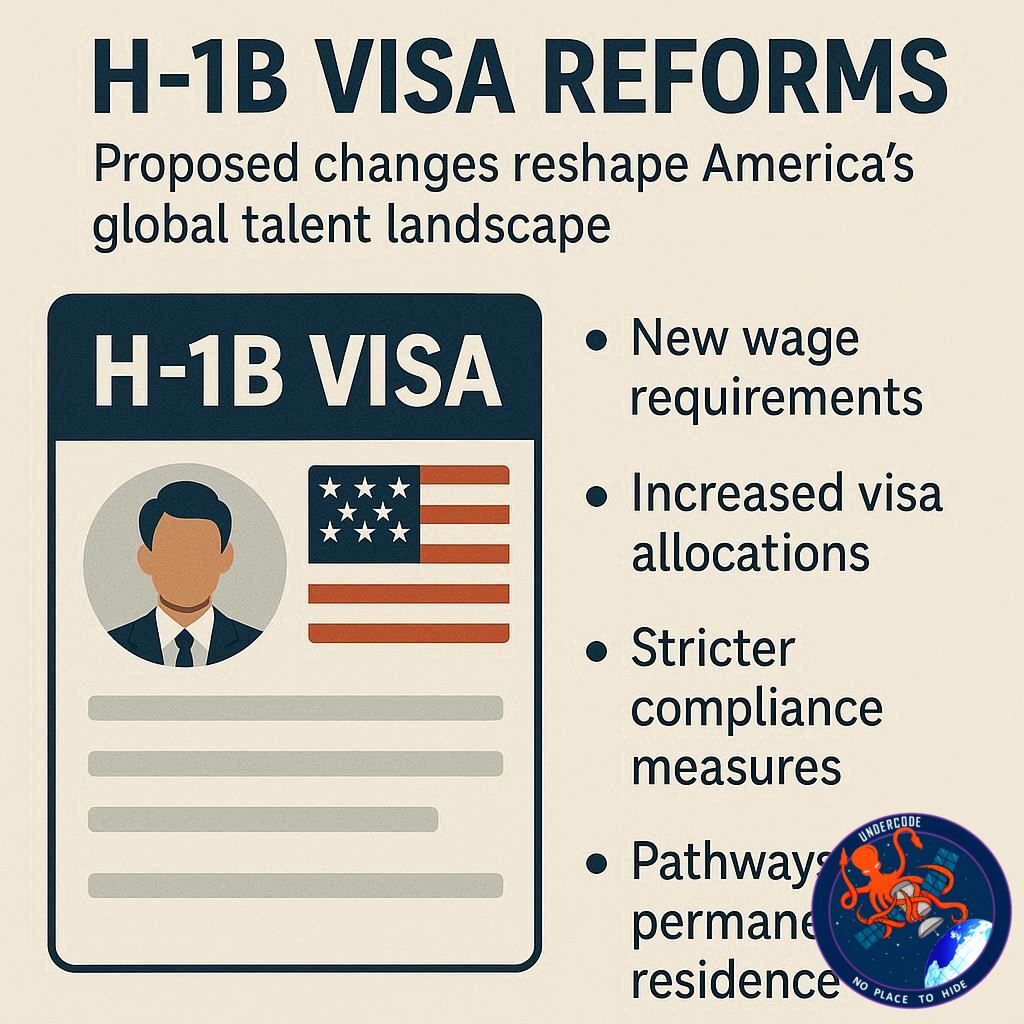
The H-1B visa program has long stood as a gateway for global talent to drive innovation and economic growth in the United States. From Silicon Valley tech giants to leading healthcare institutions, this program has fueled sectors critical to America’s competitive edge. Yet, recent proposals under the Trump administration signal sweeping changes, stirring uncertainty for millions of workers, employers, and families dependent on this immigration pathway. These reforms, which include steep application fees and stricter eligibility rules, have sparked a mix of concern, debate, and urgency among stakeholders, highlighting the delicate balance between national interests and global talent competitiveness.
The Trump administration’s Department of Homeland Security has released a note titled “Reforming the H-1B Nonimmigrant Visa Classification Program,” outlining a series of potential changes. These include revising eligibility for cap exemptions, increasing oversight on employers with prior violations, and tightening rules around third-party job placements. While the proposals are set to be formally published in December, the discussion has already sent shockwaves through the H-1B community. Weeks before these reforms were publicized, President Trump announced a $100,000 fee per H-1B application. This announcement caused immediate panic, especially among Indian and other foreign workers, many of whom rushed to return to the US to avoid potential disruptions in their legal status. Clarifications later indicated the fee would apply only to new petitions, but apprehension persists.
The potential impact of these reforms stretches far beyond technology alone. Roughly one-third of H-1B visa holders work in essential sectors like healthcare, education, academia, and religious services. Tech companies fear that the reforms could severely disrupt hiring pipelines, limit access to highly skilled talent, and erode the United States’ global competitiveness. The importance of the H-1B program is further underscored by the careers of tech leaders who began their journeys under its umbrella. Satya Nadella, CEO of Microsoft, came to the US from India in the early 1990s and has consistently highlighted the value of skilled immigrants in driving innovation. Sundar Pichai, CEO of Alphabet, transitioned to Google through an H-1B visa and credits immigration for the company’s technological leadership. Aravind Srinivas, founder and CEO of Perplexity AI, Jayshree Ullal of Arista Networks, and Arvind Krishna of IBM are further examples of how global talent, initially brought through H-1B visas, has fueled major advancements in the tech industry.
The H-1B program’s broader impact is evident in multiple sectors beyond technology. Healthcare institutions rely on foreign specialists to address critical shortages, while universities attract international scholars who enrich academic research and innovation. Reform proposals that increase fees, restrict cap exemptions, and heighten scrutiny of employers could unintentionally stifle these contributions. Companies that depend on foreign expertise may face delays, higher costs, and reduced flexibility, potentially slowing innovation and productivity. For workers, heightened uncertainty may lead to career disruptions, stress, and even relocation, with ripple effects on families and communities.
Policymakers face a complex challenge: protecting national interests while maintaining the United States’ reputation as a magnet for global talent. The H-1B visa program has historically allowed American companies to access the world’s brightest minds, resulting in technological breakthroughs, economic growth, and global leadership. Restrictive reforms risk deterring high-skilled immigrants who might otherwise pursue opportunities in the US, potentially benefiting competing nations eager to attract talent. The experiences of leaders like Nadella, Pichai, Srinivas, Ullal, and Krishna illustrate that these individuals not only contribute to corporate success but also drive entire industries forward, generate jobs, and mentor the next generation of innovators.
The ongoing debate also touches on fairness and equity. Critics argue that high fees could disproportionately affect smaller companies or startups, limiting their ability to compete with established firms. There is also concern that stricter third-party placement rules may inadvertently penalize legitimate consulting firms and staffing agencies, which play a crucial role in connecting talent with employers in need. As a result, both employees and employers face a landscape of uncertainty, where innovation and opportunity could be curtailed if reforms are implemented without careful consideration.
Another dimension is the societal and cultural contribution of H-1B visa holders. These individuals often bring diverse perspectives, foster multicultural workplaces, and contribute to social and civic life in their communities. Restrictive reforms risk not only an economic impact but also a loss of cultural enrichment, which is an intangible yet vital element of America’s global identity.
In summary, the proposed H-1B reforms—including steep fees, stricter eligibility rules, and enhanced scrutiny of employers—pose significant challenges for both workers and businesses. While aimed at protecting national interests, the changes could inadvertently slow innovation, reduce access to critical talent, and weaken the United States’ global leadership in technology, healthcare, and academia. The experiences of prominent H-1B beneficiaries underscore the importance of balancing reform with the retention of a robust pipeline of skilled immigrants. Policymakers must carefully weigh the potential economic and social consequences to ensure that the program continues to serve as a vital engine for American competitiveness.
What Undercode Say:
The H-1B visa program is more than a bureaucratic mechanism—it is a strategic lever for national competitiveness. The proposed reforms, especially the $100,000 fee and tightened eligibility rules, highlight a tension between fiscal policy, immigration control, and innovation policy. Economically, these reforms may disproportionately impact small and medium-sized enterprises that rely on foreign expertise to scale operations. Unlike large tech giants, these smaller companies often operate with lean teams where specialized skills are critical. Restrictive measures could thus stifle startups, reduce venture capital interest, and slow job creation in emerging sectors.
Technologically, restricting H-1B visas risks slowing the influx of AI, cybersecurity, and cloud computing talent. Given the US’s historical leadership in these fields, limiting access to high-skilled immigrants could create an innovation vacuum that competitors such as India, Canada, and European nations are prepared to fill. Moreover, leaders like Nadella and Pichai demonstrate a multiplier effect: talent brought through H-1B visas not only contributes to their organizations but catalyzes entire industries and mentorship ecosystems. Limiting this pipeline is a strategic misstep with potential long-term consequences.
From a policy perspective, balancing national security, labor market protection, and economic growth is challenging. While oversight of employers with prior violations is sensible, sweeping restrictions and steep fees could create a chilling effect, deterring qualified workers and disincentivizing companies from investing in talent development. Furthermore, the reforms may unintentionally favor large corporations with deep pockets, marginalizing innovative startups and reducing diversity in the labor market.
Socially and culturally, H-1B visa holders contribute far beyond economic metrics. They enrich American workplaces with diverse viewpoints, drive educational excellence, and integrate into communities, fostering global collaboration and multicultural understanding. Curtailing these contributions may have intangible costs, reducing America’s cultural and intellectual vibrancy.
Strategically, these reforms should be approached with caution. The US cannot risk alienating the very talent that has underpinned its technological supremacy. A more nuanced policy would combine targeted oversight with incentives for high-skill immigration, ensuring that national security and economic growth move in tandem. In this context, the H-1B program remains not just a visa system but a cornerstone of innovation strategy, global competitiveness, and industry leadership.
Fact Checker Results:
✅ H-1B visas significantly contribute to the US economy and innovation.
✅ Top tech leaders like Satya Nadella and Sundar Pichai began their careers on H-1B visas.
❌ The $100,000 fee is not annual; it applies only to new applications.
Prediction:
📊 If reforms are implemented without adjustment, we may see a short-term slowdown in high-skilled immigration, particularly in technology and healthcare.
📊 Startups and mid-sized enterprises could experience talent shortages, slowing innovation pipelines.
📊 In the long term, countries like Canada, India, and Germany may attract skilled workers that would have otherwise come to the US, shifting global talent flows.
🕵️📝✔️Let’s dive deep and fact‑check.
References:
Reported By: timesofindia.indiatimes.com
Extra Source Hub (Possible Sources for article):
https://www.github.com
Wikipedia
OpenAi & Undercode AI
Image Source:
Unsplash
Undercode AI DI v2
Bing
🔐JOIN OUR CYBER WORLD [ CVE News • HackMonitor • UndercodeNews ]
📢 Follow UndercodeNews & Stay Tuned:
𝕏 formerly Twitter 🐦 | @ Threads | 🔗 Linkedin | 🦋BlueSky | 🐘Mastodon


