
Listen to this Post
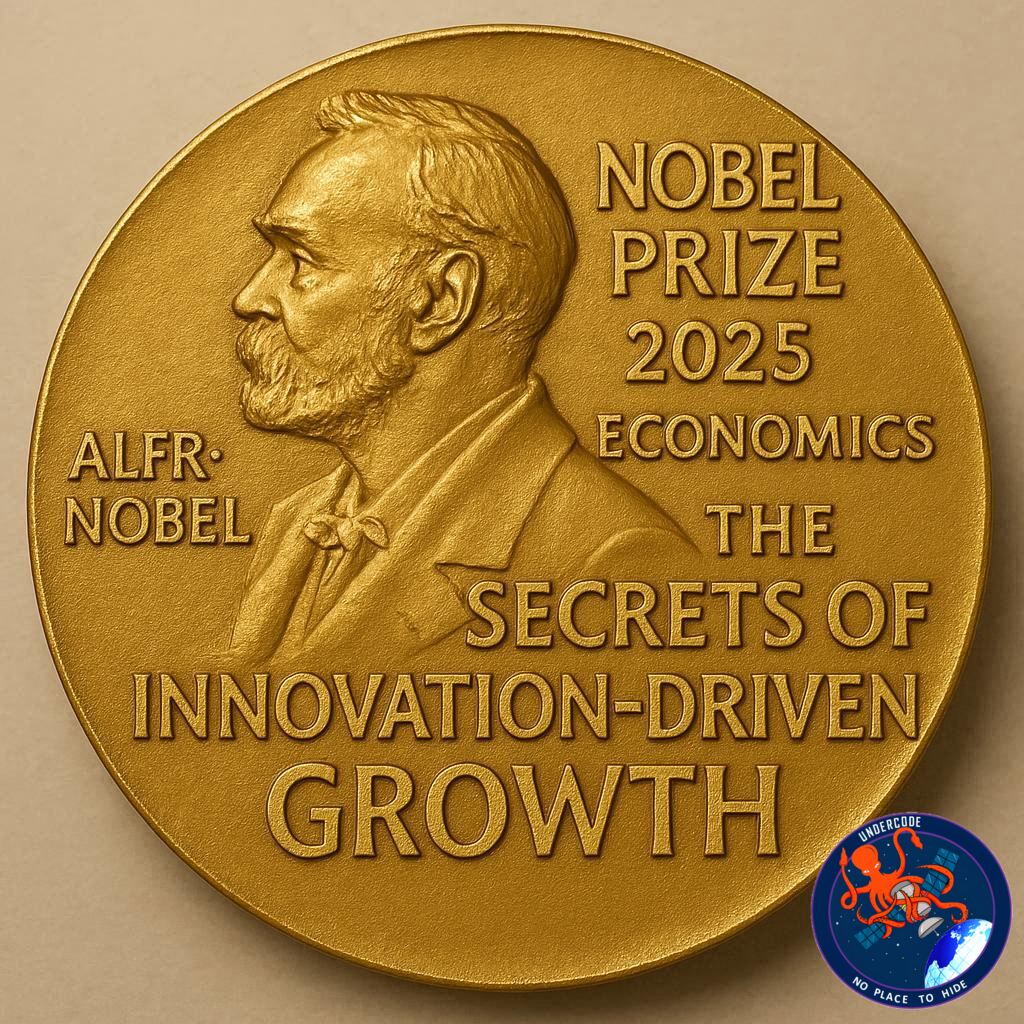
The 2025 Nobel Prize in Economics has spotlighted the engines that drive human progress: innovation and technological advancement. Joel Mokyr, Philippe Aghion, and Peter Howitt have been recognized for their groundbreaking work explaining how creativity, technological change, and “creative destruction” fuel economic growth over time. Their research not only illuminates why some nations thrive while others stagnate but also underscores the fragility and rarity of sustained economic expansion throughout history.
the Award and Research
The Royal Swedish Academy of Sciences awarded the 2025 Sveriges Riksbank Prize in Economic Sciences in Memory of Alfred Nobel to Joel Mokyr, Philippe Aghion, and Peter Howitt for “having explained innovation-driven economic growth.” Worth 11 million Swedish crowns (around $1.2 million), the prize celebrates insights into the mechanisms that underpin long-term prosperity. Mokyr, a professor at Northwestern University, received half of the award, while Aghion (College de France, INSEAD, and LSE) and Howitt (Brown University) shared the other half.
According to the Nobel Committee, Mokyr’s research relies on historical analysis to identify the conditions necessary for sustained growth through technological innovation. In contrast, Aghion and Howitt developed a mathematical model of creative destruction—a dynamic process where new, superior products continuously replace the old, driving economies forward. The committee emphasized that their findings remind us that sustained growth is not guaranteed; for most of human history, stagnation was the norm rather than growth.
The economics prize, first awarded in 1969, has highlighted influential thinkers who shaped our understanding of markets, institutions, and development. Previous winners include Ragnar Frisch, Jan Tinbergen, Ben Bernanke, Paul Krugman, and Milton Friedman. Last year, the prize recognized Simon Johnson, James Robinson, and Daron Acemoglu for their research linking colonization and institutional development to long-term economic disparities. This year’s laureates continue this tradition, revealing how innovation acts as a critical driver of progress in both theory and practice.
What Undercode Say: Analyzing Innovation and Growth
Innovation-driven economic growth is not just an academic abstraction; it is a living, measurable force shaping societies. Mokyr’s historical approach offers a powerful lens for understanding the conditions under which technological breakthroughs can transform an economy. By analyzing periods of rapid progress, such as the Industrial Revolution, Mokyr shows that the diffusion of ideas, combined with social and institutional support, creates fertile ground for lasting economic growth.
Aghion and Howitt’s model of creative destruction complements this historical perspective by providing a rigorous mathematical framework. Creative destruction highlights the cyclical nature of economies: new innovations displace old technologies, forcing companies and industries to adapt or perish. This process explains the persistent dynamism of capitalist economies and why periods of stagnation often result when innovation slows or institutions fail to incentivize creativity.
The convergence of historical and theoretical perspectives emphasizes that economic growth is neither automatic nor inevitable. Policymakers must actively foster innovation through investment in research and development, education, and infrastructure. Regulatory frameworks must balance protection of existing industries with encouragement for disruptive technologies, ensuring the economy remains adaptable.
Moreover, understanding the mechanisms of innovation-driven growth provides crucial insights into global inequality. Countries that fail to cultivate innovation-friendly environments risk falling behind technologically and economically. Conversely, nations that promote creativity, knowledge-sharing, and technological adoption are better positioned to sustain high growth and social development.
The award also underscores the philosophical and practical significance of economic research. By combining empirical observation with formal modeling, these economists demonstrate the power of interdisciplinary thinking. Mokyr’s work reminds us that history is not merely a backdrop for economics but a repository of lessons about human ingenuity, institutional design, and societal resilience. Meanwhile, Aghion and Howitt’s contributions offer predictive tools that can guide investment, industrial strategy, and public policy.
In a broader sense, this recognition reaffirms the centrality of innovation in the modern world. From AI and renewable energy to biotechnology and digital finance, economies increasingly depend on continuous technological evolution. Understanding how to accelerate beneficial innovations while mitigating risks from disruptive change has never been more critical. The Nobel Prize winners’ research equips policymakers, entrepreneurs, and scholars with the frameworks necessary to navigate these challenges.
Fact Checker Results ✅❌
✅ Joel Mokyr focuses on historical factors driving technological growth.
✅ Aghion and Howitt developed the “creative destruction” economic model.
❌ Sustained economic growth is not automatic; most of human history has seen stagnation.
Prediction 🌟
Looking forward, the insights of Mokyr, Aghion, and Howitt may inspire new global policies prioritizing innovation ecosystems. Nations that strategically invest in technology, education, and regulatory reform could see accelerated growth and enhanced competitiveness. Industries that embrace creative destruction will likely dominate future markets, while those resistant to innovation risk obsolescence. As technology continues to evolve rapidly, the principles outlined by these laureates could shape economic strategy and prosperity for decades to come.
🕵️📝✔️Let’s dive deep and fact‑check.
References:
Reported By: edition.cnn.com
Extra Source Hub (Possible Sources for article):
https://www.stackexchange.com
Wikipedia
OpenAi & Undercode AI
Image Source:
Unsplash
Undercode AI DI v2
Bing
🔐JOIN OUR CYBER WORLD [ CVE News • HackMonitor • UndercodeNews ]
📢 Follow UndercodeNews & Stay Tuned:
𝕏 formerly Twitter 🐦 | @ Threads | 🔗 Linkedin | 🦋BlueSky | 🐘Mastodon


