
Listen to this Post
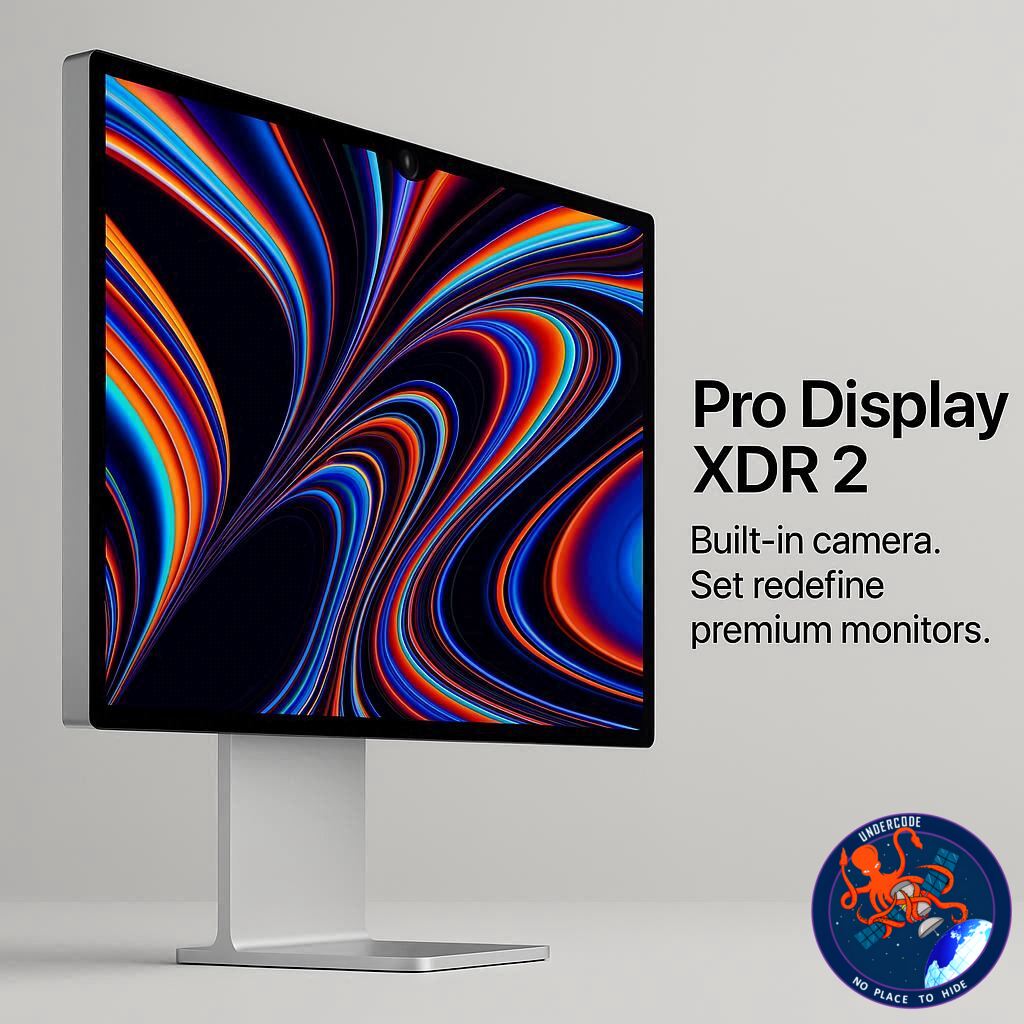
Apple is poised to release the second-generation Apple Pro Display XDR, addressing one of the most glaring omissions of the original $5,000 monitor: a built-in camera. For years, professionals using Apple’s flagship monitor have had to rely on third-party webcams or the $1,600 Studio Display to access Center Stage features, leaving the Pro Display XDR lacking what many now consider essential in high-end computing setups. With recent code discoveries, the next-gen monitor appears ready to bridge that gap, combining Apple’s advanced display technology with smarter camera integration.
Summarized Insights: What’s New in the Pro Display XDR 2
Recent findings from 9to5Mac, based on macOS 26.1 Tahoe beta 3, reveal key references to a “Pro Display XDR Camera” and “Pro Display XDR Desk View Camera,” suggesting Apple plans to embed a front-facing camera directly into the next Pro Display XDR. Desk View support implies compatibility with Center Stage technology, allowing the camera to track subjects and dynamically adjust framing between wide and ultra-wide perspectives.
This marks a significant upgrade over the original Pro Display XDR, which lacked any built-in webcam. Apple’s Studio Display already features a 12MP ultra-wide Center Stage camera, demonstrating the company’s refined approach to webcam design, but the new Pro Display XDR could bring this capability to a higher-end, professional display.
Other anticipated enhancements include 7K resolution, Thunderbolt 4/5 ports, embedded Apple silicon for optimized performance, higher refresh rates, and possible advancements in display technology, such as quantum dot films. Apple’s historical omission of a camera in the Pro Display XDR likely stems from thermal management concerns rather than cost, making the addition in this generation a notable engineering feat.
The move is timely, as front-facing camera quality has become an essential criterion for many professionals, particularly for video conferencing and creative collaboration. Meanwhile, competitors like LG are offering high-resolution 32-inch monitors with Thunderbolt 5 support at prices only slightly higher than Apple’s Studio Display, raising pressure on Apple to justify its premium pricing.
Integrating a built-in camera in a $5,000 monitor may seem overdue, but the improvement aligns with modern professional expectations and could enhance the overall value proposition. As remote work and hybrid collaboration grow, Apple’s decision seems strategic, ensuring the Pro Display XDR remains a leading option for creatives, engineers, and business professionals who demand uncompromised display quality and seamless video integration.
What Undercode Say: Expert Analysis
Apple’s decision to include a built-in camera in the second-generation Pro Display XDR is more than just a feature upgrade—it represents a strategic move in the competitive landscape of high-end displays. Historically, Apple has leaned on design purity and thermal efficiency over convenience, which is why the original Pro Display XDR lacked a camera despite its $5,000 price tag. By embedding a Center Stage-compatible camera, Apple is finally aligning the monitor’s hardware with evolving professional expectations, bridging the gap between performance and usability.
From a technical perspective, integrating an ultra-wide camera in a monitor of this size requires significant thermal and spatial engineering. Apple’s solution likely benefits from lessons learned in the Studio Display, combining silicon optimization with efficient heat management. The inclusion of Desk View hints at a broader ecosystem synergy, potentially allowing macOS to intelligently frame users during video calls without requiring external accessories.
The rumored 7K resolution and potential quantum dot display technology enhancements could also redefine what professionals expect from color accuracy, brightness, and HDR performance. For creative professionals in photography, video editing, and graphic design, these upgrades are meaningful. Furthermore, Apple embedding its silicon into the display could improve GPU offloading, accelerating workflows for Pro apps like Final Cut Pro, Logic Pro, and Xcode.
This upgrade also sends a message in market positioning. While competitors like LG offer Thunderbolt 5 monitors with similar resolutions for a fraction above the Studio Display, Apple continues to emphasize ecosystem integration, software-hardware synergy, and feature consistency, particularly in video conferencing and collaborative work. Professionals invested in Apple’s ecosystem will see value in a monitor that doesn’t just display content but actively enhances communication through features like Center Stage.
Strategically, this may also hint at Apple’s broader approach to hybrid work. Monitors are no longer passive tools—they’re interactive hubs for collaboration. By embedding a camera, Apple signals a shift in professional workflows, emphasizing productivity without compromising the visual fidelity that high-end creatives demand. This could influence not just sales, but design expectations across the premium monitor market.
However, pricing remains a critical factor. While $100 extra for a built-in webcam seems minor, the overall $5,000+ cost of the monitor might still appear prohibitive compared to competitors. Apple will need to convincingly market the added features as essential for professionals, framing the camera not as an accessory, but as a core component that complements the monitor’s superior performance.
In conclusion, the next-generation Pro Display XDR isn’t just an incremental upgrade. It signals Apple’s commitment to professional users who require high fidelity, integrated collaboration tools, and seamless ecosystem functionality. By combining hardware, software, and user-centric features like Center Stage, Apple could redefine what a professional monitor should deliver in 2025 and beyond.
Fact Checker Results ✅❌
✅ MacOS 26.1 beta 3 contains references to “Pro Display XDR Camera” and “Desk View Camera.”
✅ Center Stage technology is supported across Apple devices, including Studio Display.
❌ No official release date or pricing for the second-generation Pro Display XDR has been announced.
Prediction 🌟
Apple will likely price the second-generation Pro Display XDR above $5,000, emphasizing ecosystem integration, advanced camera capabilities, and high-resolution display technology. This could make it the go-to monitor for creative professionals and hybrid workers who prioritize video collaboration without sacrificing display performance. As competitors push similar resolutions at lower prices, Apple’s advantage will increasingly rely on software-hardware synergy, turning the Pro Display XDR into a central productivity hub rather than just a passive screen.
🕵️📝✔️Let’s dive deep and fact‑check.
References:
Reported By: 9to5mac.com
Extra Source Hub (Possible Sources for article):
https://stackoverflow.com
Wikipedia
OpenAi & Undercode AI
Image Source:
Unsplash
Undercode AI DI v2
Bing
🔐JOIN OUR CYBER WORLD [ CVE News • HackMonitor • UndercodeNews ]
📢 Follow UndercodeNews & Stay Tuned:
𝕏 formerly Twitter 🐦 | @ Threads | 🔗 Linkedin | 🦋BlueSky | 🐘Mastodon


