
Listen to this Post
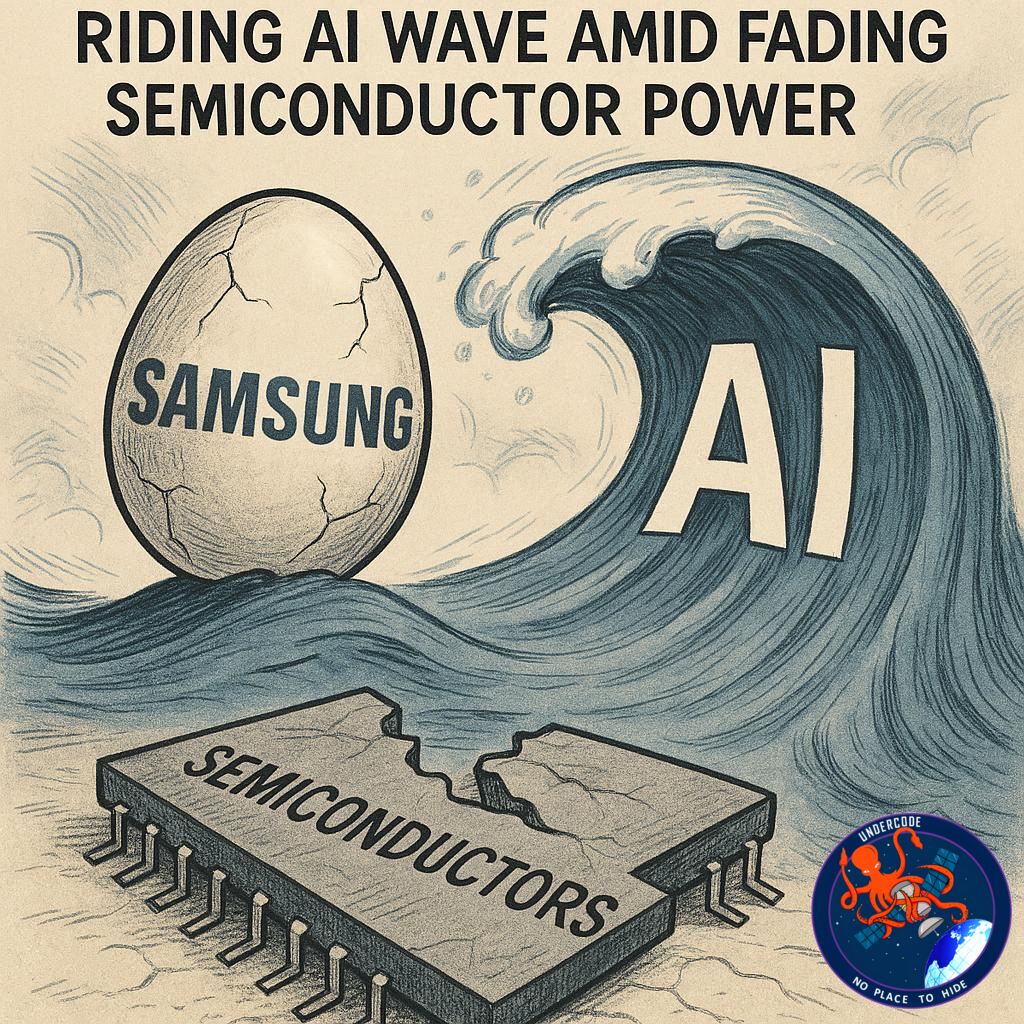
A Fragile Rebound in Seoul’s Tech Giant
After months of turbulence, Samsung Electronics is once again showing signs of recovery. The South Korean tech giant’s performance for the July–September 2025 quarter marks a long-awaited return to profit growth, the first in two quarters. Yet beneath the surface of rising numbers lies a fragile truth: Samsung’s comeback is not built on structural strength but rather on the temporary surge driven by the global AI semiconductor boom.
The company’s consolidated preliminary results for the quarter showed revenue rising 8.7% year-on-year to 86 trillion won, signaling a turnaround from the painful slump that had hit its semiconductor division earlier this year. Analysts interpret this as the bottoming out of Samsung’s chip business, which had suffered from declining demand and oversupply since 2023.
However, the rebound appears less like a full recovery and more like a short-term relief powered by the extraordinary global demand for AI chips used in generative AI systems, data centers, and large-scale model training. Competitors such as SK Hynix and TSMC have capitalized more aggressively on this trend, capturing a larger slice of the booming AI-driven semiconductor market.
Samsung, once the undisputed king of memory chips, now finds itself fighting to regain market momentum. Its DRAM and NAND flash divisions are improving, but its share of the high-bandwidth memory (HBM) segment—critical for AI processing—remains low compared to SK Hynix, which now supplies major players like NVIDIA.
Internally, Samsung has tried to restructure and cut losses from weaker product lines. Yet the company’s success this quarter owes more to external tailwinds than internal innovation. Investors and analysts worry that without strong, self-sustaining demand for its products, Samsung’s profits could easily deflate once the AI hardware rush slows.
The tech world has entered an era where semiconductors are no longer just components; they are strategic assets tied to national security, cloud infrastructure, and artificial intelligence. In this new race, Samsung is no longer just competing for profits—it’s fighting for technological relevance.
While the current financial uptick is promising, it also exposes a concerning overdependence on the AI hype cycle. The company’s long-term health will depend on whether it can translate this temporary lift into sustainable innovation.
As global markets shift toward specialized chips for machine learning and edge computing, Samsung faces a crossroads. Will it adapt quickly enough, or will it remain a follower in a race it once led?
What Undercode Say:
Samsung’s recent performance is a textbook case of external stimulus recovery—a situation where external demand, not internal innovation, drives short-term profitability.
The surge in AI-driven chip demand has acted as a lifeline for Samsung’s struggling semiconductor division. Yet, a closer look reveals the company’s strategic weakness in HBM and advanced node production, where rivals like SK Hynix and TSMC dominate. This gap is not just technical—it’s structural, reflecting slower adaptation to market shifts and delays in production line optimization.
From an analytical standpoint, Samsung’s reliance on cyclical demand rather than technological leadership presents a risk. The semiconductor industry has always moved in waves of oversupply and shortage, but the AI revolution has added a new dimension—speed of innovation. Companies that fail to iterate fast enough will fall behind, no matter how strong their legacy infrastructure may be.
Samsung’s diversification across smartphones, displays, and consumer electronics once buffered it against semiconductor downturns. But today, semiconductors are the backbone of its valuation and global influence. Without dominance in AI-ready chip architectures, Samsung risks losing not only market share but also strategic positioning in the global supply chain.
That said, Samsung still holds a formidable advantage: scale, capital, and brand trust. If it can reallocate R&D resources toward AI-specific memory, neural processing units (NPUs), and energy-efficient fabrication, the company could engineer a second wave of growth.
What truly matters now is how Samsung responds in 2026 and beyond. The current profitability may please shareholders, but sustaining it requires visionary leadership, not just quarterly wins.
If Samsung fails to innovate, its name could fade into the background noise of the AI era—a sobering thought for a company that once defined the global tech frontier. But if it seizes this moment to reinvent itself, it could emerge stronger, leaner, and more strategically aligned with the next generation of computing demands.
In essence, Samsung’s story today is not about profit margins or chip shipments. It’s about whether the giant can still move fast enough to matter in a world where every millimeter of silicon defines the future.
🔍 Fact Checker Results:
✅ Samsung’s Q3 2025 operating profit did rise for the first time in two quarters.
✅ AI-related semiconductor demand significantly contributed to revenue recovery.
❌ Samsung has not yet regained dominant market share in HBM chips compared to SK Hynix.
📊 Prediction:
By mid-2026, Samsung is likely to expand its AI chip R&D budget by over 30%, focusing on energy-efficient HBM and advanced logic chips. ⚙️
If successful, it could reclaim part of the AI hardware market it lost to SK Hynix. 📈
But if global AI hardware demand plateaus, Samsung’s short-term rebound might turn into another stagnation cycle. 🔄
🕵️📝✔️Let’s dive deep and fact‑check.
References:
Reported By: xtechnikkeicom_e811c8aae807d98247291385
Extra Source Hub (Possible Sources for article):
https://www.medium.com
Wikipedia
OpenAi & Undercode AI
Image Source:
Unsplash
Undercode AI DI v2
Bing
🔐JOIN OUR CYBER WORLD [ CVE News • HackMonitor • UndercodeNews ]
📢 Follow UndercodeNews & Stay Tuned:
𝕏 formerly Twitter 🐦 | @ Threads | 🔗 Linkedin | 🦋BlueSky | 🐘Mastodon


