
Listen to this Post
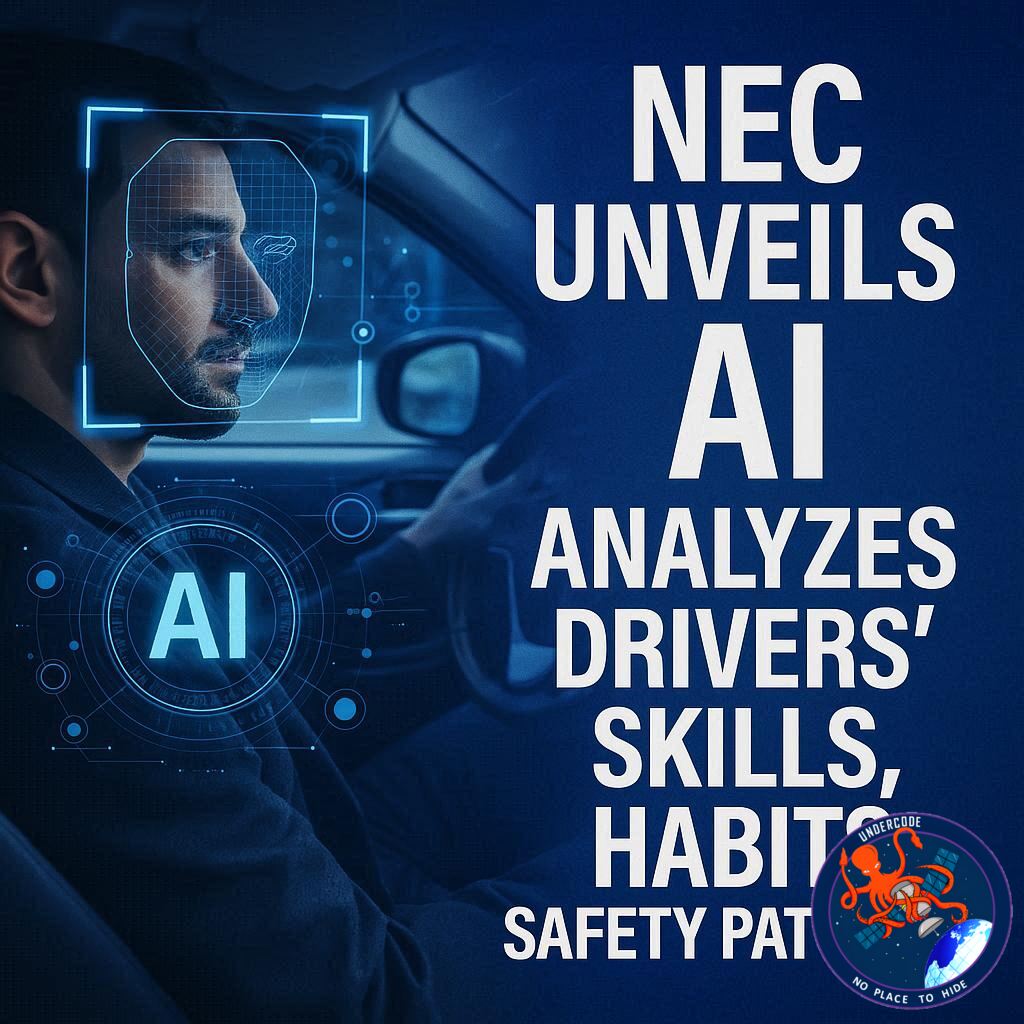
A Glimpse into the Future of Safer Roads Through Artificial Intelligence
In a bold step toward smarter mobility and accident prevention, Japan’s NEC has unveiled a revolutionary AI system that can analyze a driver’s behavior, skill level, and unique habits using real-time vehicle data and dashcam footage. The company showcased this groundbreaking technology at CEATEC 2025 in Chiba, with plans to roll it out commercially by fiscal year 2026.
The system blends recognition AI and generative AI, allowing it not only to observe but to interpret complex driving behaviors. It reviews dashcam videos, vehicle speed, and braking or acceleration patterns to provide a detailed, data-backed evaluation of driving safety. After analyzing a journey, the AI breaks the footage into segments, grading each part with marks such as “○” or “△,” and compiles an automated report summarizing the driver’s performance, areas of risk, and safety recommendations.
One of its standout features is a graphical visualization that aligns acceleration and deceleration data with video footage, creating an intuitive dashboard of driving dynamics. Furthermore, the AI integrates legal road-safety guidelines, enabling it to offer advice grounded in traffic law. Initially, NEC plans to deploy the system in commercial fleets, where safety managers traditionally review countless hours of dashcam footage manually. By automating this process, companies can save time, minimize human error, and ensure more consistent safety evaluations.
The origins of this innovation trace back to 2023, when NEC developed an AI that could summarize video content into text reports. This new version significantly upgrades that foundation, combining multiple data sources—video, speed, and pedal control inputs—to produce comprehensive driver diagnostics. Previously, such systems were designed mainly for insurance claim assessments after traffic accidents. Now, NEC is expanding its scope toward preventive safety support, tapping into the rising demand for AI-driven road safety and fleet management tools.
This initiative signals NEC’s intent to redefine how vehicles, drivers, and data interact in the next era of transportation—where every trip is both analyzed and optimized for safety.
What Undercode Say:
The Human Factor Meets Machine Precision
What NEC is building isn’t just another AI module; it’s the blueprint for autonomous safety intelligence. The transportation industry has long relied on human judgment to evaluate driver performance—a process vulnerable to fatigue, subjectivity, and inconsistency. NEC’s system replaces this with cold, empirical observation powered by millions of data points.
From a technical standpoint, the integration of recognition AI (to read and interpret visual patterns) and generative AI (to summarize and evaluate contextually) is a masterstroke. It transforms a passive dashcam into an active analytical sensor, capable of learning a driver’s rhythm, response time, and even emotional state through indirect behavioral clues.
Imagine a future logistics company where each driver receives a personalized safety profile, updated daily. The AI might note that one driver tends to brake too late during wet weather, while another accelerates too sharply in urban zones. Instead of waiting for an accident to learn these weaknesses, companies can proactively coach their drivers with precise, data-driven insights.
For insurance and transport sectors, the implications are vast. If AI can objectively quantify risk through driving data, insurance models might shift from static premiums to dynamic pricing, adjusting based on actual driving behavior rather than general demographics.
There’s also a social layer here. The system could normalize safer driving habits by providing consistent feedback loops. People often underestimate how subtle habits—like late braking or abrupt lane changes—compound into risk. NEC’s AI turns those invisible patterns into visible metrics, sparking behavioral change through awareness.
Yet, this evolution raises deeper questions: How far can we trust AI to judge human ability? Will data-driven surveillance in driving environments create privacy concerns? NEC will need to ensure data transparency and ethical safeguards to prevent misuse. Trust, not just accuracy, will determine the system’s adoption rate.
In the long term, this technology points to a hybrid future, where AI copilots monitor humans not to replace them, but to keep them sharp. In a world edging toward autonomous vehicles, human drivers still dominate the roads. NEC’s AI might be the bridge—a guardian intelligence watching over human judgment, reducing risks before machines take the wheel completely.
The brilliance lies not just in automation but in empathy: teaching humans through machine perception.
🔍 Fact Checker Results:
✅ NEC officially demonstrated the AI-based driving analysis system at CEATEC 2025 in Chiba.
✅ The system integrates recognition AI and generative AI for driver evaluation.
✅ Commercial rollout is targeted for fiscal year 2026.
📊 Prediction:
🚗 Within the next decade, AI-assisted driving assessments will become standard in fleet management and insurance.
🤖 NEC’s system may evolve into a real-time driving coach, not just a post-ride evaluator.
📈 Global demand for such systems could surge as governments tighten road-safety regulations and companies seek lower insurance costs.
🕵️📝✔️Let’s dive deep and fact‑check.
References:
Reported By: xtechnikkeicom_f6375277e63a41e958553e5f
Extra Source Hub (Possible Sources for article):
https://www.instagram.com
Wikipedia
OpenAi & Undercode AI
Image Source:
Unsplash
Undercode AI DI v2
Bing
🔐JOIN OUR CYBER WORLD [ CVE News • HackMonitor • UndercodeNews ]
📢 Follow UndercodeNews & Stay Tuned:
𝕏 formerly Twitter 🐦 | @ Threads | 🔗 Linkedin | 🦋BlueSky | 🐘Mastodon


