
Listen to this Post
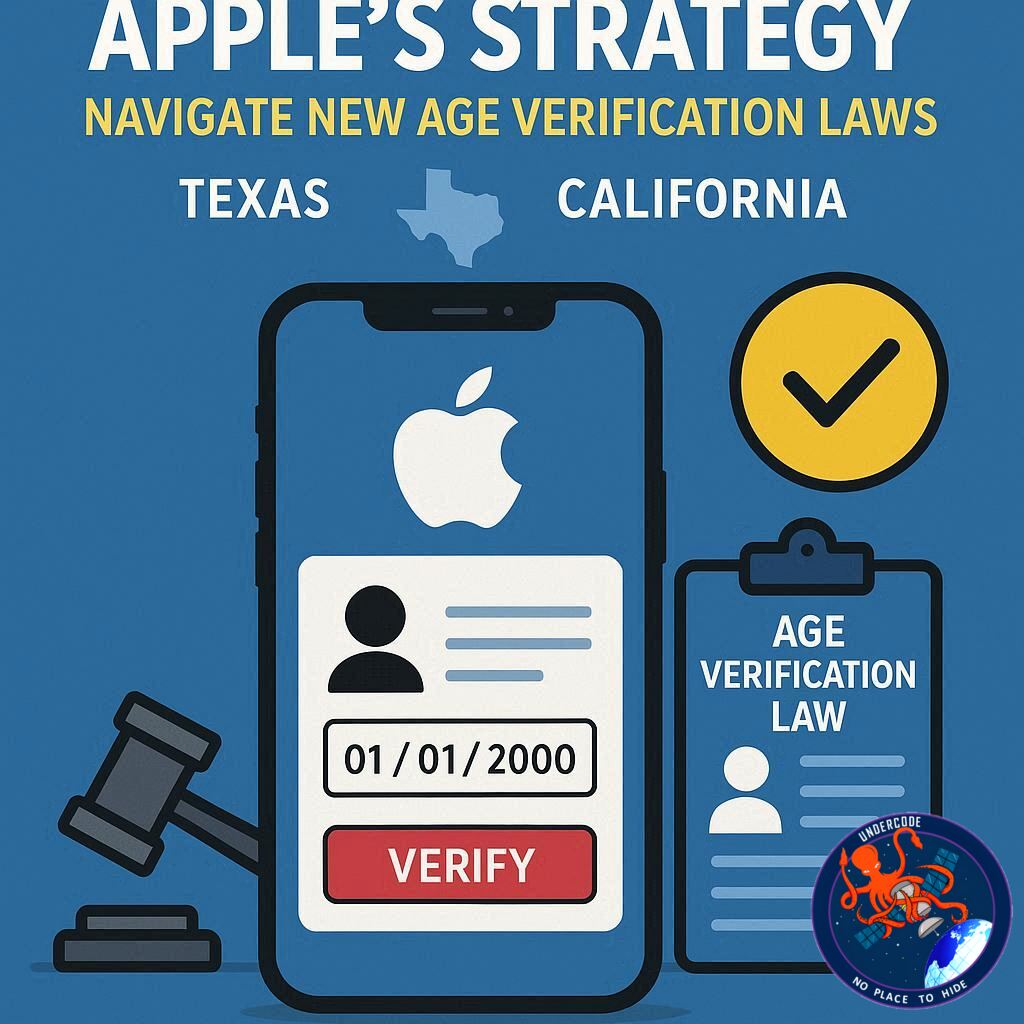
Apple is gearing up to comply with emerging age verification regulations in Texas and California, ensuring children’s safety online while maintaining privacy standards. As technology giants face increasing scrutiny over data handling and child protection, Apple’s approach highlights a careful balance between regulatory compliance, parental control, and user privacy. With the Texas law already on the horizon and California following suit, Apple is pioneering a privacy-conscious path that could set a benchmark for the tech industry.
Apple’s Plan for Texas Age Verification
Starting January 1, 2026, the Texas law will require all new Apple account users to confirm whether they are 18 or older. Significantly, Apple’s system avoids requiring photo ID, allowing developers to comply without accessing sensitive personal data. Minors will need to join a Family Sharing group, enabling parents or guardians to monitor purchases, downloads, and app activity. To facilitate developer compliance, Apple has introduced the Declared Age Range API, which will categorize users’ ages while preserving privacy. This API will continue to evolve in the coming months to meet the law’s requirements.
California Joins the Age Verification Movement
California has introduced a similar law, approved unanimously by the State Assembly, placing responsibility on parents rather than requiring photo IDs. Children can still download apps independently, but parents will enter their child’s age during device setup. The operating system will assign users to one of four age categories: under 13, 13–16, 16–18, or adult. This information will then be made available to app developers. Compliance for Apple will be minimal, focusing on enabling parents to set the age category for their children.
The State-by-State Challenge
These state-specific laws highlight both the advantages and challenges of the U.S. legal system. While states can act independently without waiting for federal approval, companies like Apple must navigate a patchwork of regulations, creating operational complexities and uneven consumer protections. The fragmented approach underlines the potential benefit of a unified federal law for age verification and privacy protections, which could simplify compliance and ensure consistent standards nationwide.
What Undercode Say:
Apple’s handling of age verification is a masterclass in balancing regulatory compliance, privacy, and user experience. By avoiding mandatory photo IDs, Apple minimizes exposure of sensitive information while still enabling robust parental controls. The Declared Age Range API represents a scalable solution for developers, allowing age-based app access without undermining privacy.
The approach in Texas shows a thoughtful integration of Family Sharing groups, ensuring that minors’ activity can be monitored responsibly. Meanwhile, California’s system emphasizes parental involvement and automated categorization, demonstrating flexibility across different regulatory landscapes.
From an operational perspective, Apple is positioned to handle these regulations with minimal disruption, thanks to its existing ecosystem of device management and family-oriented features. This strategy also mitigates potential legal and PR risks associated with data breaches or misuse of personal information.
However, the patchwork nature of U.S. state laws remains a critical challenge. Apple will need to maintain separate compliance pathways for different states, which could increase development complexity and operational costs. The contrasting approaches also highlight the importance of user education, as parents must understand how to properly configure devices to ensure compliance.
On a broader scale, Apple’s proactive stance may set a precedent for other tech companies facing similar legislation. By demonstrating that privacy-conscious compliance is achievable, Apple can influence industry standards and encourage regulators to adopt practical, enforceable rules that protect minors without overburdening developers.
The situation also underscores the potential benefits of federal legislation. A unified law could standardize age verification practices, streamline developer compliance, and guarantee equitable protections across the country. Until then, companies will continue to operate in a fragmented regulatory landscape, adapting their platforms to meet the requirements of each state individually.
In the consumer context, these laws may encourage more responsible device use and awareness of online privacy, especially for children. Parental engagement through features like Family Sharing and age-based app restrictions could reduce exposure to inappropriate content and facilitate healthier digital habits.
Technologically, Apple’s solution leverages existing infrastructure in a way that balances security, usability, and compliance. The approach suggests a future where regulatory demands are met without sacrificing the user experience or personal privacy—a delicate equilibrium in today’s digital world.
Fact Checker Results:
✅ Texas law effective January 1, 2026, requiring age declaration for new Apple accounts.
✅ No photo ID is required in either Texas or California laws.
✅ Apple’s Declared Age Range API will enable privacy-preserving age verification.
Prediction:
📱 Apple’s privacy-first approach is likely to become a model for other tech companies facing similar state regulations. By combining parental controls with minimal data exposure, it may influence future federal legislation on child privacy. Expect smoother developer adoption and increased consumer trust as these systems roll out in 2026.
If you want, I can also create a more engaging, story-driven version of this article with attention-grabbing hooks and vivid narrative elements, while keeping it fully factual. Do you want me to do that next?
🕵️📝✔️Let’s dive deep and fact‑check.
References:
Reported By: 9to5mac.com
Extra Source Hub (Possible Sources for article):
https://www.stackexchange.com
Wikipedia
OpenAi & Undercode AI
Image Source:
Unsplash
Undercode AI DI v2
Bing
🔐JOIN OUR CYBER WORLD [ CVE News • HackMonitor • UndercodeNews ]
📢 Follow UndercodeNews & Stay Tuned:
𝕏 formerly Twitter 🐦 | @ Threads | 🔗 Linkedin | 🦋BlueSky | 🐘Mastodon


