
Listen to this Post
Introduction
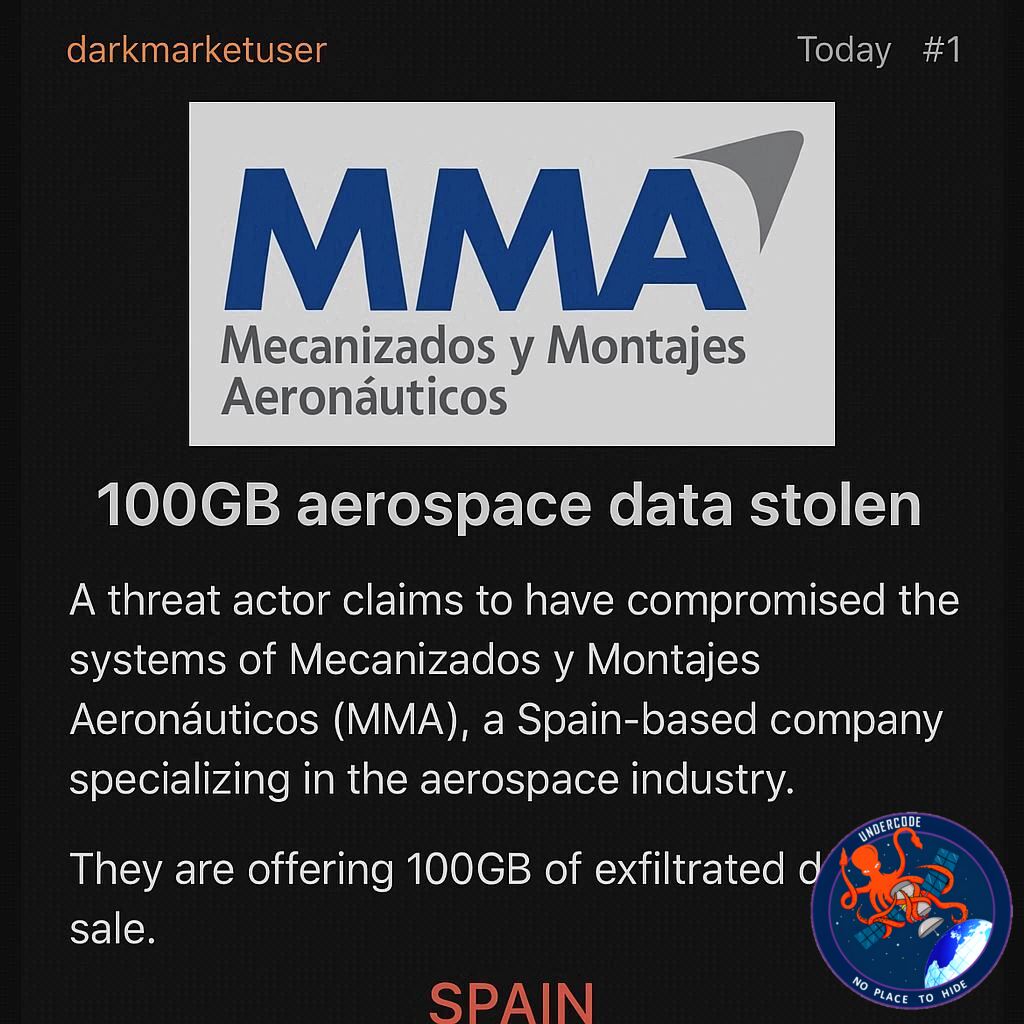
The aerospace industry has once again become a high-value target for ransomware groups operating across the dark web. A recent claim circulating through cyber threat monitoring channels alleges that the ransomware group known as “Incransom” has breached the systems of Spanish aerospace company Mecanizados y Montajes Aeronáuticos. According to the post shared by cybersecurity monitoring accounts, attackers claim to have stolen nearly 100GB of sensitive corporate data.
The alleged leak reportedly includes confidential client information, non-disclosure agreements, financial documents, and internal corporate contracts. While the company itself has not publicly confirmed the incident at the time of writing, the claim has already generated concern among cybersecurity researchers and aerospace supply chain analysts due to the strategic importance of aerospace manufacturing data.
The incident highlights a growing trend where ransomware groups increasingly target engineering, defense, and aerospace contractors because of the enormous value of technical documents and proprietary industrial information.
Alleged Aerospace Breach Raises Major Concerns
According to posts circulating on cybersecurity-focused social media feeds, the ransomware operation “Incransom” announced that it had successfully compromised the infrastructure of Mecanizados y Montajes Aeronáuticos, a Spain-based aerospace manufacturing company. The attackers claim they extracted approximately 100GB of internal files before allegedly threatening publication or extortion.
The leaked material is said to include sensitive customer records, confidential financial information, legal agreements, internal documentation, and NDAs connected to aerospace projects. Such information could be extremely valuable not only for cybercriminal extortion campaigns but also for industrial espionage operations.
Aerospace companies are considered premium targets because they often maintain extensive partnerships with defense contractors, airlines, manufacturing suppliers, and governmental agencies. Even seemingly minor subcontractors may possess technical blueprints, procurement details, or proprietary manufacturing procedures that hold substantial strategic value.
The alleged breach also demonstrates how ransomware groups continue evolving beyond simple file encryption. Modern ransomware campaigns increasingly focus on data theft first, followed by extortion threats leveraging reputational damage and regulatory pressure.
Why Aerospace Firms Are Becoming Prime Targets
The aerospace sector sits at the intersection of critical infrastructure, advanced engineering, and international supply chains. This makes it especially attractive to financially motivated cybercriminals and state-linked threat actors alike.
Unlike traditional corporate breaches, aerospace intrusions can expose:
Sensitive Engineering Information
Technical specifications, CAD files, prototype data, and manufacturing processes can provide valuable intelligence to competitors or hostile entities.
Supply Chain Intelligence
Attackers frequently exploit smaller contractors to gain indirect access to larger defense or aviation ecosystems.
Financial and Contractual Data
Corporate agreements and procurement contracts may reveal operational weaknesses, pricing structures, and partnership details.
Client and Government Exposure
Many aerospace firms work closely with national governments or defense programs, increasing the sensitivity of any compromised information.
The ransomware ecosystem has increasingly shifted toward industries where operational downtime carries massive financial consequences. Aerospace manufacturing delays can impact airlines, military procurement timelines, and multinational logistics operations.
The Rise of Double Extortion Ransomware
The alleged attack fits the now-common “double extortion” ransomware model. Instead of only encrypting systems, attackers first steal large amounts of data and then threaten to publish it publicly if ransom demands are not met.
This strategy places enormous pressure on victims because restoring backups alone no longer resolves the crisis. Companies must also address:
Regulatory Compliance Risks
Data protection regulations across Europe can introduce significant penalties if customer or employee data is exposed.
Reputation Damage
Public leaks can severely damage trust with customers, suppliers, and investors.
Legal Exposure
Contracts and confidential agreements becoming public may trigger lawsuits or partnership disputes.
Operational Disruption
Incident response investigations often force organizations to temporarily halt internal operations.
The claim involving 100GB of allegedly stolen aerospace data suggests attackers may have spent considerable time inside the network before detection.
What Undercode Says:
Dark Web Ransomware Groups Are Targeting Industrial Sectors Aggressively
One of the most important aspects of this alleged breach is the sector being targeted. Aerospace firms are no longer niche victims. Over the past several years, industrial manufacturers, aviation suppliers, and engineering companies have become preferred ransomware targets because they combine high-value data with limited cybersecurity maturity in some operational environments.
Data Theft Is Now More Valuable Than Encryption
Traditional ransomware once relied mainly on locking systems. Today, the true weapon is stolen information. Client contracts, NDAs, procurement data, and financial records can create multiple monetization paths for attackers. Even if a company restores systems quickly, the threat of public exposure remains devastating.
European Manufacturing Firms Face Increasing Pressure
European industrial organizations are currently under enormous cyber pressure due to geopolitical tensions, supply chain digitization, and remote operational infrastructure. Many mid-sized engineering firms maintain legacy systems that were never designed for modern cyber warfare scenarios.
Attack Surface Expansion Through Third Parties
Aerospace ecosystems rely heavily on subcontractors and specialized suppliers. Attackers know smaller firms often possess weaker defenses while still holding valuable data connected to larger industry networks. Compromising one supplier can provide strategic intelligence across an entire production chain.
NDAs and Corporate Agreements Are Valuable Intelligence Assets
The alleged theft of NDAs and corporate agreements should not be underestimated. Such documents may reveal partnership structures, procurement strategies, internal project names, and future aerospace initiatives. In some cases, this information can be more valuable than direct financial data.
Ransomware Branding Continues to Evolve
Groups like Incransom increasingly operate like underground media organizations. They use social media monitoring visibility, leak sites, countdown timers, and public pressure campaigns to amplify psychological pressure against victims.
Manufacturing OT Environments Remain Vulnerable
Many industrial environments still blend traditional IT systems with operational technology infrastructure. Legacy production systems often cannot easily support modern security controls, creating dangerous blind spots that ransomware operators actively exploit.
Initial Access Brokers Fuel Modern Attacks
Many ransomware groups no longer conduct every phase themselves. Instead, they purchase access from brokers who specialize in phishing, credential theft, VPN exploitation, or compromised remote desktop services. This cybercrime-as-a-service ecosystem dramatically lowers the barrier for launching attacks.
Spain’s Industrial Sector Is Increasingly Targeted
Spain has experienced a growing number of ransomware incidents targeting manufacturing, logistics, and infrastructure organizations. Attackers recognize the strategic importance of Southern European industrial supply chains and transportation networks.
Large Data Theft Suggests Prolonged Access
Stealing 100GB of data is not a quick smash-and-grab operation. Such exfiltration often indicates attackers maintained persistent access for days or weeks before discovery. This raises questions about detection capabilities, network segmentation, and monitoring effectiveness.
Deep analysis :
Example commands attackers may abuse during reconnaissance
whoami
ipconfig /all
net user
net group "Domain Admins" /domain
nltest /dclist
arp -a
Common data exfiltration staging paths
C:Temp
C:UsersPublic
/tmp/archive/
Compression frequently observed before exfiltration
7z a confidential_data.7z D:CorporateFiles
tar -czvf backup.tar.gz /srv/data/
Suspicious outbound traffic monitoring
netstat -ano
Get-NetTCPConnection
Example PowerShell persistence methods
New-ScheduledTask
Register-ScheduledTask
Detection-oriented Linux commands
last
journalctl -xe
cat /var/log/auth.log
Potential Impact on the Aerospace Industry
If the claims are verified, the consequences may extend far beyond a single company. Aerospace manufacturing relies on interconnected vendors, engineering teams, logistics providers, and procurement systems spread across multiple countries.
Any compromise involving confidential supplier data could introduce risks including:
Supply Chain Disruption
Production timelines could be affected if internal systems require forensic investigation or temporary shutdowns.
Competitive Intelligence Leakage
Technical or financial data could provide unfair strategic advantages if leaked publicly.
Increased Insurance Costs
Cyber insurance premiums continue rising sharply for industrial sectors affected by repeated ransomware incidents.
Regulatory Scrutiny
European authorities may intensify oversight around cybersecurity requirements for aerospace suppliers.
Fact Checker Results
🔍 ✅ The ransomware claim was publicly circulated through cybersecurity monitoring accounts on May 23, 2026.
🔍 ❌ There is currently no public confirmation from Mecanizados y Montajes Aeronáuticos verifying the alleged 100GB data breach.
🔍 ✅ Aerospace and manufacturing organizations remain among the fastest-growing ransomware targets globally according to recent threat intelligence reporting.
Prediction
📊 Attackers will continue prioritizing aerospace subcontractors because they often provide indirect access to larger aviation and defense ecosystems.
📊 Double extortion campaigns involving stolen engineering and contractual data are expected to increase throughout 2026.
📊 European industrial companies will likely accelerate investment in threat detection, network segmentation, and ransomware resilience following repeated attacks against manufacturing sectors.
▶️ Related Video (76% Match):
🕵️📝Let’s dive deep and fact‑check.
References:
Reported By: x.com
Extra Source Hub (Possible Sources for article):
https://www.twitter.com
Wikipedia
OpenAi & Undercode AI
Image Source:
Unsplash
Undercode AI DI v2
Bing
🔐JOIN OUR CYBER WORLD [ CVE News • HackMonitor • UndercodeNews ]
📢 Follow UndercodeNews & Stay Tuned:
𝕏 formerly Twitter 🐦 | @ Threads | 🔗 Linkedin | 🦋BlueSky | 🐘Mastodon | 📺Youtube


