
Listen to this Post
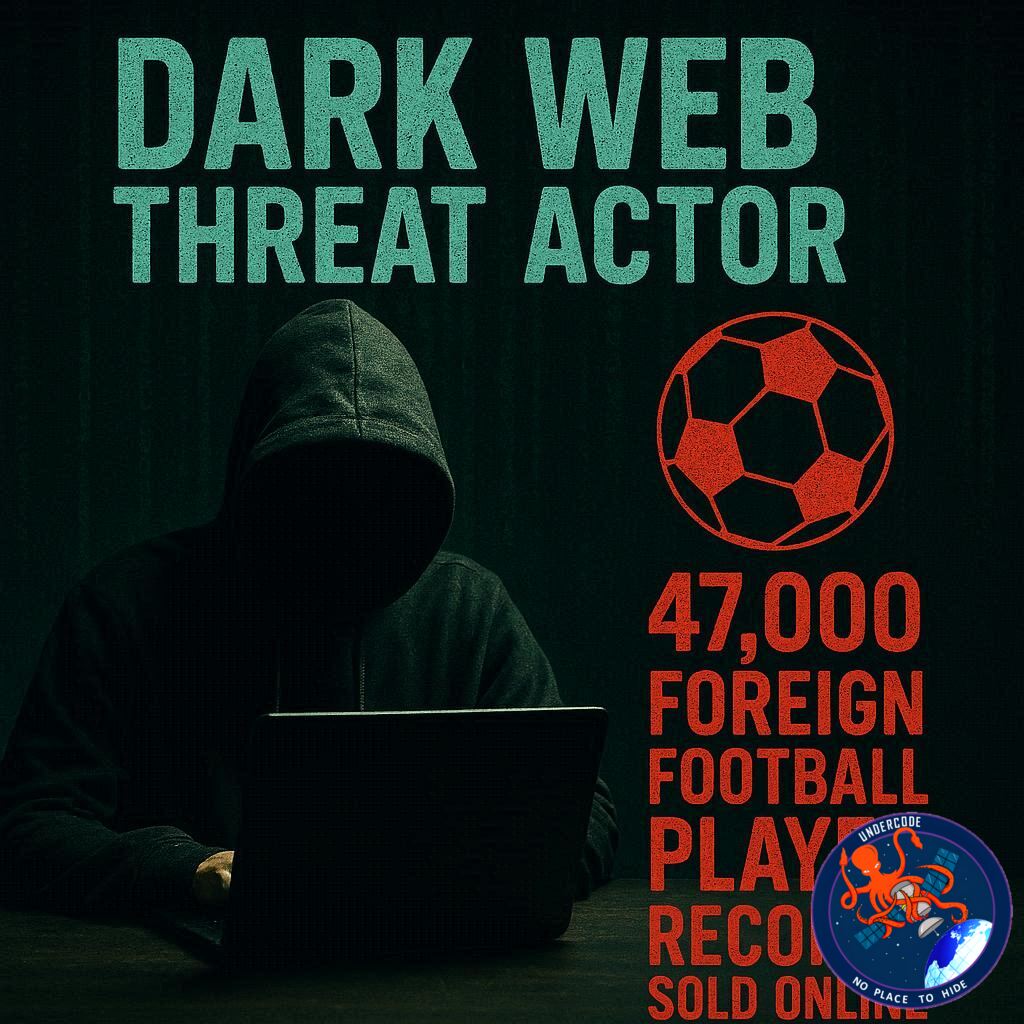
The underground cybercrime economy has once again turned its attention toward the sports industry. This time, a threat actor on a notorious underground forum claims to be selling a database containing 47,000 records tied to foreign football players. According to the listing shared by the account “Dark Web Intelligence,” the leaked dataset allegedly includes both personal and professional information connected to international football athletes.
While the authenticity of the database has not yet been independently verified, the incident highlights a growing pattern where sports organizations, athlete management agencies, scouting platforms, and recruitment systems are increasingly becoming attractive targets for cybercriminals. Football has evolved into a billion-dollar ecosystem powered by analytics, contracts, sponsorships, biometric tracking, and digital scouting tools. That means player information now carries serious financial value on underground marketplaces.
The original post circulating online claims the dataset was uploaded for sale on a dark web forum known for trafficking leaked databases and stolen credentials. The seller allegedly advertised the collection as a “comprehensive” package of football player data, potentially exposing sensitive information linked to foreign athletes across multiple leagues and regions.
The Alleged Football Player Database Listing
According to the post published by the cyber monitoring account “Dark Web Intelligence,” the database contains around 47,000 entries associated with foreign football players. The listing reportedly appeared on an underground forum frequently used by cybercriminals to distribute breached datasets and monetize stolen information.
The advertisement did not publicly reveal the exact origin of the data. However, underground sellers often collect information from compromised sports management portals, talent scouting databases, transfer systems, ticketing platforms, or vulnerable third-party services connected to clubs and agencies.
The threat actor allegedly promoted the dataset as containing “personal and professional details.” Although no complete sample was publicly disclosed, databases of this type often include:
Possible Data Included in the Leak
Full names
Nationalities
Contact information
Contract-related records
Club affiliations
Agent details
Passport or identification metadata
Salary indicators
Performance analytics
Medical or training-related notes
If authentic, such information could expose athletes to phishing attacks, extortion campaigns, identity fraud, or targeted scams involving fake transfer negotiations and sponsorship proposals.
Why Football Data Has Become Valuable to Cybercriminals
Professional football is no longer just a sport. It has become a highly digitized global business involving advanced analytics, cloud platforms, biometric systems, recruitment databases, and international financial transactions.
That transformation has created an enormous attack surface.
Football clubs, agencies, and federations store vast amounts of sensitive information across multiple digital environments. Some organizations operate with elite cybersecurity protections, while smaller clubs and talent agencies may still rely on outdated infrastructure and poorly secured web panels.
Cybercriminals understand that athlete data has commercial value. Even partial information can be sold to scammers, betting syndicates, fake agents, or social engineering operators seeking high-profile targets.
A compromised football database could also be used to launch credential stuffing attacks against associated systems. Many users still reuse passwords across multiple platforms, making sports-related leaks potentially dangerous beyond the football ecosystem itself.
Underground Forums Continue Expanding Their Reach
The alleged sale reflects a larger trend within underground cybercrime communities. Data marketplaces on dark web forums are rapidly diversifying beyond traditional targets like banks and retailers.
Today, threat actors actively trade:
Healthcare records
Airline passenger databases
University credentials
Telecom customer information
Government documents
Crypto exchange accounts
Sports industry data
The sports sector has become increasingly attractive because it combines celebrity exposure with large-scale financial operations. Professional athletes often travel internationally, use multiple digital services, and rely heavily on communication with agents, sponsors, and clubs. That makes them ideal targets for spear phishing and impersonation campaigns.
In some cases, attackers do not even need complete databases. Small fragments of verified information can be enough to build highly convincing scams.
Potential Risks for Players and Organizations
If the database proves legitimate, the consequences could extend far beyond privacy concerns.
Football players may face identity theft attempts, financial fraud, blackmail campaigns, or targeted phishing emails disguised as official club communications. Agents and club administrators could also become indirect victims if their details appear inside the dataset.
Organizations connected to the records may suffer:
Operational Risks
Reputational damage
Regulatory investigations
Sponsorship concerns
Legal exposure
Contractual disputes
Increased cyber extortion attempts
European organizations could additionally face scrutiny under GDPR regulations if personal information belonging to EU citizens was improperly protected.
What Undercode Says:
Sports Industry Cybersecurity Is Still Underrated
Many football organizations continue to prioritize physical security and athlete performance while underestimating digital threats. Cybersecurity budgets in sports often lag behind industries handling comparable financial volumes. Smaller clubs and scouting agencies are especially vulnerable because they depend on third-party software vendors with inconsistent security practices.
Athlete Data Is Becoming a Premium Underground Commodity
Threat actors increasingly see athlete information as a monetizable asset rather than random personal data. Modern football databases can contain medical evaluations, scouting notes, transfer histories, biometric metrics, and even psychological assessments. On underground forums, niche data collections often command higher prices than generic email-password leaks because they enable targeted operations.
Third-Party Vendors Are the Weakest Link
Most large sports organizations outsource portions of their infrastructure to recruitment platforms, marketing companies, analytics providers, or ticketing vendors. Attackers know compromising one vendor can expose data from dozens of clubs simultaneously. This “supply chain” approach has become one of the most effective tactics in modern cybercrime.
Social Engineering Risks Could Skyrocket
Professional athletes are constantly approached by sponsors, journalists, agencies, and recruiters. That communication-heavy environment makes phishing attacks extremely effective. A threat actor armed with legitimate player information could craft emails that appear almost impossible to distinguish from authentic negotiations.
Underground Forums Operate Like Real Businesses
Modern dark web forums are no longer chaotic hacker hangouts. Many now function like structured marketplaces with reputation systems, escrow services, customer support, and vendor verification programs. Sellers actively compete by advertising “exclusive” datasets and targeting industries that attract media attention.
Data Verification Remains Critical
It is important to note that underground forum claims are frequently exaggerated. Some sellers recycle old breaches, fabricate record counts, or combine publicly available data with smaller leaks to inflate perceived value. Independent verification is essential before confirming the legitimacy of any alleged breach.
Football’s Digital Expansion Creates More Exposure
The rise of AI scouting, cloud-based analytics, wearable performance trackers, and international transfer systems means football organizations are collecting more data than ever before. Unfortunately, many security strategies have not evolved at the same pace as technological adoption.
Reputation Damage May Matter More Than Financial Losses
For football organizations, trust is everything. Sponsors, players, and fans expect professionalism both on and off the field. Even an unverified dark web claim can trigger reputational concerns if organizations fail to communicate transparently about cybersecurity incidents.
Deep analysis :
Bash
Example reconnaissance against exposed sports-related services
nmap -sV football-platform-domain.com
Detect publicly exposed admin panels
curl -I https://football-platform-domain.com/admin
Search for leaked credentials in breach repositories
grep @clubdomain.com leaked_database.txt
Analyze suspicious login attempts in server logs
cat access.log | grep POST /login
Identify exposed cloud storage buckets
aws s3 ls s3://football-data-storage –no-sign-request
Monitor underground mentions using OSINT tools
python darkweb_monitor.py –keyword football database
Check password reuse indicators
hashcat -m 0 leaked_hashes.txt wordlist.txt
Verify SSL/TLS configuration security
sslscan football-platform-domain.com
Review suspicious outbound traffic
tcpdump -i eth0 suspicious_ip
Detect vulnerable CMS versions
whatweb football-platform-domain.com
The sports industry is rapidly becoming one of the most overlooked cybersecurity battlegrounds. Clubs and agencies invest millions into player development, but many still expose critical systems through poorly configured APIs, weak passwords, outdated CMS platforms, and unmanaged third-party integrations.
Another overlooked issue involves talent scouting platforms. These systems often aggregate massive datasets from international sources and may lack proper segmentation. If attackers compromise one centralized platform, they could potentially gain access to records spanning multiple countries and leagues.
There is also the growing issue of insider threats. In some underground forum cases, leaked sports databases were allegedly sourced not through external hacking, but through employees or contractors abusing legitimate access privileges. That risk increases dramatically when organizations fail to implement strict access controls and monitoring systems.
Attackers are also becoming more strategic with timing. Sports-related leaks often emerge during transfer windows, contract negotiations, or major tournaments when organizations are under intense operational pressure. Releasing sensitive information during these periods maximizes psychological impact and media visibility.
Cybercriminals are now blending traditional hacking with AI-powered reconnaissance. Public player interviews, social media activity, and leaked datasets can be combined to create highly personalized phishing campaigns. In many cases, the human element becomes easier to exploit than technical infrastructure itself.
Football organizations should also consider the geopolitical dimension of cybercrime. International leagues operate across jurisdictions with different privacy laws, enforcement standards, and cybersecurity maturity levels. This fragmentation creates regulatory blind spots attackers can exploit.
The commercialization of sports analytics further complicates the issue. Performance data, injury history, and scouting reports have become strategic assets worth millions of dollars. A leak involving such information could influence transfer negotiations or player valuations.
Zero trust architecture, endpoint monitoring, multi-factor authentication, and vendor auditing should no longer be optional within professional sports ecosystems. Unfortunately, many organizations still treat cybersecurity as an IT issue rather than a core business risk.
As underground forums continue evolving, sports data may become a recurring target category alongside healthcare and financial records. Threat actors follow value, and modern football generates enormous amounts of valuable digital intelligence.
🔍 Fact Checker Results
✅ The underground forum listing for the alleged football player database was publicly referenced by the monitoring account “Dark Web Intelligence.”
❌ There is currently no independent public verification confirming the authenticity or origin of the claimed 47,000-record database.
✅ Cybercriminal marketplaces have increasingly targeted sports organizations and athlete-related platforms in recent years.
📊 Prediction
🔮 Sports organizations will likely become a major ransomware and data theft target category over the next two years as digital scouting and analytics systems continue expanding.
🔮 Underground markets may begin specializing in athlete-focused intelligence packages containing performance data, contracts, travel details, and sponsorship records.
🔮 Football clubs with weak third-party security controls could face coordinated supply-chain breaches affecting multiple leagues simultaneously.
▶️ Related Video (78% Match):
🕵️📝Let’s dive deep and fact‑check.
References:
Reported By: x.com
Extra Source Hub (Possible Sources for article):
https://www.pinterest.com
Wikipedia
OpenAi & Undercode AI
Image Source:
Unsplash
Undercode AI DI v2
Bing
🔐JOIN OUR CYBER WORLD [ CVE News • HackMonitor • UndercodeNews ]
📢 Follow UndercodeNews & Stay Tuned:
𝕏 formerly Twitter 🐦 | @ Threads | 🔗 Linkedin | 🦋BlueSky | 🐘Mastodon | 📺Youtube


