
Listen to this Post
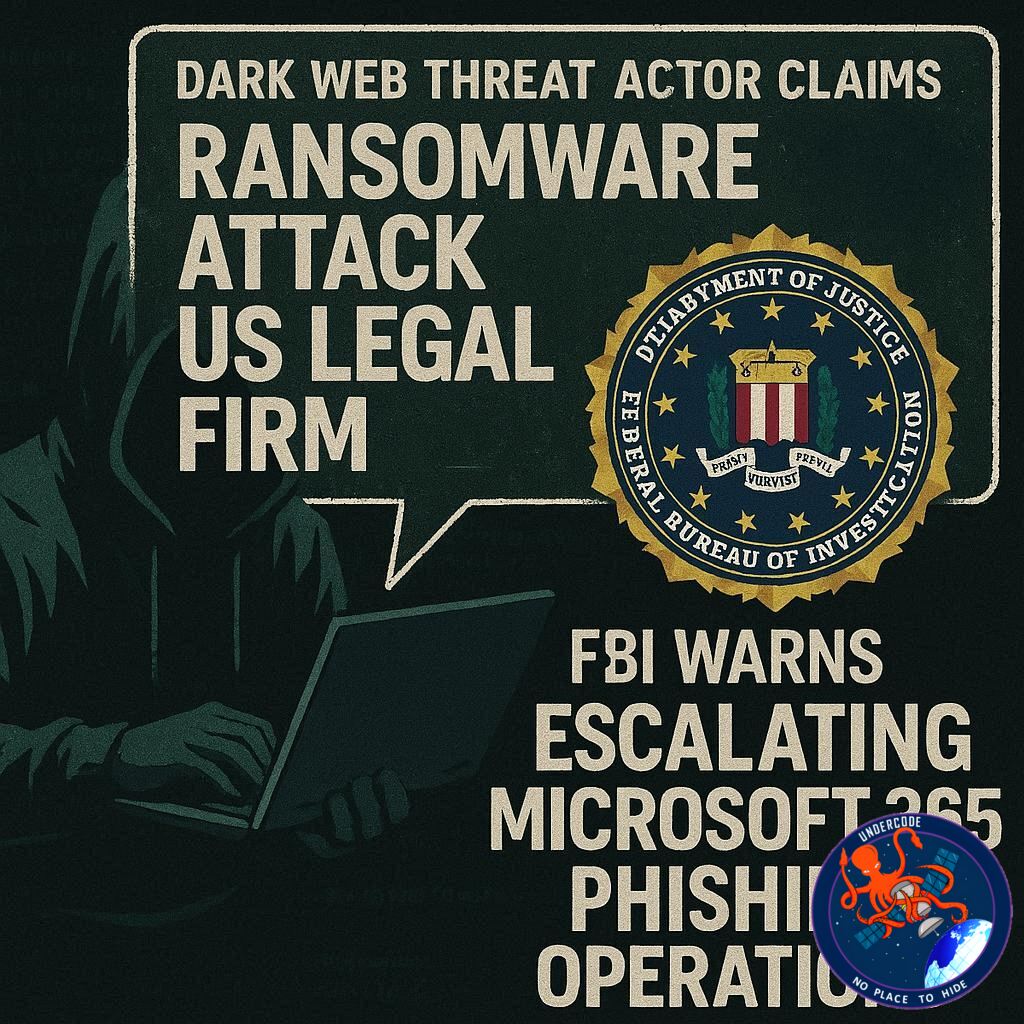
Rising Cybersecurity Chaos Hits the Legal Sector
The ransomware landscape continues to intensify in 2026 as cybercriminal groups expand their focus toward high-value industries, including law firms, healthcare providers, and financial institutions. A recent post monitored by cybersecurity trackers revealed that the threat actor known as “Genesis” allegedly targeted a US-based legal firm in a ransomware operation. The claim surfaced through ransomware monitoring platforms and quickly circulated across cybersecurity-focused social media channels.
At the same time, the FBI has issued fresh warnings regarding the rapid growth of a phishing toolkit called Kali365, a sophisticated attack framework capable of bypassing multi-factor authentication through OAuth device-code abuse. The combination of ransomware campaigns and advanced credential theft tactics paints a troubling picture for organizations still relying on outdated security practices.
The incident highlights how legal firms are increasingly becoming attractive targets for cybercriminals due to the massive volume of confidential client data, litigation records, contracts, and financial information stored in their systems. Attackers know that legal organizations often face immense pressure to restore operations quickly, making them more likely to negotiate or pay ransom demands.
Genesis Ransomware Group Claims New Victim
According to reports shared by cybersecurity monitoring accounts, the Genesis ransomware group claimed responsibility for breaching a US legal firm. Details regarding the victim organization remain limited, but the attack reportedly appeared on ransomware tracking platforms during May 2026.
Ransomware.live, a well-known monitoring service that tracks leak sites and extortion announcements, reportedly observed the publication linked to the attack claim. The disclosure follows a familiar pattern used by modern ransomware gangs. Threat actors first infiltrate corporate systems, exfiltrate sensitive data, encrypt critical infrastructure, and then threaten public leaks if negotiations fail.
The legal industry remains a prime target because firms often maintain decades of highly confidential documentation. Client records may include intellectual property, merger discussions, court evidence, financial disputes, or personal legal histories. A successful breach can therefore create both operational disruption and reputational catastrophe.
Cybercriminals increasingly understand the leverage this creates.
Why Law Firms Are Becoming High-Value Targets
The legal sector historically invested less aggressively in cybersecurity compared to banking or government institutions. Many firms still depend on legacy infrastructure, fragmented document management systems, and decentralized remote access environments.
Attackers exploit these weaknesses.
A single compromised administrator account can provide access to thousands of confidential files. Once ransomware operators establish persistence inside a network, they often spend days or weeks mapping internal systems before deploying encryption payloads.
Several recent attacks against legal organizations have demonstrated how devastating these incidents can become. Beyond downtime, firms face possible regulatory penalties, client lawsuits, and severe trust erosion.
For ransomware groups, this makes law firms extremely profitable targets.
The industry also handles sensitive cases involving corporations, celebrities, political entities, and financial disputes. Stolen data can potentially be weaponized for extortion beyond standard ransom demands.
FBI Warns About Kali365 Phishing Framework
While ransomware attacks continue to dominate headlines, phishing infrastructure is evolving just as aggressively. The FBI recently warned about Kali365, a phishing toolkit designed to abuse OAuth device-code authentication mechanisms used by Microsoft 365 services.
Unlike traditional phishing pages that simply steal passwords, Kali365 focuses on hijacking authentication tokens. This allows attackers to maintain persistent access even after passwords are reset.
The toolkit reportedly tricks users into approving malicious authentication requests through fake login workflows. Once victims unknowingly authorize the connection, attackers can gain long-term access to email accounts, cloud environments, and internal communications.
Security researchers describe this method as particularly dangerous because it bypasses many traditional MFA protections.
Instead of stealing passwords directly, attackers manipulate authentication flows themselves.
OAuth Device-Code Abuse Explained
OAuth device-code authentication is commonly used for smart TVs, IoT devices, or systems with limited input capabilities. Attackers abuse this legitimate feature by convincing victims to enter authentication codes into trusted Microsoft login portals.
Because the login occurs through legitimate Microsoft infrastructure, victims may not immediately suspect malicious activity.
Once approval occurs, attackers receive valid authentication tokens that grant continued access to the account. This approach makes detection far more difficult compared to standard credential theft campaigns.
Organizations relying entirely on MFA without implementing conditional access policies may therefore remain vulnerable.
This marks a significant evolution in phishing operations.
Deep analysis :
Check suspicious OAuth application grants in Microsoft 365
Get-AzureADServicePrincipal | Select DisplayName, AppId
Review risky sign-ins through Microsoft Graph
Get-MgRiskyUser
Detect persistence tokens
Get-MgUserAuthenticationMethod
Search Windows event logs for ransomware indicators
Get-WinEvent -LogName Security
Monitor unusual PowerShell execution
Get-Process powershell
Detect outbound data exfiltration attempts
netstat -ano
Hunt for suspicious scheduled tasks
schtasks /query /fo LIST /v
Linux endpoint ransomware artifact search
find / -name ".locked"
Analyze active network connections
ss -tulnp
Review failed authentication attempts
grep "Failed password" /var/log/auth.log
What Undercode Says:
The Legal Industry’s Weakest Point
The alleged Genesis attack demonstrates a recurring cybersecurity failure across the legal sector. Many firms prioritize compliance paperwork over real defensive architecture. Cybercriminals understand this imbalance and exploit it aggressively.
Ransomware Has Become Corporate Extortion
Modern ransomware operations are no longer simple encryption campaigns. They operate more like organized extortion businesses. Threat actors steal data first because encryption alone no longer guarantees payment leverage.
Microsoft 365 Is the New Battlefield
Cloud environments have become the central battleground for attackers. Microsoft 365 accounts contain emails, SharePoint documents, Teams conversations, and identity infrastructure. One compromised token can expose an entire organization.
MFA Alone Is No Longer Enough
The Kali365 framework proves that MFA is not invincible. Organizations still treating MFA as a silver bullet are dangerously behind current attack trends.
OAuth Abuse Is Difficult to Detect
Traditional antivirus solutions rarely identify OAuth token theft effectively. Since authentication occurs through legitimate Microsoft portals, security teams often fail to detect suspicious authorization events.
Legal Firms Hold “Silent Gold”
Law firms store information that criminals can monetize quietly. Confidential contracts, insider corporate disputes, and litigation records are incredibly valuable on underground markets.
Cybercriminal Branding Is Expanding
Groups like Genesis increasingly rely on branding tactics similar to legitimate businesses. Leak sites, public victim announcements, and coordinated extortion messaging are now part of psychological pressure campaigns.
Attack Chains Are Becoming Modular
Phishing kits, ransomware payloads, initial access brokers, and data leak operations are increasingly separated into specialized criminal services. This “cybercrime-as-a-service” ecosystem dramatically lowers barriers for attackers.
Token Theft Will Dominate Future Breaches
Password theft alone is no longer the primary objective. Authentication tokens provide persistence, stealth, and operational longevity. This trend will likely accelerate across enterprise attacks.
Human Error Remains Central
Even the most sophisticated attacks still depend heavily on human interaction. One mistaken authorization click can compromise entire corporate environments.
Security Teams Need Identity Monitoring
Organizations focusing only on endpoint protection are missing the bigger threat. Identity monitoring, session analysis, and conditional access controls are now essential defensive layers.
Public Leak Sites Create Additional Pressure
Ransomware gangs increasingly use public leak sites to damage reputation and increase negotiation pressure. The psychological impact alone can push organizations toward rapid payment discussions.
Incident Response Speed Matters
The first 24 hours after token compromise or ransomware deployment often determine whether an organization survives with limited damage or faces catastrophic operational failure.
Small Firms Are Especially Vulnerable
Smaller legal organizations frequently lack dedicated security teams, making them easier targets for automated phishing and ransomware campaigns.
Threat Intelligence Monitoring Is Critical
Organizations ignoring ransomware leak monitoring may not realize stolen data has already been published until clients or journalists discover it first.
Fact Checker Results
🔍 ✅ The Genesis ransomware claim was publicly circulated through cybersecurity monitoring accounts and referenced ransomware tracking platforms.
🔍 ✅ The FBI has recently warned about phishing frameworks abusing OAuth device-code authentication flows targeting Microsoft 365 environments.
🔍 ❌ No official confirmation from the alleged victimized legal firm has been publicly released at the time of writing.
Prediction
📊 Cybercriminal groups will increasingly combine phishing token theft with ransomware deployment to maximize access persistence before encryption begins.
📊 Legal firms and consultancy businesses will likely experience a surge in targeted extortion attacks due to the sensitive nature of their stored documents and client communications.
📊 OAuth-based phishing campaigns targeting Microsoft 365 ecosystems are expected to become one of the dominant enterprise attack vectors throughout 2026.
▶️ Related Video (62% Match):
🕵️📝Let’s dive deep and fact‑check.
References:
Reported By: x.com
Extra Source Hub (Possible Sources for article):
https://www.linkedin.com
Wikipedia
OpenAi & Undercode AI
Image Source:
Unsplash
Undercode AI DI v2
Bing
🔐JOIN OUR CYBER WORLD [ CVE News • HackMonitor • UndercodeNews ]
📢 Follow UndercodeNews & Stay Tuned:
𝕏 formerly Twitter 🐦 | @ Threads | 🔗 Linkedin | 🦋BlueSky | 🐘Mastodon | 📺Youtube


